Spring is coming early!

Punxsutawney Phil did not see his shadow this morning–so spring is on its way!  In case you are wondering, neither did the Canadian groundhog Shubenacadie Sam, Staten Island Chuck, or Georgia’s General Beau Lee.

Sixth floor balcony on a foggy Groundhog's Day morning.

Sixth floor Law Library terrace on a foggy Groundhog’s Day morning.

For our borrowers, that means that fine amnesty will not be extended past today.  If you have any overdue library materials, please return them before 11:00 PM today, to take advantage of the amnesty period.  Everyone shares the law library resources.  We thank you for your consideration for your colleagues!


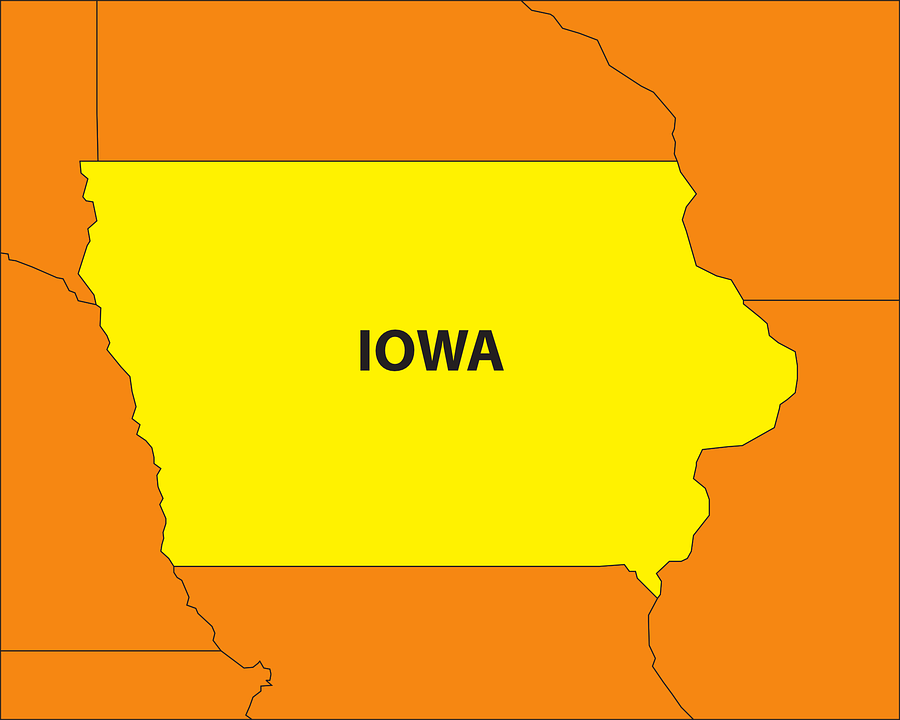
The Iowa Caucuses

iowa-43756_960_720

The Iowa Caucuses are a mystery to many people.  We understand that they occur and that the outcome can have a great impact on the eventual outcomes of the Convention’s candidate decisions, but how do they work exactly and how do they affect the outcome?

The Iowa Caucuses work differently than primary voting.  Voters from each precinct gather at a polling station but do not initially cast a vote.  The caucuses start with representatives speaking about their respective candidates, giving speeches to try to influence the other voters.  After the speeches are complete, voting begins.  In the republican caucus, votes are cast by secret ballot.

In the democratic caucus, voting is done by groups of people moving together into representative groups.  If a candidate is seen as unviable, meaning they receive less than 15% of the vote, the people from that candidate group will then move to one of the other candidate’s groups.

Through this process, winners are announced at the end of the day of caucusing.  Iowa only represents 1% of the votes at the national conventions, a very tiny amount, and yet it receives a huge amount of hype leading up to the caucuses.  This is because these are the first primary conventions in the country and the momentum which can be achieved by candidates selected is significant.  When a candidate has won the first state, it makes it easier to continue to convince other states that you should win there too.  If a candidate instead makes a poor showing in Iowa, they may choose to bow out and allow the election to continue without them on the ballot.

When watching the caucus results, it is important to remember that these elections are not actually to choose a candidate, but instead delegates who currently represent that candidate.  This is very important, as representatives for a specific candidate can change their minds about their candidate between now and the time they vote in higher level conventions.  Nothing is set in stone based on the results of this, or any other, primary.

Caucusing identifies 1,681 precinct delegates who will go to the 99 county-level conventions.  The process will be repeated at these conventions and delegates will be selected to go to congressional district-level conventions where the process will repeat again.  Lastly, the last group of representatives will go to a state-level convention where delegates for the national convention are selected.  This final selection of delegates to the national convention will occur sometime late in May.

Watching for Punxsutwaney Phil

Group photo including man holding Punxsutawney Phil

Punxsutawney Phil on Groundhog’s Day in Gobbler’s Knob, photo by Anthony Quintano, licensed under CC BY 2.0

This semester you may notice that you again accrue fines if you keep library items past their return time.  The librarians want to assure that everybody has access to our resources, and charging for items that are overdue will help assure that items, including study aids and reserve materials, are available when people come to borrow them.  A systems upgrade turned off the fines and we just got the issue resolved.

Since you may have forgotten about fines while they were turned off, we ask that for now, you please be sure to turn in any overdue items.  We are providing an amnesty through Groundhog’s Day.  You may see fines on your account (if you return an item late), but we will waive them for any items returned by February 2.

But wait, there’s more!  If Punxsutawney Phil sees his shadow on Groundhog’s Day, we will extend the amnesty period by 6 more days to end on February 8.  If the prediction is six more weeks of winter, we will give you all six more days of amnesty for returning your overdue items.  For items returned after the end of the amnesty period, fines will accrue as our Circulation Policy indicates.

If you have questions about the policy, you may speak with Meg Butler, Associate Director for Public Services, or Kris Niedringhaus, Associate Dean for Library and Information Services.

The More Things Change, the More They Stay the Same: What to Expect from your 1L Spring Semester

by Veselin Simonov

As you’re taking the last few exams of your 1L Fall Semester, it’s almost time to relish the holidays and the respite they bring. But before you turn your attention to eggnog and relaxation, casting away all thought of torturous hypos and complicated legal rules, allow me to give you a quick rundown of what you can expect from your next semester.

First, there are some curriculum changes going from Fall to Spring. Yes, you still take Contracts, Civil Procedure and Lawyering: Foundations, but Property replaces Torts as your big four credit hour class and Criminal Law takes the place of Research Methods. Criminal Law is three credit hours compared to Research Methods’ one credit hour. That does make it more time-consuming and your schedule will be busier on that basis alone. Scheduling is just as important as it was during your Fall Semester and I recommend sitting down at the beginning of January and carefully blocking out your schedule to account for the tougher workload.

There are some things you can expect from your new classes. Property – as you can most likely guess by the name – covers a large bundle of rights and rules related to owning all sorts of things. This includes intellectual property, real and personal property, rules for transferring property, etc. It’s a very broad topic and you get through a lot of complicated material in that class. That said, there are some really fun and interesting cases you’re likely to come across. If you’ve ever wondered who gets to keep the ring when an engagement is called off or who exactly owns that baseball that landed in a gaggle of people after a homerun hit, then you’ll likely enjoy the class.

Criminal Law is probably the most different thing you’ll encounter in the curriculum. The class is also a sort of broad overview of the most important topics in the subject area. You’ll most likely spend a lot of time discussing the Model Penal Code – a statutory text meant to assist lawmakers in making an effort to update and standardize penal law across all the varying jurisdictions in the US. The class doesn’t really get all that much into the procedure of criminal law – we have several other courses you can take in your 2L and 3L years that focus solely on that aspect. Still, the course serves as an excellent introduction to the theories behind why our society punishes criminals the way it does. You’ll learn things like what state of mind requirements apply to certain crimes, how accomplice liability works, when certain affirmative defenses are available, etc. Overall, the course is a great way to gauge your interest in the subject area.

Among the continuing classes, you’ll notice some changes as well. Most notably, you’ll begin to write motions for Foundations. You’ll have to shift to a more persuasive style of writing from the balanced, neutral tone of the memos. The transition can be a bit jarring, but you’re still applying the analytical skills you started developing in the Fall Semester. Focus on those and the transition should go smoothly.

For Spring Semester in general, while some of the particulars in your classes and schedule may change, the overall goal is still the same – you’re developing your reasoning, analysis and time management. Just keep an eye on that core set of skills and you’ll handle all the curriculum changes just fine. Yes, your schedule will probably end up busier but because of all the work you put in during the fall, you’ll be better equipped to manage everything. In fact, I strongly encourage you to go beyond your classes in the spring and allocate some time to extracurricular organizations that capture your interest. They’re a great way to build relationships with your future colleagues and they can be very rewarding. Remember – law school isn’t just about academics. It’s also about connecting with people and making a difference.

120 Days?

passwordAs some students have come to realize their time is up, or more so their CampusID password’s time is up.

Georgia State requires its users (faculty included) to change their CampusID password every 120 days. The application of this time limit is unfortunate to say the least. It means that students that changed or created their account passwords in mid-August –say at the beginning of the fall semester—will find their CampusID password expiring in the middle of December. Off the top of my head I cannot think of anything going on in December that might cause a problem. Oh, I almost forgot students are taking finals in December. Silly me.

Please avoid the headache and panic of learning your CampusID password has expired at an inopportune time. Take a moment and change your password now or when you are procrastinating studying for that next exam. Directions on how to change your CampusID password can be found here.

Your new passwords must:

  • Be between 10-32 characters in length
  • Start with a letter
  • Not be one of your previous passwords
  • Contain at least one lower case letter, upper case letter, and a number
  • Not contain one of the following characters: @ / () “ * ‘

It makes it awfully difficult. For help on creating a strong password take a look at these sites:

Microsoft 
Apple 
McAfee
xkcd

Finally do not forget to update your CampusID and password on your various devices, e.g. laptop, mobile phone, tablet, etc. Some directions on updating devices can be found here.

CampusID accounts allow students to sign in to the majority of the online systems at Georgia State University including Campus Email, PAWS, Brightspace, and InsideLaw.

Thanksgiving and Exam Hours

Thanksgiving by Flickr user martha_chapa95

Image by Flickr user martha_chapa95

Just so you know, we’re changing up the library’s hours for the next few weeks due to the Thanksgiving holiday and the upcoming exam period. During the week of Thanksgiving we are operating with reduced hours, as follows:

  • Monday, Nov. 23rd & Tuesday, Nov. 24th: 8 a.m. – 9 p.m.
  • Wednesday, Nov. 25th: 8 a.m. – 6 p.m.
  • Thursday, Nov. 26th – Saturday, Nov. 28th: Closed

We will reopen for regular hours on November 29th and November 30th.

We will be open until midnight during the exam period, from December 1st through December 15th. (Remember, you can call a safety escort when you are here late studying!)

After the exam period, we will again have reduced hours until the winter break, as follows:

  • Wednesday, Dec. 16th & Thursday, Dec. 17th: 8 a.m. – 6 p.m.
  • Friday, Dec. 18th: 8 a.m. – 5 p.m.

Along with the rest of the University, we will be closed for winter break from December 19th through January 3rd, and will reopen on January 4th.

As always, you can keep up with changes to our hours by checking out our calendar.

LinkedIn Tips for Law Students

by Catherine Schutz

image by flickr user The_Seafarer

image by flickr user The_Seafarer

LinkedIn is quickly becoming one of the most powerful online tools for job searches and professional networking. Using LinkedIn, there are plenty of opportunities for showing off your experience and skills, and connecting with colleagues. But how can you make your profile competitive, and is there any specific advice for law students? Here are some of the best tips and tricks from around the web:


How to write your profile:

  1. Make your profile public! Since one of the main reasons for joining LinkedIn is to connect with others, now is not the time to hide your profile.
  2. Include a photo of yourself – but make sure it is professional looking. The same picture you use on Facebook or Instagram may not be suitable for LinkedIn. If necessary, get together with a fellow law student and take pictures in suits in front of a plain background.
  3. Create a personalized URL – your default URL in LinkedIn will be a string of numbers. But you can change your URL under Public Profile in LinkedIn. Most suggest changing it to linkedin.com/in/FirstnameLastname.
  4. Using the short introductory summary can be a powerful way of introducing yourself and explaining your career goals.
  5. Your LinkedIn profile should not be exactly like your resume. It’s OK to use more colloquial and friendly language on LinkedIn than you would in your resume.

How to connect with others:

  1. Send personalized contact requests. Don’t use LinkedIn’s generic language of “I’d like to add you to my professional network on LinkedIn.” Instead change it to specifics of how you know this person.
  2. Connecting with people on LinkedIn is important, and it’s good to extend your connections to 2nd and 3rd degree connections. Using the “People You May Know” can be helpful with this. But quality is always more important than quantity, and beware of accepting (or sending) connection requests from people you don’t know.
  3. You can also use LinkedIn to search for GSU College of Law alumni. Use the “Advanced People Search” and type in “Georgia State University College of Law” into the “School” box.
  4. As a law student, beware of conflicts of interest. By connecting with judges, experts or opposing counsel, you may be creating a conflict of interest for a firm that wants to hire you.
  5. Consider asking for recommendations from people you’ve worked with through LinkedIn.

How to make the most of groups:

  1. Using groups on LinkedIn can be a good way of connecting with contacts and learning about legal news.
  2. Some particularly good groups to check out as a law student:
    1. ABA Young Lawyers Division
    2. E-Legal
    3. Law Student Career Network
    4. LAW Jobs

For more tips and tricks, see these articles:

Goodbye and Thank You From Austin and Deborah

After 5 wonderful years at Georgia State Law Library, Austin Williams and Deborah Schander are moving on to new positions.

Austin will soon be the new Assistant Law Library Director at North Carolina Central University. His last day is today, Nov. 6. Deborah will be starting as Research Services Librarian / Lecturer in Law at Vanderbilt University’s law library. Her last day is next Friday, Nov. 13.

Austin and Deborah started work at Georgia State Law Library on Aug. 9, 2010, sharing responsibilities as Student Services Librarians. For both of them, one of the highlights of their time at Georgia State has been working with students, both formally in class and informally at trainings, giving away free coffee, and chatting in the hallways. They are both thankful for all the wonderful memories.

And now, enjoy a quick photo timeline of their tenure here at Georgia State.

DSC_0168

Posing for a fake reference interview shortly after their arrival in 2010

Celebrating Thanksgiving in 2011

Celebrating Thanksgiving in 2011

Austin learning how to wrap presents for the first time in 2012

Austin learning how to wrap presents for the first time in 2012

Standing behind Dean Kaminshine at the 2013 class reunion (fun fact: it didn't matter where in the room they were standing, Deborah and Austin always wound up behind the Dean when he was giving his speech at the reunion)

Standing behind Dean Kaminshine at the 2013 class reunion (fun fact: it didn’t matter where in the room they were standing, Deborah and Austin always wound up behind the Dean when he was giving his speech at the reunion)

Kicking off the 2013 Mario Kart Tournament

Kicking off the 2013 Mario Kart Tournament

Groundbreaking

Hanging out at the new law building groundbreaking in 2013

At their farewell party in 2015

At their farewell party in 2015

We will miss you, Georgia State.

Remember, Remember … the Leisure Collection

by John Evans

image by Flickr user gato-gato-gato

image by Flickr user gato-gato-gato

“Remember, Remember the Fifth of November, the Gunpowder Treason and plot. I can think of no reason why the Gunpowder treason should ever be forgot.” Guy Fawkes, anarchist hero or misunderstood historic figure? I don’t know. Either way, it makes for a pretty good movie. Speaking of movies, have you checked out the library leisure collection of movies? From the classic court room drama Perry Mason to the modern political drama House Of Cards; from a British comedy like Monty Python and the Holy Grail to dystopian sci-fi thriller The Hunger Games, this collection has something for everyone.  The movies can be checked out for one week and are located on the fifth floor of the library. As you exit the elevators continue straight ahead until you pass the IT help desk and are standing by the printers. Turn left, and the leisure collection is on the far wall.

“But Mr. Evans,” you might say, “I have no time for leisure. Do you not know that I am a Law Student? I must study all day.” Well, I say to you, leisure is an important part of life. Without leisure you might, like V, the eponymous hero of V for Vendetta, become too fixed on just one goal. So “Remember, Remember the Fifth of November, the Gunpowder Treason and plot, take a break for a show, so your focus won’t go, and all your law dreams are forgot.”