“Two Countries Separated by the Same Language”: Comparing Marriage under U.S. Law and English Common Law

The Law From Here

By Divya Maharaj

Welcome to another installment of The Law From Here, our globe-trotting series that gives you a chance to get to know GSU Law’s LLM students. Like many of our LLM students, Divya Maharaj has considerable experience researching the law of another country–here, the Caribbean twin-island nation of Trinidad and Tobago. Divya has an LLB from the University of London and an LLM from Staffordshire University, in addition to being a recent graduate of GSU’s LLM program. In Trinidad and Tobago, she spent some time working under the nation’s former attorney general before working as an independent attorney. In today’s very special The Law From Here, Divya takes a look at some of the different ways that English Common Law and U.S. Way treat marriage.

George Bernard Shaw said, “England and America are two countries separated by the same language”. Before I immigrated to the US, I had very little idea about how extensive this “separation” is because it goes much beyond language and extends even to the sphere of the legal systems which originate from the same English Common Law (ECL). As a practitioner and student of law, the more comparative research I conducted in this sphere, the more I realized the extent of this “separation”. However, before going any further, here is a disclaimer. Although Trinidad and Tobago is my country of origin, the legal system there is almost entirely based on ECL, and in addition, I am an English-educated attorney and hence when it comes to law, England is my home country and hence the prologue.

Divya Maharaj

Amongst the many major differences, one that I stumbled upon recently was in the domain of Family Law–more precisely in the unpleasant arena of Divorce Law. Divorce in England and Wales, and by extension in Trinidad and Tobago as well, is guided by the Matrimonial Causes Act (MCA) 1973 pt 1, s 1(2), wherein, divorce can only be considered when a marriage has irretrievably broken, which again is determined if one or more of the following facts are satisfied: (1) respondent committed adultery; (2) respondent’s behavior made living together impossible; (3) respondent deserted for at least a continuous two year period; (4) the parties had at least two years of continuous separation if they have consented to a decree of separation; or (5) the parties had at least five years of continuous separation if there was no decree of separation. Even with the last two clauses, the law there is mostly a fault-based one and the divorce petition statistics also show that a vast majority of the petitioners rely upon fault as the ground for divorce, adultery and unreasonable behavior being the most popular ones.

However, from my research I have come to realize that there are quite a number of important differences between the laws of the US versus that of England and Wales. Some of the major ones are as follows. First, due the no-fault divorce law revolution of the 1970s, the overall framework in the US has tilted mostly towards no-fault grounds, even though fault grounds still exist. Second, marriage and divorce here is mostly guided by the state laws, therefore a single law is not guiding divorce for the entire country. Third, even though all fifty states now allow no-fault divorce, there are many different flavors of the laws. On the one end of the spectrum are the seventeen states allowing divorce solely on no-fault grounds (e.g. California, Washington, etc.). Case in point is California where, per California Family Code 2310, divorce can be granted on the following two grounds: (1) irreconcilable differences, resulting in marriage breakdown; and (2) permanent legal incapacity to make decisions. On the other end of the spectrum are the thirty-three other states allowing divorce on a mix of fault and no-fault grounds (e.g. Texas, Georgia, Utah, etc.). Case in point is Georgia, where, per Georgia Code § 19-5-3, divorce can be granted on the following grounds: (1) prohibited types of intermarriage; (2) mental incapacity; (3) impotency; (4) force, menace, duress, or fraud in the process of marriage; (5) wife’s pregnancy by someone other than the husband; (6) adultery of either party; (7) willful and continued desertion by any of the parties for one year; (8) conviction of either party for moral turpitude offense, resulting in two or more years of imprisonment; (9) habitual intoxication; (10) cruel treatment; (11) incurable mental illness; and (12) habitual drug addiction; and (13) the marriage being “irretrievably broken” (i.e., the no fault option). Fourth, regarding the no-fault divorce related separation clauses, there are differences between state laws on the duration based on whether the divorce is consent-based or unilateral. In many states, the parties can go for immediate divorce if it is consensual (e.g. Texas, Florida, etc.). For unilateral ones, the duration of separation varies from state to state as follows, with some of them allowing as short a duration as one month (e.g. Alabama), whereas some requiring as long a duration as two years (e.g. Illinois). Fifth, in a handful of states where fault-based clauses are still important, there are some unusual additional grounds as well. For example, New Hampshire, where joining a religious sect which destroys marriage can be a ground for divorce, or Illinois, where infecting a spouse with venereal disease can be a ground. Sixth, even with the existence of fault-clauses, the general trend in the country has been towards no-fault based divorce. Finally, in a limited number of states like Louisiana and Arizona, there is the concept of “covenant marriage” which does not exist in England. In this arrangement, parties opting for it are required to go for premarital education classes and promise to seek marital counseling in case of later problems to preserve the marriage, with no-faults no-fault divorce not available as an option.

After researching the legal frameworks, I also proceeded towards gauging the relative experiences with the highly fault tilted, versus the highly no-fault tilted divorce law frameworks in these two jurisdictions; note that when it comes to the US, by “jurisdiction” I mean the overall US. It was quite interesting to see the prevalence of “grass in greener on the other side” sentiment on both sides.

On the English side of the fence, a comprehensive and widely accepted study by Nuffield Foundation highlighted the following major challenges because of high reliance upon fault-based divorces. First, fault-based framework’s original objective of preserving the institution of marriage by making divorces difficult, has not really been satisfied. Second, a great degree of dishonesty has crept into the process because, irrespective of the reality, the parties have found that they can short circuit the process by using fault, thus avoiding the long separation period requirements and trigger faster divorces. Third, reliance upon fault has given rise to higher levels of acrimony in the divorce process, thus greatly increasing the suffering of children. Fourth, the fault-based proceedings are highly unjust towards the respondent in a high percentage of cases because of truth being taken out of context. Finally, reliance upon fault has, in many cases, resulted in protracted legal battles and has severely impacted the quality of life. A glaring example is the highly debated and publicized case of Owens v. Owens, where although it was found that the marriage has irretrievably broken after 37 years, the judge refused to grant a divorce on the ground: that the petitioner’s fault-based allegations (e.g. intolerable behavior) were just minor altercations which can be expected in a marriage; and that the respondent was also opposing the divorce. The petitioner’s further appeal was unanimously dismissed by the Supreme Court even though the judge expressed his “uneasiness”. The petitioner is still waiting before she can apply for a divorce on the basis of separation grounds, while living quite unhappily in a marriage which does not work anymore. As a result of all these, a strong push has come from various quarters of the society that the law, which has not seen any change since 1973, needs to be reformed towards a no-fault based one so that it is more in alignment with the laws in other developed western nations like the US.

However, on the US side of the fence, because of many decades of experience with the no-fault framework, some major challenges have been observed as well. First, no-fault has caused a substantial rise in divorce rates in the US, probably arising mostly from unilateral divorces. In fact, the US has one the highest divorce rates in the world. Second, in the absence of the conflicts arising from the need to prove fault, fights over custody and support have taken its place, and these have become more prevalent with the similar, if not higher, level of acrimony and humiliation in the process. Third, dishonesty in the process has shifted from falsification in order to prove fault, to falsification in order to get a favorable bargain on the collateral aspect of the divorce process, which is evidenced by a rise in the level of one of the party falsely accusing the other party of child sexual abuse in order to get the children’s custody. Finally, due to the shorter wait period for non-consensual divorces, the party intending to divorce may just wait and simply leave at the end of the waiting period, thereby possibly putting the other spouse who did not want to divorce at a considerable disadvantage, and thus having a higher bargaining power. As a result of these factors, a sentiment opposite to the other side of the Atlantic is prevalent in some sections of the US society. Although there has not been much success, here the detractors of the no-fault framework have been trying to bring fault into the mainstream again. One effect of this push can be evidenced in the introduction of “covenant marriage” in a handful of states as mentioned earlier.

In conclusion, I can only say that this ongoing research has broadened my knowledge horizon and made me realize that I definitely need to undertake more of these exploratory comparative research initiatives. All of the sudden, I see Hamlet appearing in front of my sleepy eyes and say: “There are more things in heaven and earth, Horatio, than are dreamt of in your philosophy.” So, yes, my research will continue!

The Law From Here: What is Legal Research like in Venezuela?

by Mariana Griffiths, LLM Candidate

Welcome to another installment of The Law From Here, our globe-trotting series that gives you a chance to get to know GSU Law’s LLM students. Like many of our LLM students, Mariana Griffiths has considerable experience researching the law of another country–here, Venezuela. In Venezuela, Mariana worked as a legal coordinator. Currently, she works as corporate legal supervisor at UPS while she finishes up her LLM degree at GSU. In today’s The Law From Here, she offers her insights into legal research in the Venezuelan legal system, and how it compares (so far) to researching the law in the United States.

I received my law degree in Caracas, Venezuela at the Universidad Metropolitana or Metropolitan University at the age of 23 years old after finishing high school. In Venezuela it is not required: (1) to pursue an undergraduate degree before applying and start law school; (2) take a bar to practice law. As soon as you receive your law degree in Venezuela, you are licensed to practice nationwide if you register yourself with the Institute of Lawyers and obtain the registration number (which is equivalent to a bar number). However, there is no such requirement of passing the bar in the state where the attorney intends to practice law.

Mariana Griffiths

Venezuela’s legal system is governed by civil law, which is a codified system, meaning that the law is written and organized in codes for each area of the law. Venezuela is a centralized federalism in reality, but constitutionally it is a “Democratic and Social State of Law and Justice which holds as superior values of its legal order an actions those of life, liberty, justice equality solidarity, democracy, social responsibility and, in general the preeminence of human rights, ethics and political pluralism,” Constitución de la República Bolivariana de Venezuela [VE][Constitution]Feb. 19, 2009, Title I, art. 2

The U.S. and Venezuelan flags.

Even though case law is not usually considered a fundamental source of law in Venezuela’s legal system, judicial decisions have become more important in many areas. In particular, there are important decisions regarding public matters such as use of public land, eminent domain (called ‘expropriations’), and infrastructure. The most important cases are the ones decided by the Supreme Court of Justice, which is Venezuela’s equivalent of the Supreme Court of the United States, although there are quite a few differences in composition and operation. The Supreme Court of Justice’s decisions are more likely to be published and create precedents for specific legal issues. However, although that court’s decisions are the most prominent, for case law research, there is no strict rule of hierarchy.

The Constitution in Venezuela is the supreme law of the land, and in the hierarchy of the laws, it is at the same tier as international treaties and agreements. Below, there are the codes and laws enacted by the Legislative Power and the Law Decrees issued by the President, which can be related to any matter, at any time, without any restriction, whether there is a national emergency or not. These decrees often include modifications to current law, which makes practicing law in Venezuela very challenging. It is important to note that in the last twenty years, the numbers of decrees has increased considerably as a way to escape the legislative process. These decrees usually strike down one or more segments of the law in question, as an amendment, which means the attorneys must research different decrees and other sources in order to discern the valid statutory law. Perhaps an analogy can explain it better—it is akin to ‘shepardizing’ case law in the United States.

Before endeavoring to contrast the common law and civil law systems of the U.S. and Venezuela, respectively, it is important to note that both systems have evolved with society’s technological and legal changes. Civil law countries have been relying on case law and using precedent to maintain uniformity in the judicial system, which helps to limit frivolous lawsuits and provides a reference for practicing litigant attorneys. And common law countries use precedent to identify potential areas of the law where statutory law is needed for the same reasons, and for the efficiency of the judicial system.

In Venezuela, like in the United States, there is a  separation of powers. However, this is a similarity with a distinction, since Venezuela’s government has five branches: legislative, executive, judicial, citizen and electoral. This separation of powers of five branches is included in an amendment to the Venezuelan Constitution. In contrast, the United State maintains the classic separation of powers with three branches, characterized by the element of check and balances.

The interaction and relationship between federal and state law is also quite different. In Venezuela, even though each state is autonomous, the codified law apply to all the states. Not all the states even have written constitutions or different laws. States do issue ordinances (at the level of administrative agencies) for local matters such as traffic, business licenses and use of the land, but they do not occupy the same legal space as the federal law. In some ways, this is a simpler system than what we find with the overlapping systems of federal and state law that characterize the United States.

As you might expect, these differences add up, and legal research in Venezuela is pretty different. First, you need to know that, when researching the law in Venezuela, you won’t likely find all of the key primary sources in any one single place, like you do in the U.S. when using Westlaw of Lexis. There is a company called Microjuris that provides some resources for legal research similar to what you might see on those platforms, but it is less complete and less sophisticated. More importantly, Microjuris is not always up-to-date and has an outdated design that, personally, I do not find be user-friendly.

Second, the number of executive decrees which modify the codified law is enormous. Sometimes, in one month, there are more than twenty! That means it is important that means you be up-to-date, which you can ensure by checking the Gazette Official published by the Supreme Court of Justice (the “Tribunal Supremo de Justicia”). Generally, it is a large file; the good news is that it is available online.

Third, because it is a codified law system, legal professionals base their research on the civil codes as primary sources. To support their arguments for a legal memo or for a case in litigation, the use of jurisprudence to supplement the civil codes is critical. There are reputable and well-known authors for each subject, often former judges or academic teacher.

These differences in their countries’ legal systems have a big impact on the way that attorneys research the law in Venezuela and the United States. Although case law is less prominent in Venezuelan law, the added wrinkle of ensuring your research of decrees is up-to-date adds to the challenge of researching Venezuelan, as does the unavailability of a comprehensive or user-friendly service for doing legal research online.

What is a patent agent?

Agents of Invention, Part 1

by T.C. Deveau, Intellectual Property Correspondent & Law Library GRA

Welcome to the first installment of Agents of Invention, our new series exploring the exciting world of patent agents by the law library’s own T.C. Deveau. T.C. has a PhD in Neuroscience and has worked as a patent agent for almost 7 years. He’s currently in the final year of GSU Law’s part-time program.

Imagine helping entrepreneurs ensure that they actually own the exciting inventions that they’ve dedicated so many hours to creating. Imagine collaborating with attorneys and scientists in an environment that where your technical background can make an enormous difference. Imagine a career that helps prepare you for a sophisticated area of legal practice, but doesn’t require a J.D.

If this scenario sounds appealing, have you ever considered becoming a patent agent? A patent agent is someone with a science or engineering degree (i.e., bachelors, masters, Ph.D.) who writes and prosecutes patents on behalf of inventors.[1] Often, these patent agents/prosecutors work at law firms, but they can also work for other organizations, or even for themselves. 

The USPTO HQ in Alexandria, Virginia.

Patent agents have taken and passed the U.S. Patent and Trademark Office Registration Exam (the “Patent Bar”), which allows them to represent clients (inventors, companies, or other organizations such as universities) in front of the USPTO.  Patent agents can submit patent documentation to the Office and participate in the substantive examination of patents.  Basically, patent agents can help clients with anything relating to obtaining a patent from the USPTO. 

“Anything relating to…” sounds really broad, but it generally consists of the following:

  • Consulting with the client about their invention;
  • Working with them to determine a filing strategy that best fits your client’s interest (and budget);
  • Assisting with preparation and filing of the application;
  • Working with USPTO Examiners to get the application allowed; and
  • Working with the USPTO on procedural issues so that the patent is ready for publication and issuance.

For a given client, you may take a patent from start to finish in this manner, for others, you may only work on certain pieces of the puzzle.

While patent agent work is largely U.S.-centric, it’s important to keep in mind that the United States is not the only jurisdiction where intellectual property rights may be relevant or meaningful for a given client.  Patent agent duties often include, coordinating patent application efforts not only in the U.S., but in foreign jurisdictions as well, such as Europe, China, and Japan. This involves working with attorneys or agents in other countries to further your client’s interest in these jurisdictions.

At law firms in particular, the duties of a patent agent often overlap significantly with those of patent attorneys involved in patent prosecution, although an agent’s duties are more limited in scope.  While agents can help clients obtain patents, they cannot be involved in matters that involve giving legal opinions.  Aspects of the field that follow grant of a patent, including patent invalidity, infringement, and licensing, must be handled by attorneys.  When clients have questions like “what can I do with my patent after it is has been issued?” or “I think our competitor is infringing our patent, can you investigate it?,” it’s time to get an attorney involved.

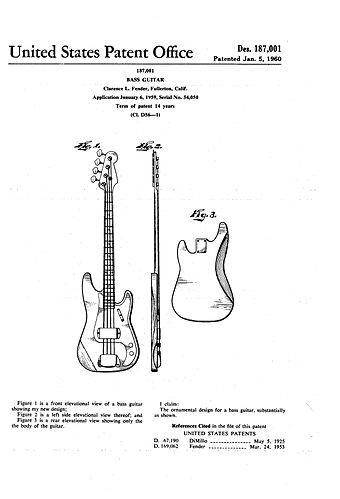
A patent for a bass guitar.

Whether you’re interested in becoming a patent agent (remember, no J.D. required) or a patent attorney, GSU provides great opportunities to students looking to break into the field of patent prosecution.  GSU provides many courses tailored to patent law, both from a doctrinal and a practical experiential perspective.

It is common for patent agents in and around Atlanta to enroll in the part-time J.D. program at GSU and take the next steps towards becoming an attorney.  The part-time program provides a lot of flexibility for those looking to further their careers, and firms in the area even provide incentives to patent agents for going to law school (such as tuition reimbursement).  While at GSU Law, students can further immerse themselves in the world of intellectual property beyond patents.   GSU offers classes covering related topics like copyright, trademark, trade secrets, and contract drafting, all of which are quite helpful in becoming a well-rounded IP attorney.

Some of you reading this may be thinking, “but I’m already in law school—why do I care about patent agents?”  Well, it’s not uncommon for students at GSU to take the Patent Bar, skipping the agent position entirely.  Indeed, many students find GSU Law coursework—classes like Patent Law and Patent Drafting & Prosecution—to be a huge help in their Patent Bar prep (look for coverage of this in a future post).  

Today, I’ve given you an overview of the patent agent position, discussing what it involves and discussing some of the requirements of the field. Stay tuned for our next installment of Agents of Innovation, where I’ll describe a thrilling “day in the life” of a patent agent.  


[1] Did I mention that this position also allows you to call yourself a ‘prosecutor’? The ‘patent prosecution’ process refers to the process of applying for and pursuing patents.