Exams Are Over, Now What?

Are you a little bummed out that exams are over and you don’t know what to do with all your free time? Since most of you have been sheltered away from the real world for the last 4 months, I will catch you up on some of the best activities to keep yourself busy over the winter break.

  1. Sleep:  It’s never a bad idea to catch up on a little lost sleep and try to build on sleeping habits that you can carry with you into the Spring semester.  You don’t have to make a 9am class anytime soon, so abandon the alarm for the next 2 weeks and get try to get 7-8 hours a night.
  2. Gym: The gym can be your friend.  Sweat your worries away and rejuvenate yourself in time for a productive second semester.
  3. Shop:  Don’t forget to pick up those last minute gift items for family and friends.  Fortunately, most people will not hold you to high expectations during law school….hence why most of my family and friends received “law school swag” during my 3 years of law school.
  4. Read:  Read?  Yes read.  Winter break is the best time to catch up on pleasure reading.  You aren’t bogged down with summer classes or work for an internship.  Plus, it’s always good to remind yourself that reading can be fun.   If you need a few ideas on what to read, check out the New York Times Best Sellers.
  5. Television:  You will have plenty of time to catch up on all of those shows you DVR’d over the last few weeks and discover your new favorite shows.   If you need a suggestion on new TV Shows, I would highly suggest “Person of Interest” and “Revenge.”  It is also college bowl season, so spend a little time kicking it on the couch and watching your favorite college team play in the “PizzaCarRandomWebsite.com Bowl.”
  6. Movies:  Yes, they are slightly expensive, but who can resist larger than satisfying Diet Cokes and free refill movie popcorn!  My picks for this winter break are “Mission: Impossible – Ghost Protocol,”  “Sherlock Holmes: A Game of Shadows,” and “Tinker Tailor Soldier Spy.”

If  you get tired of all these fun activities, just remember that the Law Library will be back open on January 3rd from 8am – 6pm.  Have a great winter break.

Vengeful Librarians

Could your local reference librarian actually be a CIA agent?  Probably not, but a recent Associated Press story has got people thinking about the role of librarians in open source intelligence gathering.

Known as “vengeful librarians,” a group of analysts at the CIA’s Open Source Center analyze Facebook and Twitter posts, newspapers, television news, local radio and chat rooms to collect valuable intelligence about America’s friends and enemies.

Although all of the information they gather can be found in the open, they possess the special skills needed to gather that information and use it in conjunction with clandestine intelligence.  Many times the information they collect can give intelligence analysts a better idea of the local mood of a region.

An example of open source information that has provided analysts with valuable intelligence is social media postings during the Osama bin Laden raid.  Open source analysts were able to gather hundreds of local postings, which officials then used to gauge the public perception after the killing.  Another example is analysts gathering social media postings prior to the Arab Spring.   While you might think anyone can do this, that is far from the truth.

Tweets and other posts cannot always be pinpointed to a certain geographic location, so analysts have to use language and dialect to figure out their location of origin.  The center’s director, Doug Naquin, noted that the best analysts possess a master’s degree in library science (M.L.S) and speak several languages.  This enables them to locate, translate, and organize the information for intelligence analysts.

So next time you think about posting on a social media site, consider who might be watching in.  All of your the Legal Bibliography professors here at Georgia State have an M.L.S. degree, so maybe they previously worked as analysts for the Open Source Center. Of course I would tell you if I had worked there prior to coming to Georgia State, but then I would have to …

More Information

Emanuel Book Signing

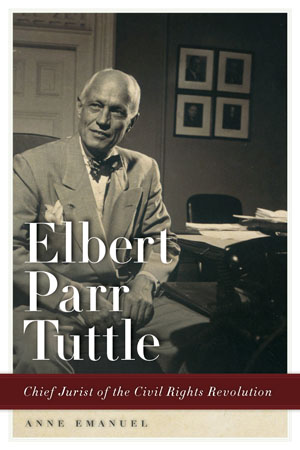
Georgia State University College of Law Professor Anne Emanuel will be holding a book discussion and signing at the Georgia State University College of Law Library on Thursday, October 27th at 4 p.m.

Her book, titled “Elbert Parr Tuttle: Chief Jurist of the Civil Rights Revolution,” is the first and only authorized biography of the late Elbert Parr Tuttle.  Tuttle served as chief judge of the United States Court of Appeals for the Fifth Circuit during the height of the civil rights movement, from 1960 until 1967.

Tuttle is a graduate of Cornell University for both his undergrad and  law degree.  Prior to attending law school he served in the U.S. Army and worked as a reporter.

Click here for more information about the book.

The event will be held on the first floor of the Law Library.  Following the presentation, copies of the book will be available for purchase and signing.  Light refreshments will be served.

Click here for more information on the event.

Meet Warren Buffett

Warren Buffett has increasingly made headlines over the past few months based on his claim that he pays a lower tax rate than his maid.  Why is this so significant?  It’s because Buffett happens to be listed by Forbes as the 2nd  Richest American, only bested by Microsoft founder Bill Gates.  Forbes lists Buffett’s net worth at an estimated 39 Billion dollars, which is no small pocket change.  So just how did he get there?

Buffett was born in 1930 in Omaha, Nebraska to U.S. Representative Howard Buffett.   He attended Wharton Business School for two years before he transferred to the University of Nebraska-Lincoln and graduated at 19 with a B.S. in Business Administration.  After undergrad he attended the Columbia Business School.  Between 1951 and 1969 he held such positions as an investment salesmen, securities analyst, and general partner.  In 1970 he became Chairmen, CEO of Berkshire Hathaway, Inc., and from there, the rest is history.  Buffett became a millionaire in 1962 and reached billionaire status in 1990.

In addition to his vast wealth, Buffett is also known for his philanthropy.  Buffett has vowed to give most of his money away to charity after his death.

For those interested in finding out more about Warren Buffett, check out the following websites and books:

Librarians Go Hollywood

What better way to celebrate the end of Law Library Week than to relax to a movie about the adventures of your average librarian?  Here are a few suggestions to get you started:


BLACK MASK (1996)

Jet Li plays Tsui Chik, a genetically-engineered assassin turned shy librarian after his unit is disbanded.  He becomes a mask-wearing superhero when drug lords start turning up dead.


FOUL PLAY (1978)

Goldie Hawn is a San Francisco librarian who, after being encouraged to try something new, meets a mysterious man who gives her a pack of cigarettes secretly containing a roll of film.  After Hawn is attacked, a detective, Chevy Chase, investigates and together they unravel a mystery and attempt to stop a murder.


THE GUN IN BETTY LOU’S HANDBAG (1992)

Betty Lou Perkins (Penelope Ann Miller) is an introverted librarian largely ignored by everyone including her husband, Alex, a detective.  When she finds the gun to a criminal kingpin’s murder, no one will listen to her, so she confesses to the murder – then she gets attention from the police and the kingpin’s associates.


THE LIBRARIAN

A series of made-for-TV movies featuring Noah Wyle as a brilliant librarian, Flynn Carsen, who holds twenty-two college degrees.  The Metropolitan Public Library where he works houses many rare books as well as historical and magical artifacts in a secret section.


QUEST FOR THE SPEAR (2004):  Someone breaks into the secret section and steals a piece of the Spear of Destiny.  If the thief can unite it with the other two pieces, he will control the destiny of the world and have power over life and death.  Flynn must find the piece of the spear and return it to the library in an Indiana Jones-style adventure.


RETURN TO KING SOLOMON’S MINES (2006):  Flynn receives a map in the mail with the secret location of the mine.  When the scroll is stolen, Flynn must retrieve it before the thief can recover the book hidden in the mine which can give the reader control over space and time.


CURSE OF THE JUDAS CHALICE (2008):  While on vacation, Flynn meets a mysterious woman and they set off in search of the Judas Chalice – a vampire version of the Holy Grail.


THE MUMMY (1999)

Rachel Weisz plays a librarian/Egyptologist, Evelyn Carnahan, in Cairo in the 1920s.  Her brother steals a box with a map from Rick (Brendan Fraser).  When the three team up to follow the map, Evelyn accidentally wakes the mummy of Imhotep.  She and Rick must battle a mummy out for revenge.


MUSIC MAN (1962)

Shirley Jones plays Marian “the librarian” Paroo of the River City, Iowa, Public Library.  Prim and proper, she sets out to prove Professor Harold Hill (Robert Preston) is a fraud, but falls in love with him as she watches him bring the town to life.


THE SHAWSHANK REDEMPTION (1994)

Tim Robbins plays a banker, Andy Dufresne,  convicted of murdering his wife and her lover. While in prison he takes over the library (a former janitor’s closet) and greatly expands the prison library over the next 23 years through an intense writing campaign to government officials.


PLEASANTVILLE (1998)

While not an actual movie about librarians, it is a nice accompaniment to Banned Book Week.  Two modern day teenagers (Toby McGuire and Reese Witherspoon) are transported into a fictional TV show about a 1950s town, Pleasantville, where everything is in black and white, and all the books have blank pages.  As the teenagers tell the plots of the books, the pages of the books fill in.   The library quickly becomes a popular place, and as people start learning new things through books and other experiences, they fill with color.  When town members try to stop the spread of colorization and new ideas, they burn books and forbid access to the library.


If interested, you can find a surprising number of movies about librarians at the following links:

http://emp.byui.edu/raishm/films/introduction.html

http://home.earthlink.net/~movielibrarians/


By Meghan Starr


Banned Books Week

Saturday, September 24th marked the first day of Banned Books Week 2011.  Banned Books Week  celebrates the freedom to read and the importance of the First Amendment.   This year Banned Books Week is being held from September 24th until October 1st.  During this time libraries all over the country hold events to highlight free and open access to all information.

The American Library Association (ALA) provides a list of 46 books from the Radcliffe Publishing Course Top 100 novels of the 20th Century that have been the target of ban attempts. Here are a few books on the ALA’s  list you may recognize:

  • The Great Gatsby, by F. Scott Fitzgerald
  • The Catcher in the Rye, by JD Salinger
  • The Grapes of Wrath, by John Steinbeck
  • To Kill a Mockingbird, by Harper Lee
  • The Color Purple, by Alice Walker
  • Animal Farm, by George Orwell
  • Gone with the Wind, by Margaret Mitchell
  • The Lord of the Rings, by J.R.R. Tolkien

There are also hundreds of books that have not been banned but have been challenged.  Challenged means that there was an attempt by a person or a group to remove or restrict the materials.  The Office of Intellectual Freedom cites the following as the top three reasons books are challenged:

  1. the material was considered to be “sexually explicit”
  2. the material contained “offensive language”
  3. the materials was “unsuited to any age group”

For those interested in learning more about banned and/or challenged books, you can consult the ALA’s website devoted to Banned Books Week.

The Law Library also has several books devoted to the First Amendment and book banning.  Here are just a few:

NFL Lockout and the Law

On the night of Thursday, September 8th, the 2011-2012 NFL season kicked off when the reigning Super Bowl champion Green Bay Packers hosted the New Orleans Saints at Lambeau Field.  However, it was not too long ago that many of us doubted whether this season would start on time, if at all.  The issues involved in the lockout that threatened to derail our fall Sunday traditions remind us how the law intersects with nearly every aspect of our lives, even our diversions.

For those of you who have not spent the last several months closely following every development of the lockout, the following is a brief summary.

After the close of the 2010-2011 season, the final season included in the previous collective bargaining agreement between the league and the NFL Players Association, things looked rather bleak for football fans.  When the CBA expired in early March, the NFLPA was decertified.  On March 11, the players filed a class action antitrust lawsuit in U.S. District Court in Minnesota.  The players listed as plaintiffs are some of the biggest names in the NFL, and include Tom Brady, Peyton Manning, Drew Brees, Osi Unemyiora, Mike Vrabel, Brian Robison, Von Miller, Logan Mankins, Ben Leber, and Vincent Jackson.  The day after the suit was filed, the league imposed a lockout of the players.

One of the first orders of business for the players was to request an injunction against the lockout.  A hearing regarding the players’ request for an injunction was held in April before District Court Judge Susan Richard Nelson.  Judge Nelson declared the lockout was improper, and the owners immediately appealed to the 8th Circuit Court of Appeals.  The Circuit Court granted the NFL’s motion for a stay of Judge Nelson’s order pending appeal, and later, in a 54-page opinion, reversed Judge Nelson’s ruling.  (See opinion here: http://www.ca8.uscourts.gov/opndir/11/07/111898P.pdf )

In the meantime, settlement negotiations took place between the sides outside of the courtroom.  The 136-day ordeal finally came to an end when the players and owners agreed to terms for a settlement in July.  Upon agreement by all parties, Judge Nelson ordered Brady v. NFL dismissed, stating that the parties had “at all times acted with the utmost integrity and in the best interests of football.”

While the veracity of Judge Nelson’s statement is debatable, we can all agree that the end of the lockout is good for fans everywhere.  Now, our minds are free to ponder other things.  Like, why would Aaron Rodgers shave his magnificent preseason mustache?  Just how bad will the Colts be without Peyton Manning?  Did Tom Brady really agree to be the new face of Uggs?  Can the Falcons rebound after that painful Week 1 loss?

So enjoy this football-season-that-almost-wasn’t, and go Bills!!

By Kristin Poland

Legal Bibliography Help

Right now you may be stressed out because you cannot find the last answer to your legal bibliography assignment. What can you do?  Who can help?  Who you gonna call?

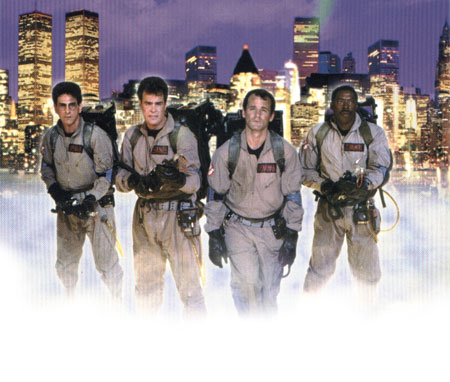
Unfortunately the Ghostbusters cannot help you locate American Jurisprudence or United States Reports, but a reference librarian or graduate reference assistant (GRA) can provide you with some assistance.

The Reference Desk is open Monday through Thursday, 8:30 a.m. until 8:00 p.m.  For those of you who prefer to get most of your work done on the weekend, the Reference Desk is open on Friday from 8:30 a.m until 5:00 p.m. and on Saturday and Sunday from 10 a.m. until 6 p.m.  During these times you can do any of the following:

  1. Stop by and talk to a reference librarian or GRA in person
  2. Utilize chat reference (chat box located on http://law.gsu.edu/library/)
  3. Call the reference desk at 404-413-9102


ProQuest Legislative Insight

In your research, you may be asked by an attorney or law professor to locate congressional materials produced by Congress as the law was introduced, studied, and debated.  This research task is called legislative history research.  It can be a very tedious process, particularly for older laws.  Although, today there is an abundance of hearings, debates, and reports available in free online sources (Thomas and FDsys), it can still be a complicated task of focusing on both locating all the congressional documents and then focusing on key phrases.

At this point, you may ask yourself why anyone would want to read all those congressional materials.  Those congressional documents are often used by attorneys and courts in an attempt to determine Congressional intent or to clarify vague or ambiguous statutory language.  For example, in Dawson Chemical Co. V. Rohm & Haas Co., 448 U.S. 176 (1980), the question turned on whether the chemical manufacturer had engaged in patent misuse.  The U.S. Supreme Court reviewed the hearings prior to the enactment of the law and held that the respondent was within his rights because his behavior did not fall outside of the intended scope of Pubic Law 82-593.  Many cases fall on the exact definition of statutory terms and the courts look to legislative history.

Fortunately, members of the Georgia State University College of Law community have access to excellent legislative history resources.  Nancy P. Johnson’s Sources of Compiled Legislative Histories (part of Hein Online) is an excellent starting point for legislative history research.  Two other subscription databases are ProQuest Congressional and ProQuest Legislative Insight.  You can locate these databases, along with others, on the Law Library website – Electronic Resources.

ProQuest Congressional includes all congressional documents, including oversight hearings and annual reports.  ProQuest Legislative Insight is excellent for extended legislative history research.  Legislative Insight includes those congressional documents linked directly to a public law.  The outstanding feature of Legislative Insight is that a researcher can easily locate key terms in the full texts of documents.  This feature can save many hours of researching detailed documents.

Currently, Legislative Insight is a work in progress, but by 2012, it will include 18,000 legislative histories covering laws from 1929 to the present.  PDF documents include the public law, all versions of the bills, reports, documents, CRS reports, committee prints, debates in the Congressional Record, and presidential signing documents.

By Professor Nancy P. Johnson

Auction Yields $232,246

The United States Marshals Service recently held an online auction (May 18 to June 2, 2011) for some personal items owned by  Theodore Kaczynski, also known as the Unabomber.   The purpose of the auction was to raise money to compensate Kaczynski’s victims.  In all, the auction was able to raise $232,246.  The items auctioned ranged from a typewriter, handwritten papers, and Kaczynski’s infamous hooded sweatshirt and sunglasses.

Pictures of all items auctioned

Kaczynski plead guilty in 1998 for a string of bombings between 1978 and 1995 that killed three people and wounded 23 others.  He is currently serving a life sentence in a federal prison (commonly referred to as Supermax) in Florence, Coloroado.  Other notable inmates at Supermax include Robert Hanssen (FBI Agent who spied for USSR & Russia), Eric Rudolph (Centennial Olympic Park bombing), and Terry Nichols (Oklahoma City bombing).

If interested in learning more about Kaczynski’s life as the Unabomber, his victims, and the Supermax prison, check out some of the following books Law Library and University Library’s collection: