Offbeat Law Library Collections

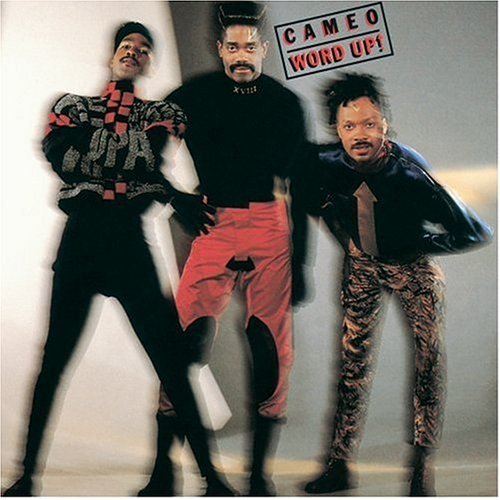
Cameo Word Up LP coverThis year’s CALI Conference for Law School Computing was hosted at the Thomas Jefferson School of Law in their beautiful new downtown facility located in the shadow of San Diego’s Gaslamp quarter.  The building still had that new, technology-rich, Leeds-certified smell about it. Everything in the facility was brand spanking new…save a pair of 300-thousand year old wooly mammoth tusks that were on display in the law library. The school had unwittingly unearthed the fossils when excavating for the new building and they did what everyone does when they do not know what to do with something:  give it to the law library.

This got me thinking of what other unusual items have by chance or device found themselves part of a law library or its collection. Below is the fruit of my first search. I am sure there is more to be unearthed.

  • I am equally perplexed by and envious of Cornell Law Library’s squash court.  Yes, that is right. There is a squash court in the Cornell Law Library.  Struggling with Georgia legislative history (or the lack thereof)? Well blow off some steam and play a quick game of squash.  After hitting a few trickle boasts, you will be ready to face that legislative history research again.
  • My personal favorite, being a child of the 80’s, is the platinum album of Cameo’s Word Up that is on display at University of Tennessee Joel A. Katz Law Library. The Library’s namesake is a successful entertainment lawyer that has represented Willie Nelson, Jimmy Buffett and Michael Jackson among others. He has donated a number of his platinum plated awards to the law library but it is the image of Larry Blackmon in a codpiece—which in his defense seemed to make perfect sense back in the 80’s—on the walls of a law library that just makes me smile.
  • Finally, Yale has added bobbleheads to the Lillian Goldman Law Library rare book collection. Likeness of the Supreme Court justices in bobblehead form are now given similar historical attention to those commonplace gilt vellum bound manuscripts that litter the rare book collection.  Their Rare Books Blog is actually quite fascinating and worth a read.

Fireworks Laws in Georgia

fireworks image

Image by Flickr user joelmann

It’s almost July 4. A time for barbecues, the annual viewing of 1776, and that most-beloved tradition: fireworks. There are fireworks displays all over Atlanta, starting tonight. Or, if you prefer to stay inside, there’s even an app for that.

Fireworks are one of those topics on which state laws vary significantly. In Georgia, fireworks are regulated by O.C.G.A. § 25-10-1 et seq. Here, among other things:

  • the term “fireworks” does not mean model rockets or toy pistols with paper caps (25-10-1),
  • a license is required for anyone wanting to put on a public fireworks display (25-10-3.2),
  • not having a license is a felony and is punishable by 2-10 years in prison, a fine of up to $10,000 or both (25-10-8),
  • it is illegal to employ anyone under the age of 18 to work at a public display or where fireworks are stored (25-10-4.1), and
  • it is negligence per se to sell fireworks to a minor (Allen v. Gornto, 100 Ga. App. 744 (1959)).

We hope you all have a happy — and safe — July 4!

Keep Your Lips Sealed…and Keep Your Client’s Secrets

By Lindsay Anglin

Confidential image

Image by Flickr user naiadsspring

As many of you are now deeply entrenched in case files, briefs, and client intake at your summer internships, it is important to take a moment to remember your ethical responsibilities regarding client information. Last week the 5th Circuit approved $30,000 in sanctions against a firm for accidentally distributing an opposing party’s confidential client information after someone from the firm mistakenly copied the information onto compact discs that were given to other attorneys. (Source: ABA Journal). While confidentiality breaches like this can easily occur when sending electronic files or cc’ing the wrong person on an email, the greatest risk lies in a casual conversation with friends, family, or fellow students.

None of you want to be the employee who cost the firm thousands in sanctions for an inadvertent breach in client confidentiality. So check out these tips on how to maintain confidentiality this summer:

  • Do not talk about the firm’s clients outside of the firm. Period.
  • It may be tempting, especially if you have a funny story to tell, but don’t tell specific case stories or facts to friends and family. Even if you keep it vague, with a little internet research on your firm, agency, or judge, someone can find out what case you are working on and figure out who your client is.
  • Refrain from posting updates about your summer internship on social media sites. Though you (hopefully) withhold client names, postings with date and time stamps can easily be traced back to your dealings with certain clients, attorneys, or judges.
  • Along those same lines, do not blog about your summer experience. Giving you more space to air your thoughts certainly does not help your chances of breaching confidentiality.
  • Try not to trash talk your firm, the attorneys you work for, or other interns. While this does not violate a rule of legal ethics, you never know who might be behind you in the elevator or sitting at the next table.
  • Do not copy, download or distribute written work product without approval from your firm. If you are applying for a job later and want to use a brief you wrote at your firm as your writing sample, ask for permission from the firm. They own this work product, not you. And using it could breach client confidentiality.

Source: Above the Law, an expert recruiter and former firm hiring partner.

Most of your offices likely provided training on legal ethics, but for those of you who were still recovering from your post-finals celebrations that first week on the job and have forgotten some of the rules, the library has resources to help you out:

Good luck this summer and remember to keep your lips sealed when it comes to your clients.

The Two Most Important Things to a Law Student – coffee and the brain – in that order

By Joe Brock

Image of coffee mug

Image by Flickr user mhaithaca

While many students drink coffee simply to keep their head off the desk, coffee does have some beneficial effects other than an energy boost. First, coffee helps one be a better proof reader. According to a study in the Journal of Experimental Psychology it only takes about 200 milligrams of caffeine a day to make you a better proof reader. 200 milligrams is roughly 12 oz. of coffee. But, if some is good more is better, right? I wish I had known this before I turned in my Appellate Brief for RWA, needless to say, it wasn’t mistake free. 


Aside from the benefits to proofreading skills, coffee may also deter Alzheimers. Although researchers concluded that coffee may reduce the risk of Alzheimers, they cannot pinpoint what component of coffee provides this affect. According to the study, decaf won’t cut it, but caffeine is apparently not to blame either. However, this is probably irrelevant for people at GSU law because no one would drink decaf – ever. 

So next time you find yourself reading tax or con law, remember a cup of joe is good for more than just alertness. 

How many calories are in that pizza?

Picture by Scott Bauer, USDA

The major pizza companies are up in arms. Why? Because the FDA will soon require them to post calorie counts for their pizzas, which they say is impractical for a number of reasons. For example, the regulations would require the restaurants to list the calories in an entire pizza, rather than the calories per slice.

The proposed rules, which were distributed via the Federal Register in April 2011, would apply not only to pizza chains, but also to other restaurant chains with more than 20 locations. There was an open comment period that ended on July 5, 2011; comments that were submitted during that period can be viewed online at regulations.gov. Although the FDA anticipated issuing the final rules by the end of 2011, there have been delays and now they anticipate issuing the rules in November of this year.

There is evidence that consumers agree with the FDA’s stance. A recent study by the Center for Science in the Public Interest found that consumers overwhelmingly favored labeling in restaurants, and even favored labeling of items exempted from the new FDA rules, such as alcohol.

Summer Exam Prep

Image by Flickr user albertogp123

It’s summer time! Time for amusement parks and vacations, internships and exams. If you’re starting to think about another round of law school exams, don’t forget the great selection of resources we have to help you prepare:

Morning Person

A recent study by researchers at the University of Toronto has discovered that morning people are happier than night owls.  Based on the responses to the study, those who favored mornings over evenings also reported higher levels of happiness.  Some of this maybe attributed to sleep deprivation.  People who stay up late and want to wake up later may end up having to wake up early anyways, especially if they have a 9-5 job (or Legal Bibliography at 9 a.m on a Friday morning). (Source, Yahoo:  Morning people happier than night owls, says study)

So are you ready to make the commitment to being a morning person?  It’s easy to do if you follow these tips (Source, Yahoo: Great tips for becoming a morning person):

  • Slash an hour from your day:  trim down your evening obligations.
  • Protein: add a little protein to the most important meal of the day, breakfast.
  • Reward Yourself:  build in a few minutes of a reward for not hitting the snooze.  Read, listen to the news, meditate, whatever works for you.
  • Pep Talk:  ask yourself what you GET to do today, instead of what you HAVE to do.
  • Exercise:  exercise can boost morning energy surge, burn more fat calories, and result in more weight loss than exercising after breakfast.


Fastcase: Legal Research, Now on Your Android Device

It’s no surprise (but still often a shock) that upon graduation you lose the LexisNexis and Westlaw access that you’ve become accustomed to over the past three or four years. Six months after graduation you lose access to Bloomberg Law. Yet you still have to do legal research in order to practice law. How do you do that?

One option is to pay for access to LexisNexis, Westlaw, or Bloomberg Law, and many people do. However, there is another option. One of the perks that you get with membership in the Georgia Bar (along with free parking in the State Bar parking deck) is free access to Fastcase, a legal research service with access to both state and federal cases, statutes, regulations. Fastcase also offers Authority Check, which can help with locating citations to cases.

Fastcase released its iPhone and iPad apps in 2010, and this week launched the first legal research app for Android. What’s more, these apps are free for anyone to use. You have to register, but registration is free and not limited to subscribers or members of the state bar. The early reviews are in, and they’re pretty positive. If you have an Android device (or iPhone or iPad), go and check it out – it’s free, and it’s a great way to start becoming familiar with a resource that you’ll get upon graduation (and passing the bar, of course)!

Soda Ban

Flicker photo by SeveStJude

For those of you who love your soda, whether it be Pepsi or Coke, you might be interested in the story bubbling out of New York City.  Recently Mayor Michael Bloomberg (yes, the same Bloomberg in Bloomberg Law) proposed a ban on the sale of sugary beverages over 16 ounces.  The ban would be enforced at city restaurants, delis, movie theaters, and street cars.  (source:  CNN Blog)

Why is this significant?  New York City is already a town where most eating establishments charge for a refill.  Throw on top of that a limit on the size of a soda that can be sold, and soda lovers are in for a rude awakening.  If passed, consumers can forget about that large mega gulp while watching the newest summer thriller or a super-sized cola with your burger and fries. (source:  CNN Blog)

The purpose behind the ban is to combat obesity, which Bloomberg believes has become a nationwide problem.  This is not the first time Bloomberg has caused an uproar regarding his food and health policies.  Bloomberg has a history of health proposals that have stirred a little controversy, such as (source: CNN Blog):

  • Exclusion of soda, sports drinks, and other sugary drinks from food stamp eligibility
  • Ban outdoor smoking in parks, beaches, marinas, boardwalks, and pedestrian plazas
  • Limits on alcohol advertising near schools
  • “Salads in Schools” initiative, which provides low-height salad bars to elementary schools
  • Calorie information displayed at chain restaurants on menus and menu boards
  • Cuts to the amount of salt in packaged and restaurant food by 25% over 5 years
  • Ban on trans fat in cooking oils within the city’s 24,000 food establishments

Before you get too rash and decide to take New York City off of your travel list, you should know that the ban would not apply to diet sodas, fruit juices, dairy based drinks, or alcoholic beverages.  Furthermore, the ban will not extend to sugary beverages sold in grocery or convenience stores.  Therefore, you can still get your fix, just not at places where you would be consuming food and drink.  (source:  New York Times article)