Healthy, Hunger-Free Kids Act of 2010

by Katie Ginnane

The Federal Department of Agriculture just announced its plan for implementing the Healthy, Hunger-Free Kids Act of 2010, spearheaded by current first-lady, Michelle Obama.  The legislation funds healthy meals for children in public schools, specifically more balanced meals, including more fruits and vegetables and lower calorie meals.  Although the legislation was enacted in December 2010, the guidelines for implementation were just recently solidified.

The three main goals of this important legislation is to improve nutrition and focus on reducing childhood obesity, increase access to meals and finally to increase program monitoring and integrity.  These goals are incredibly important because one out of every three children in America are considered either overweight or obese, and over seventeen million children live in food insecure homes.  The implementation of these standards should take about three years to complete.

Several methods are being employed to assure that school lunches facilitate the above goals.  Although the original plan attempted to bar french fries from menu items within school lunch, lawmakers prevented that extra step.  The plan does focus on providing a more balanced meal to school children; however, pizza managed to slip in as a vegetable because of the tomato paste.  A new meal could consist of  whole wheat spaghetti with meat sauce, a whole wheat roll, broccoli, cauliflower, kiwi, low-fat ranch dip, margarine and low-fat milk.  This would replace meals of a hot dog on a bun with ketchup, canned pears, raw celery and carrots with ranch dip and low fat chocolate milk.

There are potential cost-reduction benefits as well.  The Environmental Working Group states that the new food regulations could help reduce medical bills related to diabetes and other obesity-related chronic diseased.

Spider-Man’s Ongoing Legal Woes

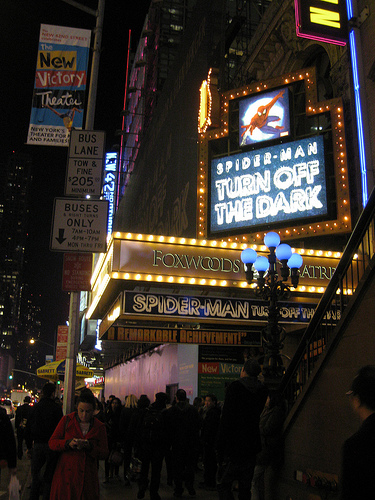
by Flickr user wynlok

Popular sites around the country went dark yesterday in protest of the pending SOPA/PIPA copyright bills — and you might think I’d write about that. But nah. Let’s talk about the ongoing saga of the musical Spider-Man Turn Off the Dark instead.

The musical began as a collaboration between Bono and The Edge from U2 and director/writer Julie Taymor (most famous for directing the stage version of The Lion King). Stories quickly began to emerge about trouble. Cast members were seriously injured, others quit before the show even opened.  The preview period (full, live performances during which the show may still be tweaked before it officially opens) was extended again and again. Comic book aficionados said the script bore little resemblance to the original story. OSHA issued safety violations. In an unprecedented move, theatre critics began to review the show before it opened. It was infamous and massively in debt. And one day, Taymor was fired.

With new writers and a new director, the show officially opened in June 2011 and has been doing steady business ever since. Over New Year’s it set a record as the highest-grossing Broadway production in history, raking in $2,941,794 in a week (nine performances). You’d think that producers would be doing the dance of joy. But no. They’re locked in a legal battle with Taymor.

Taymor filed suit against the show’s producers in November (Taymor et al. v. 8 Legged Productions, LLC et al.). She is suing for “willful copyright infringement and breaches of contract arising from their unauthorized and unlawful use of Taymor’s copyrighted written works in the current hit Broadway musical[.]” Just the other day, the producers counter-sued saying “Taymor refused to develop a musical that followed the original, family-friendly ‘Spider-Man’ story, which was depicted in the Marvel comic books and the hugely successful  motion picture trilogy based on them. Instead, Taymor, who admits that she was not a fan of the Spider-Man story prior to her involvement with the Musical, insisted on developing a dark, disjointed and hallucinogenic musical involving suicide, sex and death.” Ouch.

You can follow the suit and find the original complaint, answer and other documents on Bloomberg Law. (If you don’t have a login yet, see a Reference Librarian).

I’d like to buy the library a Coke.

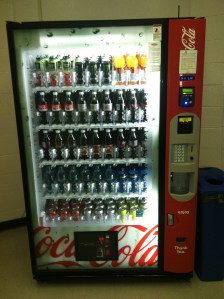
Coke machine in Law Library copyroom

Not really.

But you can buy yourself one with the arrival of the Law Library’s new Coke machine (not to be confused with a “New Coke” machine).  That is right, we have a Coke machine in the Law Library. Students no longer have the procrastination tool of  faking a cough and having to go to the bookstore or second floor vending machines to get something to drink.

The behemoth was rolled in the other day and in a couple of hours was ready to serve library patrons cold drinks.  Selections include  Minute Maid juice, Monster energy drinks, Vitaminwater, Powerade, Dasani water, and your traditional selection of Coca-cola sodas (Coke, Diet Coke, Cherry Coke, Mr. Pibb, and MelloYellow). Unfortunately there is no root beer, but we are working on that.

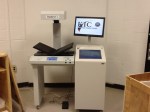
The Coke machine is located in the Law Library copyroom (UL 116).  Incidentally with the arrival of the Coke machine and imminent arrival of the new book scanner (to be explained in a later post), it may be time to rename this room as it will soon house one copier, one scanner, and one Coke machine. The term copyroom no longer seems accurate as the room is no more a copyroom than it is a scanroom or a drinkroom. Perhaps, the copy-scan-drink room?

With that being our best idea so far, we put it to you.  What should we call this bizarre, round, brick, room in the middle of the Law Library? The soda can? better yet… the soda scan? That is it. I give up.

Stop by the reference desk and make a suggestion or just find out when the next Library Abridged session will be hosted.

The Research Works Act

by Katie Ginnane

The Research Works Act, proposed December 2011, is new legislation introduced by Representatives Darrel Issa of California and co-sponsored by Carolyn B. Maloney of New York.  The crux of the legislation is to end the current requirement that research paid for by taxpayers be publicly available for free.  The government body most potentially affected by the legislation would be the National Institute of Health because of its policy of allowing public access; however, any other agency hoping to share the results of research gained through public funds would also be inhibited from doing so in the future.  The bill is currently being considered by the House Oversight and Government Reform Committee, of which Mr. Issa is the chair.

The bill’s support stems mainly from the Association of American Publishers.  These publishers argue that by publishing research results in their articles they had value and credibility to the research.  By allowing public access to the research results, they may be denied just compensation for publishing because of their peer review process.  The process assesses the research for validity and significance, and according to proponents of the bill, adds value enough to warrant charging for articles outlining the results.

The main opponents of the bill are the Scholarly Publishing and Academic Resources Coalition, the Alliance for Taxpayer Access and the American Library Association.  The American Association of Law Librarians opposes the bill as well.  The opponents of the bill protest that the research results are already public property because the research was paid with taxpayer funds.  In essence, according to opponents of the bill, individuals who would purchase the articles would essentially have paid for the research twice.  These organizations stress the importance of access to publicly funded research and would like to continue its availability to those individuals whose funds made the research available in the first place.

New Law Librarian of Congress

David Moa was recently named the new Law Librarian of Congress.  Moa will be the 23rd Law Librarian of Congress, taking over from Roberta Shaffer.  His appointment to the position is effective as of January 4, 2012.

Prior to being appointed to this post, Moa served as the Deputy Law Librarian of Congress since June 2010.   Before his time at the Law Library, Moa held positions at Georgetown University and the international law firm Covington and Burling.

The Law Library of Congress was established by the U.S. Congress in 1832 in order to provide legislators with convenient access to reliable legal materials.  The Law Library’s current collection of over 2.65 million volumes of primary and secondary sources makes it the world’s largest law library.  Most law students are probably familiar with THOMAS, an online resource produced by the Law Library of Congress that allows users to research and track legislation in Congress.

If you would like to find out more information about David Moa and the Law Library of Congress, check out the following sources:


And We’re Back

By Flickr user ToniVC

The winter break is over, and the law library is open for business once again. We have limited hours this week:

  • Jan. 3-6: 8 a.m. to 6 p.m. (with Reference until 5 p.m.)
  • Jan. 7&8: 10 a.m. to 6 p.m. (Reference closed).

We resume our regular hours on Jan. 9 when classes begin.

Exams Are Over, Now What?

Are you a little bummed out that exams are over and you don’t know what to do with all your free time? Since most of you have been sheltered away from the real world for the last 4 months, I will catch you up on some of the best activities to keep yourself busy over the winter break.

  1. Sleep:  It’s never a bad idea to catch up on a little lost sleep and try to build on sleeping habits that you can carry with you into the Spring semester.  You don’t have to make a 9am class anytime soon, so abandon the alarm for the next 2 weeks and get try to get 7-8 hours a night.
  2. Gym: The gym can be your friend.  Sweat your worries away and rejuvenate yourself in time for a productive second semester.
  3. Shop:  Don’t forget to pick up those last minute gift items for family and friends.  Fortunately, most people will not hold you to high expectations during law school….hence why most of my family and friends received “law school swag” during my 3 years of law school.
  4. Read:  Read?  Yes read.  Winter break is the best time to catch up on pleasure reading.  You aren’t bogged down with summer classes or work for an internship.  Plus, it’s always good to remind yourself that reading can be fun.   If you need a few ideas on what to read, check out the New York Times Best Sellers.
  5. Television:  You will have plenty of time to catch up on all of those shows you DVR’d over the last few weeks and discover your new favorite shows.   If you need a suggestion on new TV Shows, I would highly suggest “Person of Interest” and “Revenge.”  It is also college bowl season, so spend a little time kicking it on the couch and watching your favorite college team play in the “PizzaCarRandomWebsite.com Bowl.”
  6. Movies:  Yes, they are slightly expensive, but who can resist larger than satisfying Diet Cokes and free refill movie popcorn!  My picks for this winter break are “Mission: Impossible – Ghost Protocol,”  “Sherlock Holmes: A Game of Shadows,” and “Tinker Tailor Soldier Spy.”

If  you get tired of all these fun activities, just remember that the Law Library will be back open on January 3rd from 8am – 6pm.  Have a great winter break.

Quiet in the Library for Exams

The librarians  would like to share a few strategies we have identified that will help everybody focus and prepare for exams.

First, the librarians are going to make extra efforts to keep the library quiet.  This includes keeping our own noise levels down.

Typical Study Room, Typing Room #220, taken in 1926. Source: New York Public Library Visual Materials / Lantern Slides / Research Library / Typing

If you prefer quiet when studying, we have some guidelines and suggestions.

1) Use the back of the library (up the stairs or the ramp) as an extra quiet area.

2) If you would like a librarian to come and shush other library patrons in the designated quiet area, please ask at the reference desk or use the library’s chat reference service to better maintain your anonymity.

3) Borrow one of the new “Do Not Disturb” signs from the circulation desk–you can put it on the shelf in your study carrell as an indication that you’re trying to focus on your schoolwork.

4) If we can’t keep the ambient noise out of your head, please pick up some earplugs–sponsored by West–from the Reference Desk.

Of course, if you would like to use the library to study with a group of people, and you are looking for a place for your study group to be successful, please use our study rooms.  They are available for checkout for law students only, and you can reserve them online.  Study rooms are great if you want to outline together, talk through hypos, use a wipe board, or project your notes on the wall using the overhead projector.

We have three additional study rooms available for reservation during the exam period thanks to the Career Services Office.

Good luck with your exams!

Happy Thanksgiving!


Image by (V)oluntary (∀)mputation

Happy Thanksgiving from the College of Law Library! Although everyone hears about the first Thanksgiving, did you know that Congress didn’t officially establish the last Thursday in November as Thanksgiving Day until 1941? And not long after that another famous Thanksgiving event occurred – Arlo Guthrie’s arrest for littering, immortalized in song as “Alice’s Restaurant.”

Yes, it’s true. Alice exists. The restaurant and church existed (the church is now the site of the Guthrie Center, actually). And, on November 28, 1965, Officer Obie (a.k.a. William J. Obanhein) did actually arrest Arlo Guthrie for littering. You can even go up to Stockbridge, Massachusetts in May and see all of the sites on the annual “Garbage Trail Walk.”

Since the release of song detailing the events surrounding the arrest – and the subsequent film – listening to “Alice’s Restaurant” has become a Thanksgiving tradition for many Americans. Turn on the radio on Thanksgiving around noon, and you’re likely to hear it on at least one station.

And, just like the dump in the song, the library’s closed, of course – we reopen on Sunday, November 27th. In the meantime, we hope you’re all having an enjoyable few days off!


Relax With the Law: Ace Attorney Video Games

The Blackacre Times has already introduced you to a law firm which created a video game to give applicants an idea of what the practice of law is really like. But maybe you aren’t interested in reality. You just want to relax, point and click, and shout “Objection!” a lot. Allow me to introduce you to the Phoenix Wright: Ace Attorney series. As Phoenix “Nick” Wright, you are a rookie attorney, just entering the legal profession. Each game sees you interact with the police, wacky suspects, a clueless judge and ruthless prosecutors as you investigate and try several cases.

The series has proved incredibly popular over the past decade. The original game has spawned two direct sequels, two spin-offs, a team-up with the popular Professor Layton game series, a couple of manga books, and an upcoming live action movie adaptation. To say nothing of Nick’s recent addition to the Marvel v. Capcom line up (in one move, he literally throws the book at opponents).  Not bad for one attorney.

As a budding attorney yourself, it won’t take you long to realize that the game play bears little resemblance to the US trial system. In some part, this is because you are after all playing a video game, but  mostly it’s because the games originated in Japan. Although some references and settings have been localized for an English-speaking audience, the games still primarily reflect Japan’s legal system, which is a mix of the European civil law system, with some American elements thrown in recently. If you need a justification for playing a video game during law school, just say it’s helping you “study comparative law”.

The Phoenix Wright games are available for the Nintendo DS, Wii and, most recently, through the Apple store for your iOS devices.