Summer in the Law Library

As always, everyone at the law library is excited to welcome students for a new semester. At the same time, the end of the summer does have a certain bittersweet quality to it.

We always seek to create a calm and comfortable environment, but during summer, the library is often very quiet.[1] At the beginning of the summer, with the busy exam season in the rearview, I can definitely appreciate the chance to take a deep breath and relax in a peaceful environment. Of course, a few weeks in, I really start to miss the hustle and bustle of school year, but the stillness of the summer library is nonetheless worth commemorating.

 As you might imagine, fewer students means fewer patrons at our reference and circulation desks. This gives the reference librarians and our hardworking circulation staff time to work on projects that might otherwise reside on the backburner. It also gives us a nice opportunity to get to know our summer “regulars,” whether they are taking courses, studying for the bar, or researching an important project for their summer job.  This can make summer feel like a productive and fulfilling time, while also making me eager to meet a whole new class of amazing 1Ls, transfers, and LLMs.

Working in the law library, you get accustomed to these seasonal rhythms. The variety keeps things interesting! The quiet times also lead to more overall productivity, with better library services as a result. However, it’s worth remembering that everyone needs downtime, even attorneys and law students.

Here’s to the end of summer and the start of a new year.


[1] Do keep in mind that the 6th floor is always quiet!

Productivity Tips for the Upcoming Academic Year

office-work-1149087_1920 Although studying from home has its advantages, it also presents its challenges. The potential lack of structure, combined with the absence of social reinforcement and the presence of myriad distractions, can exacerbate the already-acute anxieties associated with law school’s heavy workload. Learning how to efficiently manage that workload should be part of any strategy to mitigate that stress. If harnessing the power of your smartphone to get organized sounds appealing, you may want to try productivity apps (all of the ones described here come in free and paid versions, and are available for iOS and Android.)

The first app to check off your list is a to-do list. The purpose is easy to understand for anyone who’s ever composed a grocery list: it helps you organize your most immediate tasks for action. As you complete action items, you virtually “check” them off, and they disappear from your list, giving you a nice little rush of positive reinforcement. My go-to to-do is Todoist. Its intuitive interface makes it easy to create tasks, break them into subtasks, and of course, check them off. In addition, the combo of voice integration and natural-language processing allows you to speak your tasks into your phone as they occur to you, which is valuable when you inevitably recall a critical but heretofore forgotten task while knocking out your household chores.

Next, you’ll want a dedicated note-taking app for creating and organizing notes and materials that won’t fit into a list format, such as class notes. In this category, I’m a fan of Evernote. It has excellent optical character recognition, allowing you to, say, take a picture of that maddening Pennoyer v. Neff case, annotate it during your WebEx lecture, and then search it all by keyword later in the semester when you’re pulling all of that personal jurisdiction material together for your Civ Pro outline.

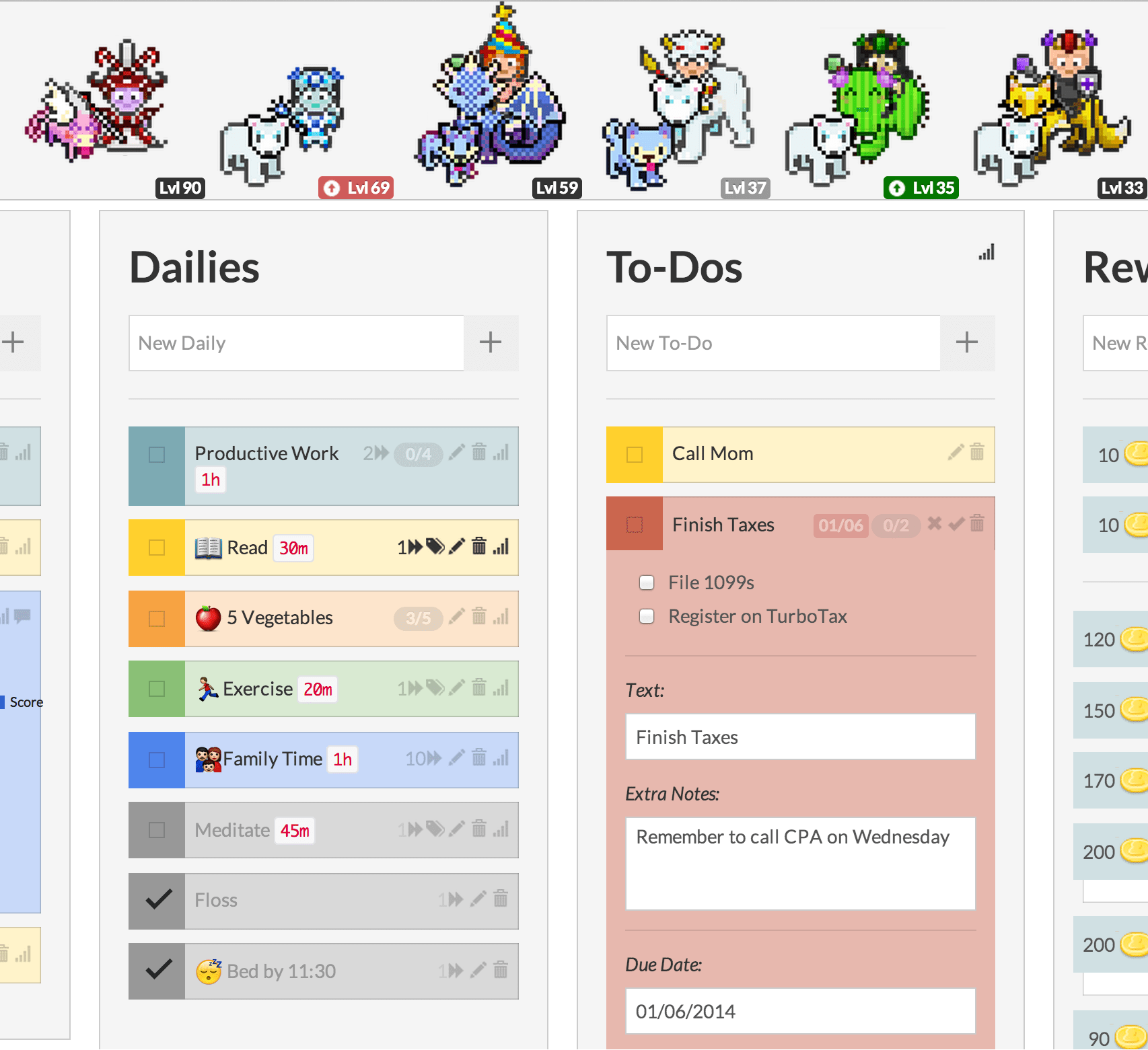
habitica screenshot

The final element in your productivity suite should be a habit tracker. Habit trackers, which are designed to directly incentivize your healthiest and most productive behaviors, really help to keep you on track in a world full of distractions and diversions. For its considerable fun factor, I like Habitica here, which gamifies your habitual behaviors and presents them as a SNES-style RPG. So, yeah, you can totally earn experience points, find some sweet magical armor, and slay dragons just by washing your dishes, wrapping up those Con Law readings, and getting your steps in.  It also allows you to create even more accountability by questing with your real-life friends (while maintaining social distance) in a party of habit-forming adventurers.

Are there any other productivity apps you find to be especially helpful in organizing your law-school life at home? Let us know in the comments.