Criminal Background Checks: Georgia Law

by Zain Haq

Georgia’s New (ish) Expungement Laws

Compared to other states in the country, Georgia has some of the strictest laws regarding expungement of criminal records. Arrests resulting in convictions can only be taken off your criminal record in very limited circumstances. This makes it extremely difficult for people who have committed even minor crimes to gain access to housing, employment, and education. That being said, Georgia has taken some big steps toward ensuring that those with criminal records have some recourse. This article will give you a brief overview of what can and cannot be taken off a criminal record. Moral of the story is this: Do your best to keep your record clean, because Georgia law is not very forgiving!

Employment

Record Restriction (aka Expungement)

Georgia’s new law, effective July 1, 2013, does not use the word “expungement.” Instead, the process is now referred to as “record restriction.” Restriction does not mean that your records are deleted or destroyed, but rather that criminal history information maintained by the GCIC is unavailable for all purposes except law enforcement and criminal justice. The GCIC (Georgia Crime Information Center) is Georgia’s state entity that manages and disseminates criminal record information. Record restriction ONLY impacts those records maintained by the GCIC, and does not affect records maintained by the Clerk of Court (this process is referred to as sealing, which is discussed later in this article).

Georgia’s record restriction statute is O.C.G.A. 35-3-37(h).  Automatic restriction usually only occurs if your arrest is not prosecuted. Generally, cases closed with no conviction qualify for restriction (including charges that are nolle prossed, dead docketed, and verdicts of not guilty).

It is important to note that while Georgia’s new restriction laws are a big step in the right direction, convictions still are not eligible for restriction (unless you are sentenced as a youthful offender or first offender, which is discussed below). This includes pleas of nolo contendere (no contest).

Restricting your record is only half the battle. Employers, housing authorities, and other interested parties do not usually go to the GCIC for criminal record information. Rather, they will go directly to the Clerk of Court to obtain court records. These records can only be disposed of by petitioning the court to “seal” the record.

Record Sealing

In order to seal your records and ensure that the Clerk of Court no longer disseminates information about your case, your records must first qualify for record restriction. O.C.G.A. 35-3-37(m) governs record sealing, and states that the petitioner must show the court that the harm suffered by the clerk’s record remaining public (denial of jobs, housing, licensing, etc.) outweighs the interest in the record being publicly available. Sealing your record is crucial to ensuring that arrests not resulting in a conviction are inaccessible by members of the public and other interested parties.

First Offenders

As previously stated, arrests resulting in convictions generally cannot be taken off your record. One exception to this is Georgia’s First Offender statute, 42-8-60 (also known as Georgia’s “second chance” law). If you are sentenced as a first offender and successfully complete your sentence, your record will not show a conviction, and your case will be sealed by an Order of Discharge. The intent of this law is to give first time offenders a second chance and allow them to move on with their lives without suffering the collateral consequences of a conviction.

To qualify as a first offender, you must have never been convicted of a felony in the past, and never have been sentenced as a first offender. Moreover, certain convictions preclude you from being sentenced as a first offender (DUI’s, serious violent felonies, sexual offenses, and child pornography charges). Receiving a First Offender sentence is not automatic. You or your attorney must ask the judge to be sentenced under the First Offender Act.

The sealing of your record pursuant to a first offender sentence is conditioned on your complying with the terms of your sentence. If you violate any of the terms of your sentence, or commit another crime, the judge can revoke your first offender status and convict you of the crime you were arrested for.

Youthful Offenders

The Youthful Offender law (O.C.G.A. 35-3-37) is another exception to Georgia’s rule against restriction of arrests that result in convictions. Certain misdemeanor convictions that occurred before you turned twenty-one years old qualify for restriction. To qualify as a youthful offender, you must successfully complete your sentence and you cannot have been charged with any other offense. There are a number of exceptions to the Youthful Offender law, mostly for serious traffic offenses and sex crimes.

Pardons

Lastly, pardons provide a method for those convicted of a felony to minimize the collateral consequences they face as a result of their conviction.  While a pardon does not take a conviction off of your record, it is an order of official forgiveness from the State, and may help in receiving employment, housing, licensing, etc. Pardons are granted by the State Board of Pardons and Paroles. In Georgia, less than 40% of pardon applications are approved.

To sum it all up…

Georgia has made some big changes to help those who arrested receive a second shot without suffering the severe consequences that come with having a criminal record. Unfortunately, those with convictions on their record are still facing an uphill battle when it comes to finding jobs, housing, licensing, and educational opportunities. While a good amount of progress has been made, there is still a long way to go.

 

Note:  This post is an update to 2012’s post on the same subject https://theblackacretimes.com/2012/03/20/criminal-background-checks-and-georgia-law/

Outlining 101

Worried about outlines? What are they? Should you write your own or use someone else’s? When should you start putting one together? The whole thing can seem overwhelming, but with just a few tips, you’ll be an outlining pro.

Although you may have outlined during your undergrad career, law school exams are much different than any other exam you’ve ever taken, so you need to adapt your outlines likewise. Throughout the semester, you learn the black letter law and concepts through case analysis. However, your exam will not be a resuscitation of this. Instead, most of your exams will include a fact pattern in which you will need to apply the legal principles you have learned to identify and analyze the situation in order to reach a legal conclusion.

Outlines are nothing more than a condensed, organized version of your notes. A good outline will include only those critical topics you will be tested on and should include relevant case law and statutes. You should not include every single word you wrote down, but should instead be a synthesized version of your notes, briefs, reading, and secondary sources in one document.

It is important to start outlining at the right time. If you start the first week of classes, it’s too soon. You don’t have a good enough grasp on the material to know what’s important and the substantive law. But if you’re thinking about waiting until the week before exams, you’ll find yourself struggling to remember the nuances from the first half of the course. The ideal time to start is after finishing a significant topic in the course. Try taking a look at your syllabus – professors often break the semester down into large subsections that they cover over a few weeks. Use this is a guide to setup your own outline.

What should a good outline look like? Well, it should be easy to read. Although that means different things to different people, the better ones usually have clearly defined sections, use bold or italics to emphasize definitions, caselaw, or statutes. Underlining and different font sizes and colors help draw the eye to specific topics. Make sure to include broad categories and then start to narrowly define them using various source elements.

business, learning, meetingNow to the great debate – should you create your own outline or use an existing one? To be honest, there are pros and cons to both methods. Creating your own will far and away provide you the best review of the course material. You will be forced to critically think about each topic in a logical and efficient manner, which is exactly what you want your mindset to be during an exam. However, the creation process can be time consuming and cumbersome, so many students find themselves resorting to using someone else’s outline from previous years. Upperclassman often share their outlines with 1Ls and many student organizations maintain outline banks. Although I would discourage relying 100% on an existing outline, if you have decided you just don’t want to do it yourself, take an existing outline and adapt it to what you’ve learned. Course material often changes from year to year, so a course outline from last year may not include all the same cases or material as this year. Ensure that you go through the outline line-by-line to make sure everything included is relevant. Also, don’t be afraid to add to it! Use your own sources to make it better or reorganize it in a way that makes more sense to you.
Lastly, make sure to constantly review your outline for missing elements and accuracy. Talk with other students in your study group or schedule some time with your professor to go over topics. This will provide an opportunity to not only review the material, but also to find gaps, misinformation, or just add clarity to your outline.

SaveSaveSaveSaveSaveSave

Let’s Get Clinical – experiential learning is an ABA requirement

By Colleen Hampton

It is that time of year, folks: time to consider experiential learning opportunities. The deadline for Spring 2018 Clinic and Externship opportunities is September 27th.  And if you started school in 2016 you are required to obtain at least six (6) credit hours of experiential learning (see ABA rule 303 a Curriculum, March 2015). Your required, 3 credit hour, Lawyering:  Advocacy class will get you part of the way there – but you must do more. Besides, who among us doesn’t want to get a taste of how the practice of law works in the real world?


Luckily GSU COL offers externships, clinics, and other courses designed to help you gain practical, real-world experience while satisfying ABA requirements. Here’s what you need to know about these opportunities:


What’s the difference between an Internship, Externship, and a Clinic?

Whether you are interested in an Internship, Externship, or Clinic one thing is for certain: you will gain valuable experience regardless of the avenue you choose. However, there are some important distinctions to consider when evaluating your experiential learning choices.

Internships – Internships are a fantastic way to gain skills and build your network. You are generally hired by a firm or agency, typically without pay (unless you are one of the lucky few to land a coveted, paid internship). Internship hours can vary from position to position and terms of your service can sometimes be negotiated to fit your schedule. Sounds great, right? Keep in mind internships are not for-credit, meaning you don’t pay tuition for the internship or get credit hours needed to satisfy the ABA requirement. In other words, internships are valuable in their own right and should be pursued, but an internship will not satisfy your experiential learning requirement.

Externships – An externship is a class that gives you the opportunity to learn from non-profit and government lawyers and judges. Because an externship is a class, you earn credit for your outside, hands-on learning experience and the class credit can help you satisfy the ABA experiential learning requirement. You will pay tuition for your externship (usually a three (3) credit hour course, graded pass/fail) and, if it’s your first externship, you have a one (1) credit graded classroom component in addition to your work hours. Speaking of work hours, externships require a minimum hour commitment spent working (generally ten (10) hours a week during the Fall and Spring semesters or twenty (20) hours a week during the summer semester). Externship site supervisors are required to give you feedback on your performance during your semester which enables you to learn and grow. Externships are a meaningful way to satisfy your experiential learning requirement.

Clinics – Clinics provide students the opportunity to work with and represent real clients, and to directly experience what it feels like to work as a lawyer while building their skills and professional identity.  Students have primary responsibility for the cases they handle in clinic, and work under the close supervision of their professor, who is both a clinical educator and a licensed attorney.  Enrolling in a clinic requires attendance in the clinic seminar, case rounds, and hours working on cases inside the clinic office.  GSU COL offers both in-house and off-site clinics to provide students with a variety of opportunities to grow their skill set. Clinics, like externships, are a fantastic way for students to satisfy their experiential learning requirement.


What is the difference between in-house clinics and other clinics offered at GSU COL?

GSU College of Law offers three in-house clinics: Health Law Partnership (HeLP) Legal Services Clinic, Investor Advocacy Clinic, and the Philip C. Cook Low Income Taxpayer Clinic. These clinics conduct business on campus and are supervised by professors of the College of Law. Additionally, the in-house clinics are graded where the off-site clinics are pass/fail.

Off-site clinic courses require a yearlong commitment (fall and spring).  Students attend a clinic seminar taught by an adjunct professor and perform their work at the external office location. Off-site clinics include Capital Defender Clinic, Landlord-Tenant Mediation Clinic, and Olmstead Disability Rights Clinic.


I’m a 1L, can I enroll in a Clinic or Externship?

Most experiential opportunities provided through GSU COL are only available to students who have completed their entire first year’s course work and have a 2.3 GPA. If you are a part-time student that means you must have completed your first two years of course work in order to be eligible. However, each experiential opportunity will have their own pre-requisites that must be satisfied in order to participate.


Where can I learn more about Clinics and Externships?

General Clinic website

HeLP Clinic

Investor Advocacy Clinic

Tax Clinic

Capital Defender Clinic

Landlord-tenant Clinic

Olmstead Disability Clinic

General Externship website 

Externship FAQ’s

Externship opportunities (sites)


What other courses satisfy the experiential course requirement?

All courses that satisfy the experiential requirement are designated as “E” courses in the schedule and the college of law bulletin.  “E” courses include clinics, externships, simulation courses, and others.  You can also find a listing of E courses here.


What are the deadlines for application to clinics and externships?

Applications for SPRING semester clinics and externships are due at 11:59 p.m. on Wednesday, September 27.

MPRE Sign Up

Thinking of taking the MPRE? Don’t wait, the deadline is soon approaching to sign up for the November exam! Don’t forget, the MPRE is required for admittance to the Georgia Bar.

WHAT IS IT?

The Multistate Professional Responsibility Examination (MPRE) is a two hour exam administered by ACT, Inc., on behalf of the National Conference of Bar Examiners (NCBE).  The examination is administered three times per year – in March, August, and November – and consists of 50 unscored and 10 scored multiple choice questions.  The purpose of the MPRE is to measure the applicant’s knowledge and understanding of established standards related to a lawyer’s professional conduct.

Image result for mpre

WHAT IS IT LIKE?

Not sure if you are prepared? Check out these sample questions to get a feel for what the test is like, and then head over to the Law Library to check out some study aids!

WHAT IS A PASSING SCORE?

The Georgia Board of Bar Examiners requires all applicants to take and pass the MPRE with a scaled score of 75 or higher, prior to the issuance of a Certificate of Eligibility for Admission to the Practice of Law.

WHEN IS IT?

The next exam will take place on Saturday, November 4, 2017. If you register before September 14, 2017, the registration fee is $95. However, if you miss this deadline, you can still register up to September 21, 2017, but will have to pay a late registration fee of $190.

Test Dates and Online Registration

HOW DO I REGISTER?

For MPRE Registration Information, go to www.ncbex.org.

GREAT, I’VE TAKEN IT! WHEN DO I GET MY SCORES?

MPRE scores a usually released within five weeks of the examination date and posted to your NBCE account. They remain available only under the next test administration, so make sure to access and save them as soon as they are posted.

Faculty Spotlight Series: Dean Lisa Bliss

How well do you really know the faculty at the COL? Maybe you heard stories from other classmates or maybe you have taken a few classes with a certain professor, but have you ever wondered what really makes them tick? Well, wonder no more! I’d like to introduce the Faculty Spotlight Series, a collection of posts that will highlight some of our faculty at the GSU College of Law. Every week, we’ll try to look beyond what you find on a biography page and delve into what truly drives our mentors and teachers.

We’re starting off the series highlighting Lisa Bliss, Associate Dean of Experiential Education and the Co-Director of the HeLP Legal Services Clinic.


LISA BLISS

How long have you been teaching at GSU? 

Since 2001.

What classes do you teach?

I teach Health Law Partnership (HeLP) Clinic I and II, and Interviewing and Counseling.

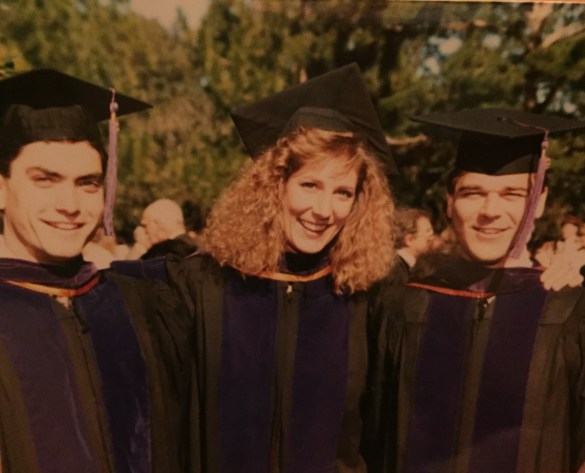
Dean Bliss (pictured top row, third from right).

What class would you like to develop if you could?

I would love to teach more courses on Interviewing and Counseling!  That course is a lot of fun for me and the students, and there is always more to learn and experience.  Someday I would also like to develop a course on Creative Problem Solving.

What do you most enjoy about teaching?

Being a lawyer is a very creative profession, although people do not usually associate being a lawyer with the notion of creativity.  I love the process of lawyering. As a clinical professor, I have the privilege of watching students develop their understanding of how to identify a client’s problem, generate potential solutions for it, and then put their ideas into action.  All of this happens in the clinic in the context of real cases.  The clinical learning experience is transformative, and I have a front row seat to that transformation every semester.  As we work closely together on cases, I see students meet their clients, perform research, write briefs or other documents, and represent clients at hearings.  I watch students develop their skills and confidence, and by the end of the experience they see themselves differently.  They see themselves in the role of lawyer.

What type of law did you want to practice when you were in law school?

I had a “lightening bolt” moment when I knew exactly what I wanted to do:  I was sitting in my civil clinic seminar watching my professor debrief something with the class.  I was completely mesmerized by the depth of examination of what we were learning and doing, and what those decisions and actions meant for the case and the client.  We were fully examining the process of lawyering.  It was at that moment that I realized that I wanted to be a clinical professor.  I am so lucky to be here now doing a job that I dreamed of having, and to have had such a wonderful role model and mentor.

Dean Bliss (center) graduating law school.

What did you end up doing before you came to GSU? 

In order to become a clinical professor, one must understand and experience the practice of law.  I worked for several years for a mid-sized litigation firm doing toxic tort litigation, trucking accidents, and a few very high-end divorce cases.  I then had a chance to teach with my former clinical professor, so I did that for two years.  My husband and I decided to move back to Atlanta, and I served for a few years as Deputy Director of the Atlanta Volunteer Lawyers Foundation, where I consulted with lawyers handling pro bono cases, and ran the Saturday Lawyers Program.  After our daughter was born, I went to work part time for a small litigation boutique where I handled a small caseload on variety of matters.  That was a lot of fun.  Because I had a lot of experience at that point, I got to work on some really interesting cases.  I left there to come to GSU, where I started teaching in the legal writing program.  Ten years ago, I was hired to develop and teach in the HeLP Clinic when GSU received a grant to start that clinic.

What is your favorite piece of advice for students? 

Being a lawyer is a lifelong process of learning and accumulating experiences to apply in the future.  Often our most memorable lessons come from our mistakes.

Is there any aspect of the legal profession you would like to see changed? 

There are so many people that need legal help that cannot afford or access it.  I would like the profession to fully commit to ensuring that legal help is available for those who need it.  Getting that kind of assistance can make a difference in a person or family’s housing, education, health, status, and other matters that contribute to quality of life and ability to access resources.  Those who are vulnerable are taken advantage of and are often unable to pursue or enforce their rights because they don’t have a lawyer to help them.

Any fun story that you’d like to share?

When our daughter was six, I drove to New Mexico and Colorado with her by myself in our VW camper van while my husband had to stay behind for work.   We camped everywhere.  We visited some very remote spots (some roads so rocky we did not think we would be able to drive out!) and one night when we were in Texas a scary storm came through.  We had lots of fun living out of our van, visiting a friend, and meeting people along the way.  I had been doing this for a couple of weeks when we ended up camping next to two state troopers from Arizona.  They saw that I was a single woman traveling with a child and made some assumptions about us.  They kindly kept trying to help me with my equipment and such, which I thought was very funny, because I had been doing it for weeks all on my own.  That trip was a great experience for me, and something I hope our daughter will remember as an empowering thing we did together.  Just to be sure she would remember, I forced her to write a sentence or two in our journal every night, promising her that she would thank me as an adult!

De-stress with GSU Law Library’s Leisure Section

naturally-de-stress


By Colleen Hampton

Whether you’re looking to de-stress over a weekend or binge watch something over a vacation, the Law Library’s Leisure Section has what you need. With exams looming in the not too distant future you may need a break from the constant studying and outlining.  You are studying and outlining already, right?

Either way, the Library has a fun leisure section stocked full of TV shows and movies for your viewing pleasure:

TV Shows:

Criminal Minds – Because all investigations should be solved in 40 minutes.

Matlock – Who doesn’t love this Southern do-gooder? Sure, it’s a little dated but think of it like a time capsule to the land of shoulder pads and wide-leg suit pants.

Perry Mason – For the lover of black-and-white-era television you can’t go wrong with this legal drama. Besides, Mr. Mason somehow manage to get only innocent clients making this show a statistical anomaly worth watching.

The Closer – A Southern chocoholic who breaks bad guys with her logic and reasoning? Why not!

West Wing – Because maybe a fictional President is what we need right now.


And for the more serious among us there are even Documentaries:

Hot Coffee – Which challenges what you think you know about tort reform.

How to Die in Oregon – An in-depth look into the controversies surrounding medical aid in dying.


Light-hearted Movies:

My Cousin Vinny – Regarded by some as the best legal movie of all time, My Cousin Vinny details one lawyer’s difficulty in navigating down-home justice.

Legally Blonde – When you want to believe law school can be as easy as Reese Witherspoon makes it look.

1776 – Before there was Hamilton the Musical there was 1776. Yes, it’s a musical and yes it’s cheesy but if you are in the mood for musical theater you can’t go wrong with this choice.

The Rain Maker – Because who doesn’t love to see a lawyer go after a big, bad insurance company?

These are just some of the many titles available at the Law Library.

Let’s face it, law in real-life involves some dull mechanics (I’m talking about you, Civil Procedure). If you need an escape, look no further than the Law Library’s Leisure Section.

Finding Your Fit in a Student Organization

Most everyone entering law school has heard of Moot Court, Law Review, and Student Trial Lawyers Association (Mock Trial), but there are other organizations that get far less attention. The plethora of student organizations chartered at GSU COL give students the opportunity to be actively involved in issues they plan to practice in later and/or that they care about on a personal level. Membership dues range from $0 – $65, with most being in the $10 range. The student organizations host a variety of events (usually with a free lunch included), where professionals ranging from doctors, social workers, attorneys, and judges speak to our students, giving them information that may impact their future legal careers. Generally, you never have to be a paid member to attend an event, but membership will usually come with voting rights, and possibly in a priority position to get information.

This time of year, many organizations are accepting names to be placed on the ballot for the following year’s executive board positions. Get involved. Use the summary of the organizations below to decide where you will enjoy being active and seek out opportunities! Good luck.

STUDENT ORGANIZATIONS BASED ON AREAS OF LEGAL PRACTICE
AMERICAN CONSTITUTION SOCIETY
ACS seeks to promote a progressive view of the Constitution that advances values like compassion and decency in American law.
Facebook Page:  https://www.facebook.com/pg/GSUACS/about/?ref=page_internal
BUSINESS AND LAW SOCIETY
To foster a broad understanding of business issues facing attorneys today. To focus on the interest of JD/MBA candidates, providing an introduction of business issues that affects the careers of business and law students.
Facebook Page:  https://www.facebook.com/groups/632410446936808/
CRIMINAL LAW SOCIETY
CLS seeks to promote interest and education in the field of criminal law by providing opportunities to learn through panel discussions and guest speakers
Facebook Page: https://www.facebook.com/GSUCriminalLawSociety
ENVIRONMENTAL LAW SOCIETY
Seeks to provide a forum for law students to explore the field of environmental law, a network of students and professionals to support professional growth.
Facebook Page:  https://www.facebook.com/groups/632818390230354/
ESTATE PLANNING AND WEALTH MANAGEMENT LAW SOCIETY
EPWM exists to educate, inform, and connect students with the professional community practicing in the areas of Estate Planning, Probate, Trusts, Wills, and related Tax Law.

The EPWM seeks to provide resources for students interested in achieving employment in these legal fields and non-legal professions related to such fields, as well as, working closely with the professional community in these areas to build a stronger bond between it and Georgia State University students.

FEDERALIST SOCIETY
To embrace the principle that the state exists to preserve freedom, the separation of governmental powers is central to the integrity of the Constitution, and that it is province and duty of judiciary to say what the law is and not what is should be. To promote an awareness of these principles through activities.
Facebook Page:  https://www.facebook.com/groups/1533019816912668/
Website: https://orgsync.com/24772/chapter
FAMILY LAW SOCIETY (host of COL book swap page)
The organization is dedicated to creating awareness about legal issues relating to family law including but not limited to traditional families, mixed families, marriages, divorces, adoptions, domestic violence, family courts, and attorneys. Our primary focus is on the unique role of the legal profession within a societal context. The organization will create awareness through the creation and incorporation of educational materials, speakers, and affiliations with other organizations. Members will have the opportunity to expand their knowledge on the various family law topics and interact with legal professionals in dealing with family law.
Facebook Page:  https://www.facebook.com/groups/GSULawBookExchange/
IMMIGRATION LAW SOCIETY
Immigration Law Society (ILS) is committed to increasing awareness of immigration law within the GSU College of Law, providing support to law students interested in the practice of immigration law, and providing support to Atlanta’s immigrant community.
Facebook Page: https://www.facebook.com/groups/319286581582802/
INTELLECTUAL PROPERTY LAW SOCIETY
Provide members with opportunities to network with practicing IP attorneys. To learn more about Intellectual Property art and technology issues, and also provide a forum for students to work together to build their legal careers.
Facebook Page: https://www.facebook.com/gsuIPLS/
INTERNATIONAL COMPARATIVE LAW SOCIETY
To promote the study of international law and legal topics such as international human rights, state-to-state relations, and international business issues. To strengthen ties between its students members and the legal community
Facebook Page: https://www.facebook.com/groups/118183328632971/?ref=bookmarks
LABOR AND EMPLOYMENT LAW SOCIETY
The Labor & Employment Law Society’s (LELS) mission is to allow law students to network with one another, increase their exposure to labor and employment law practitioners, develop their knowledge of current labor and employment law issues, and share information among members regarding career opportunities.
Facebook Page: https://www.facebook.com/LELSGSU/?hc_ref=SEARCH&fref=nf
LAW STUDENTS FOR REPRODUCTIVE JUSTICE
Committed to educating, organizing, and supporting pro-choice law students to ensure that a new generation of lawyers will be prepared to successfully defend and expand reproductive rights.
Facebook Page: https://www.facebook.com/groups/164795878048/?fref=nf
PUBLIC INTEREST LAW ASSOCIATION (host of Annual PILA Auction and Outline Bank)
To educate students and the public at large about public interest law issues and seeks to promote the goals of public interest law in protecting the public rights.
Facebook Page: https://www.facebook.com/groups/GSUPILA/?fref=nf
Website: http://auctionchairpila.wixsite.com/pilaauction
SPORTS AND ENTERTAINMENT LAW SOCIETY
To promote law school and its students in the Sports and Entertainment network in Atlanta. To provide information to our members concerning different opportunities in the Sports and Entertainment law field.
Facebook Page: https://www.facebook.com/groups/854225408012541/
STUDENT CHAPTER OF THE ANIMAL LEGAL DEFENSE FUND
The Animal Legal Defense Fund’s mission is to protect the lives and advance the interests of animals through the legal system. ALDF accomplishes this mission by filing high-impact lawsuits to protect animals from harm, providing free legal assistance and training to prosecutors to assure that animal abusers are punished for their crimes, supporting tough animal protection legislation and fighting harmful animal protection legislation, and providing resources and opportunities to law students and professionals to advance the emerging field of animal law.
Facebook Page:  https://www.facebook.com/groups/830946793604431/?hc_ref=SEARCH
Website (National Chapter): www.aldf.org
STUDENT HEALTH LAW ASSOCIATION
To provide an organization for students with a legal interest in the healthcare field. Any student who is interested in health law issues, opportunities, and programs is encouraged to join.
Website:  http://gsu.orgsync.com/org/studenthealthlawassociation23861/home
STUDENT ORGANIZATIONS BASED ON DIVERSITY
ASIAN AMERICAN LAW STUDENTS
To foster and improve ties between Asian American Law students and Members of the Asian American Bar and Bench and the legal community as a whole. To foster an environment conductive to the continued advancement of Asian American law students and to ensure their success as future attorneys.
Facebook Page:  https://www.facebook.com/groups/GSU.AALSA/?hc_ref=SEARCH
ASSOCIATION OF WOMEN LAW STUDENTS
To show concern about the under representation and lack of parity of women in the legal profession.
BLACK LAW STUDENTS ASSOCIATION (host of the annual mock contract exam)
To articulate and promote the professional needs and goals of black law students while seeking to influence the legal community to bring about meaningful change to meet the needs of the Black community.
Website: http://gsu.orgsync.com/org/nblsa
CHRISTIAN LEGAL SOCIETY
Mission is to maintain a vibrant Christian Fellowship on GSU’s College of Law campus which enables our members to love the Lord with our whole beings– hearts, souls, and minds– and to love our neighbors as ourselves.
Facebook Page:  https://www.facebook.com/groups/gsucls/
JEWISH LAW STUDENT ASSOCIATION
Facebook Page:  https://www.facebook.com/JLSAGSU/?hc_ref=SEARCH
LATINX AND CARIBBEAN LAW STUDENT ASSOCIATION
To play an active role in the furthering of Hispanic awareness and interests within the GSU College of Law and the legal community.
Facebook Page:  https://www.facebook.com/LCLSAGSULaw/?hc_ref=SEARCH
MUSLIM LAW STUDENT ASSOCIATION
Facebook Page:  https://www.facebook.com/groups/GSUMLSA/?fref=nf
NATIONAL LAWYERS GUILD
The National Lawyers Guild (NLG) was founded in 1937 as an association of progressive lawyers and jurists who believed that they had a major role to play in the reconstruction of legal values to emphasize human rights over property rights. The Guild is the oldest and most extensive network of public interest and human rights activists working within the legal system.
EMAIL: nlgatgsu@gmail.com
OUTLaw (formerly Lesbian and Gay Law Students Assoc.)
To support lesbian, gay, bisexual, and transgender (LGBT) law students and allies at Georgia State University by encouraging personal, social, professional, and academic development through a safe and supporting space and atmosphere, a sense of community, networking opportunities, advocacy and education.
Facebook Page:   https://www.facebook.com/OutlawGA/
PARENTS ATTENDING LAW SCHOOL
Connecting GSU law student and alumni parents and parents-to-be.
Facebook Page:   https://www.facebook.com/groups/407962166070001/
STUDENT ORGANIZATIONS BASED ON NETWORKING
JAMES OGLETHORPE LEGAL SOCIETY
The Oglethorpe Legal Society is a group of Students and Alumni who seek to interact together and promote fellowship between Students of the Georgia State College of Law and The State Bar.
Facebook Page:  https://www.facebook.com/groups/OglethorpeLegalSociety/
PHI ALPHA DELTA – Russell Chapter
PAD is a professional fraternity and its mission is to form a strong bond uniting students and teachers of law with members of the Bench and Bar in fraternal fellowship designed to advance the ideals of liberty and equal justice under law.
Facebook Page:  https://www.facebook.com/groups/1725837767680045/
Website (national chapter): http://www.pad.org/home
STUDENT BAR ASSOCIATION (host of Barrister’s Ball and other off-campus student events)  
SBA serves the student body by acting as an advocate of all academic concerns, a promoter of student life, and a coordinator of all those peripheral functions that are integral to the achievement of academic excellence.
Facebook Page:  https://www.facebook.com/GSUSBA/
Website: https://insidelaw.gsu.edu/sba/

The Online Reading Room: Professor Insight

By John Evans

Have you ever sat down to write a take home exam and wondered what your professor actually thought about the subject? Or had a professor make a side comment about an issue they clearly care about but goes well beyond the scope or depth of the class? Well for you, the more curious law students (if you have some time on your hands), I have an answer.

The Reading Room.

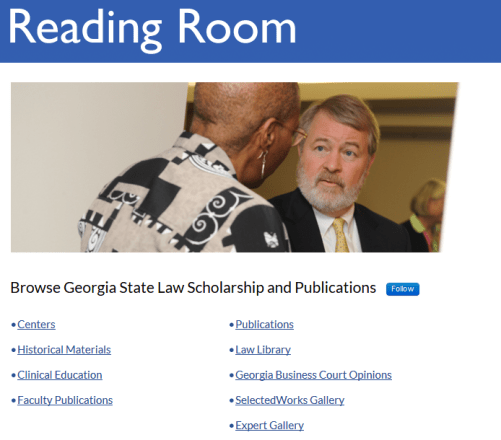
The Reading Room is an institutional repository which seeks to be a comprehensive collection of the works written by GSU Law faculty. In the Reading Room, each professor has their own page listing their published works. The works are separated into categories based on type of publication.

reading-room

If you just want a quick glance at the professor’s opinion, look for the popular press section. This section contains newspaper articles and blog posts, which should give you an introduction to the topic.

If you are interested in a little more treatment of the topic, head to the “article” section. For most professors, the bulk of their publications are in the “article” section – publications in law reviews and law associate journals. Items in this section are meant for a more learned audience, so it will require a bit more time.

If your appetite can’t be satisfied by a few dozen pages or want more diversity in opinion, check out the “contribution to books” section. Here you will find works where the GSU professor wrote only a portion of a book.  If you want to really get into your professor’s head, look for the full books section – you can access these items in the library.

So you have found a piece of writing that fits your needs, so what’s next? Each work in the Reading Room, has its own bibliographic page with a treasure trove of information. If you are really short of time, simple reading these titles in aggregate can paint a picture in your head of the professor’s opinions. You will also find the citation for the work in order to help you find it.

As we all know, openfinding sources, even with the citation, can be difficult. The Reading Room again comes to our rescue. For most writings, especially those in the article and popular press sections, the reading room provides a link to the text of the writing. For an increasing number of  works, there is also a full text PDF. Currently the library is working on obtaining permission to post full text of as many of the works as possible.

So next time you are starting a research project and want to know what your professor has to say, come and check out the Reading Room.

Inauguration Facts!

by Veselin Simonov

Image by Flickr user The British Library. Originally appeared in “The Household History of the United States and its people”, Macmillan & Co, 1889.

Recently, the United States witnessed the inauguration of its 45th President – Donald J. Trump. Inaugurations are festive events and they never fail to make history. Here are some fun historical facts about past presidential inaugurations!

  • Constitutional guidelines about the presidential inauguration only include the date and the oath. Everything else has developed as a matter of tradition and technically isn’t legally required.
  • In 1801, Thomas Jefferson was the first to be inaugurated in Washington, D.C. after the city was designated as the fledgling nation’s permanent capital.
  • Jefferson is also the one that started the tradition of the inaugural parade after he rode to the Presidential House from the Capitol when mechanics from the Navy Yard started following him in celebration.
  • In 1865, Abraham Lincoln was the first President to invite African Americans to the inaugural parade.
  • Andrew Jackson’s 1829 public reception drew 20,000 people and the White House was so crowded, Jackson had to escape through a window.
  • While we’ve just inaugurated our 45th President, only 44 men have held the job – Grover Cleveland is counted twice due to his non-consecutive terms in office.
  • The shortest inaugural address: George Washington, 135 words. The longest inaugural address: William Henry Harrison, 8455 words (clocking in at almost 2 hours!).
  • In 1861, the only float in Lincoln’s inaugural parade was one symbolizing the Constitution and the Union. It was clad in red, white and blue with a small girl symbolizing each of the 34 states, even those that seceded.
  • In 1969, Richard Nixon’s inauguration limited the number of military units present to appear less hawkish.
  • Calvin Coolidge was sworn in by his father – a justice of the peace – rather than the Chief Justice, as tradition usually dictates. This is because he wasn’t elected – he took over the presidency after Warren G. Harding’s death.
  • If a presidential term begins on a Sunday, the President will take the oath privately that day and then repeat it at a public ceremony the next day.

Source: White House Historical Association

If These Walls Could Speak – a Brief History of the U.S. Supreme Court Building

by Veselin Simonov

OLYMPUS DIGITAL CAMERA

Image by Flickr use Matt Wade

Lawyers and law students stand in awe of the Supreme Court of the United States. We reverently refer to it as “the Court”. We pick and choose the justices we like and agree with. We read the cases and treat the rulings as powerful and definitive. We argue over the Court’s role in our democracy but even during our debates we cannot overstate its importance to our society. The power of judicial review makes the Court the ultimate authority on saying what the law is. The Court is the nation’s heart of judicial power and such a powerful institution doesn’t come without its fair share of fascinating history.

5554035521_899ffc8f87_b

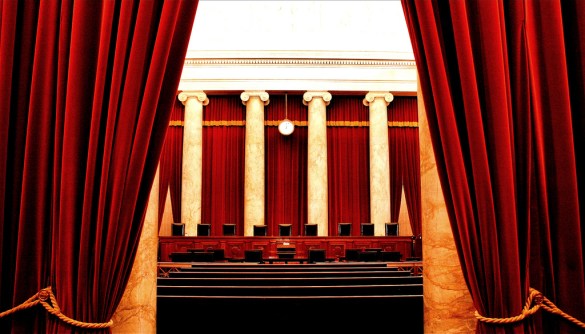
The courtroom. Featuring the pillars made of Sienna marble. Image by Flickr user Phil Roeder.

Take the building the Court meets in, for example. Surprisingly, it’s relatively new – the Court didn’t get its own building until 1935 after existing for 146 years. At the very beginning, the National Capital was located in New York and the Court met at the Merchants Exchange Building. The Capital then moved to Philadelphia in 1790. There, the Court convened first in the State House (Independence Hall) and then in City Hall. Ten years later, the Capital moved again, this time to its permanent home in Washington, D.C. and the Court had no building of its own in which to convene. Congress thus offered the Court space in the Capitol Building. This started a period during which the Court would move several times around the Capitol Building. This ended when the British set fire to the Capitol in the War of 1812 and the Court was forced to meet in a private home until 1819. Once the Capitol was restored, the Court moved back in and met in a chamber now known as the “Old Supreme Court Chamber” until 1860. Then, the Court relocated to what is now known as the “Old Senate Chamber” until it finally moved into its own building in 1935.

The new building’s chief proponent was Chief Justice William Howard Taft (yes, that William Howard Taft – President Harding appointed him to the bench eight years after Taft finished his term as the 27th U.S. President). Taft convinced Congress to stop housing the Court in the Capitol Building and give it its own place. To that end, Cass Gilbert was chosen as the lead architect. Tragically, neither Gilbert nor Taft would live to see the building completed and the construction of their vision was finished under the direction of their successors. On October 13, 1932, Chief Justice Charles Evans Hughes spoke as the cornerstone was laid. His words were “the Republic endures and this is the symbol of its faith.”

Construction was complete in 1935 and the Court held its first session there on October 7 of that very year. The building incorporates several different types of marble. The main facade is made of Vermont marble while the inner courtyards consist of Georgia marble. The marble for the main courtroom’s 24 columns comes from Sienna, Italy – as per Gilbert’s exact directions. The building currently houses the Great Hall, the courtroom, the reading rooms and chambers of the justices, an exhibition hall, a gym, a basketball court (aptly named the Highest Court in the Land) and much more.

Not everyone was thrilled with the opulence of the structure. Associate Justice Harlan Fiske Stone called it “almost bombastically pretentious…wholly inappropriate for a quiet group of old boys such as the Supreme Court.” Another justice supposedly said the justices would be “nine black beetles in the Temple of Karnak.” Yet another justice humorously suggested that they should ride into the building on elephants. Remarkably, the opulent building came in $94,000 under budget, costing around $9.6 million in 1935 terms ($169.5 million in modern terms).

Concerns over the building’s extravagance aside, the Court finally had a home of its own – a place not only for the justices to decide cases, but a building symbolic of the judicial authority of the U.S.

5554026789_38db3cb3ca_b

The Great Hall. Image by Flickr user Phil Roeder.