Dean Johnson Inducted Into Law Librarian Hall of Fame

With throngs of Georgia State University Law Librarian, both past and present, cheering in appreciation, Nancy Johnson was inducted into the American Association of Law Libraries (AALL) Hall of Fame at the 2011 AALL Annual Meeting and Conference.  The Georgia State University Associate Dean for Library and Information Services and Professor of Law is part of the 2011 class of hall of fame inductees and joins other  pioneers and leaders of the profession.

Librarian Johnson in the Rare Book Collection

Johnson built the Georgia State Law Library collection from the ground up.

The following announcement is from the June issue of AALL Spectrum:

Nancy P. Johnson, associate dean for library and information services and professor of law, Georgia State University, has been active nationally in AALL and especially the Academic Law Libraries Special Interest Section (ALL-SIS). On the local level, she has been active with the Atlanta Law Libraries Association (ALLA) and the Southeastern Chapter of the American Association of Law Libraries (SEALL), serving as president of ALLA in 1990-91 and of SEALL in 2003-04. She was chair of the ALL-SIS in 1992-93 and served as Special Interest Section Council chair in 1993-94. She was a member of the AALL Executive Board in 1996-99 and chaired the AALL Economic Study Advisory Committee on Law Book Pricing, for which she received a Presidential Certificate of Appreciation in 2001. In 2009 she was honored by the ALL-SIS with the Frederick Charles Hicks Award for Outstanding Contributions to Academic Law Librarian ship, and in 2010 she received the SIS’s award for best article of the year for “What First-Year Students Should Learn in a Legal Research Class,” published in Legal Reference Services Quarterly.

Johnson’s strengths can be seen in her writing, her teaching responsibilities, and her support as a mentor. She has guided many former staff members to new positions as directors and associate directors in law libraries. She has spoken at and has served as a moderator at AALL Annual Meetings as well as SEALL and CALI programs. She was one of the early founders of CALI’s Legal Research Community Authoring Project, which reached a milestone in 2010 with 100 legal research lessons. Georgia Legal Research, co-authored with Elizabeth Adelman and Nancy Adams, is the definitive publication on the subject. Sources of Compiled Legislative Histories has been published with regular updates since 1979 and is now available on Hein Online. Johnson has been a co-author of Legal Research Exercises, most recently with Susan Phillips, since 1986.

Congratulations Nancy. It is well deserved.

Librarians Leave for the Birthplace of Liberty/Cheesesteaks

Each year, law librarians from around the country — and even the world on occasions — gather for the American Association of Law Libraries (AALL) annual conference. This year’s conference is taking place in Philadelphia from July 23-26. Six of the GSU law librarians will be attending this year. In addition to the general agenda of training, meeting with colleagues and gathering new ideas to enhance our services,  each librarian is playing a slightly different role in the conference.

  • Nancy Johnson will be inducted into the AALL Hall of Fame, which recognizes members whose contributions have been “significant, substantial and long-standing”.
  • Pam Brannon and Deborah Schander may — or may not — be speaking in an improvisation-style session. If their names are selected from a hat, they’ll be speaking using a Powerpoint slide set they’ve never seen before.
  • Trina Holloway is participating in a special workshop on electronic resource management software.
  • Meg Butler is presenting her new paper on teaching pedagogy, which won one of the categories in the 2011 AALL/LexisNexis Call for Papers competition.
  • Austin Williams is participating in a pre-conference training session for new librarians.
  • And the whole group will be recognized for their winning “Day in the Life” photo, which depicts the evolution of library technology.
“But yes,” you say. “Have fun sitting in meetings and eating cheesesteaks. What about us?” Two of our librarians, Terrance Manion and Qian Cui, will still be here to help you. And our Reference Desk will still be open 9-5 each day, with help available in person and via chat and phone.

Civ Pro Case Study: Deities

If you’re a follower of the career of Malcolm McDowell, then you probably know about his upcoming movie, Suing the Devil.

You might find this premise a little familiar for a couple of reasons. For those of you who haven’t taken Civil Procedure, you may be familiar with either the short story or film version of The Devil and Daniel Webster. For those of you who have taken Civ Pro, then you’re probably reminded of another case brought against Satan, United States ex rel Mayo v. Satan & His Staff, 54 F.R.D. 282 (W.D. Pa. 1971). The opinion in that case is a civil procedure classic, in which the district judge denies the plaintiff’s prayer to proceed in forma pauperis due, in part, to a lack of personal jurisdiction and proper service of process.

In that case though, as opposed to the movie, no one showed up as counsel for the defendants. This can be contrasted with another, more recent case, Chambers v. God, No. 1075 (Neb. D. Ct., Douglas Cty., Oct. 14, 2008). In this case, Nebraska State Senator Ernie Chambers sued God in state district court, seeking a permanent injunction preventing God from continuing to “cause harmful activities.” The final order to dismiss is was posted online by Slate, but what are more interesting are the documents mentioned in the order: three answers filed on behalf of God and a special appearance, all filed in September 2007. Luckily for us, the Civil Procedure & Federal Courts Blog posted the original petition, all three answers, and the special appearance, which are a wonderful read for just about anyone, although only lawyers and law students may really appreciate the invocation of the doctrine of unclean hands.

CALI Lessons on the iPad

How many tiBlack Angry Birdmes have you caught yourself catapulting angry birds across your iPad thinking, “if only CALI lessons were not in flash and available for the iPad, I could be having just as much fun while learning secondary considerations used in assessing the nonobviousness requirement in patent law.”

Well that time is almost here.

Starting in the fall CALI lessons will be available to students with mobile devices such as iPads and iPhones. The new viewer dubbed CALI 5 uses HTML and Jquery to bring their library of lessons to mobile devices. For more information visit the CALI website announcement.

Faculty can preview the iPad-iPhone compatible viewer over the summer. To learn more about the new viewer faculty can register for an upcoming webcast: New lesson viewer webcast on July 12.  Also faculty can view a CALI conference session on the CALI 5 viewer.

Going Back to CALI

Today is the first day of the CALI conference for Law School Computing.  The conference is being hosted at Eckstein Hall, the new home to Marquette University’s Law School  (which was designed by the same architects the College of Law worked with during the pre-design phase of our new building).  I imagine as I type this law school technologists, librarians, faculty and administrators from around the U.S. are discussing law school technology on the shores of Lake Michigan while drinking beer,  and eating sausages.

CALI Conference Logo

CALI (the Center for Computer-assisted Legal Instruction) is best known by law students for their library of interactive, computer-based lessons. The CALI library of lessons is a collection of over 851 lessons covering 33 legal education subject areas. They are interactive tutorials written by law faculty to supplement traditional law school instruction. The format of the exercises varies according to the authors’ objectives.  The Georgia State Law librarians have authored several legal research lessons including:

  • Georgia Legal Research–Primary Source Material
  • Georgia Legal Research – Secondary Source Materials
  • Copyright and Trademark Legal Research
  • Mastering Looseleaf Publications
  • Forms of Federal Statutory Publication
  • Researching Federal Legislative History

Information on how to access CALI these and other lessons can be found here

Students may also know CALI for the awards they give out at the end of each semester.  The CALI Excellence for the Future Award is given to the highest scoring student in each law school class at many law schools including Georgia State Law. Past award winners can be found here.

In addition to the more visible lessons and awards, CALI is engaged in a number of interesting and forward-looking initiatives to better facilitate the teaching of law.   eLandell is  a new model for law school casebooks, namely electronic casebooks that better lend themselves to ebook and iPad users.  Classcaster is a blogging and podcasting solution to help faculty supplement their lectures. Free Law Reporter publishes nearly all appellate and supreme court opinions.   We recommend that you explore all of CALI’s resources.

What you may not know is how involved Georgia State College of Law has been in CALI.  As mentioned above Librarians have contributed significantly to the library of lessons.  Technologist and librarians presented at CALI every year for as long as I can remember.  This year Librarian Pam Brannon is presenting case management technology to better support faculty research.  Prof. Patrick Wiseman currently serves on the CALI Board of Directors.  Finally not one, but two Georgia State Law faculty members received the CALI Excellence in Service Award:  Dean Nancy Johnson and Prof. Patrick Wiseman.

If you are interested in viewing this year’s sessions you can do so online or if you are interested in exploring what all CALI has to offer you can get the Georgia State Law activation code here.

Auction Yields $232,246

The United States Marshals Service recently held an online auction (May 18 to June 2, 2011) for some personal items owned by  Theodore Kaczynski, also known as the Unabomber.   The purpose of the auction was to raise money to compensate Kaczynski’s victims.  In all, the auction was able to raise $232,246.  The items auctioned ranged from a typewriter, handwritten papers, and Kaczynski’s infamous hooded sweatshirt and sunglasses.

Pictures of all items auctioned

Kaczynski plead guilty in 1998 for a string of bombings between 1978 and 1995 that killed three people and wounded 23 others.  He is currently serving a life sentence in a federal prison (commonly referred to as Supermax) in Florence, Coloroado.  Other notable inmates at Supermax include Robert Hanssen (FBI Agent who spied for USSR & Russia), Eric Rudolph (Centennial Olympic Park bombing), and Terry Nichols (Oklahoma City bombing).

If interested in learning more about Kaczynski’s life as the Unabomber, his victims, and the Supermax prison, check out some of the following books Law Library and University Library’s collection:


Library Construction

Very few events are a more accurate indicator of the arrival of summer than library construction projects.  This year is no different. No sooner was Joseph Zukusky hooded as the last Juris Doctor candidate at this year’s commencement and hooding ceremony than the Law Library started knocking down walls with an eye to finishing before our new crop of law students arrive in August.  This year’s library construction includes three projects:

  • new study rooms
  • additional soft/relaxed-style seating area
  • upgrading the Instructional Lab.

Study Rooms (184A-C)Study room construction

Room 184 in the University Center wing of the Law Library (more commonly known as ‘up the steps’) is being renovated to accommodate three new study rooms.  This space had previously served as an unneeded copy room and more recently a seldom-visited student lounge. The new study rooms will be outfitted with networked tables similar to our other study rooms.  After the project is completed in late July the law library will offer eighteen study rooms that can be reserved by study groups via the Law Library Study Room Reservations System.

Soft Seating Area (across from the Georgia collection)

The bizarre brick silos that pepper Urban Life create unique and cozy spaces.  The Law Library is outfitting one of these spaces with soft/relaxed seating and improved lighting.  Hopefully this will make the space more inviting. This space is located immediately beside the Georgia collection.

Instructional Lab (113B)Computer lab renovation

The instructional lab (more commonly known as the back half of the computer lab) is being renovated and upgraded.  The instructional lab had supported 24 worn and weathered workstations with out-of-date CRT monitors.  The new instructional Lab will support 16 new workstations with considerably more desk work space allowing students to spread out and take notes when the space is used as a classroom.  The Instructional Lab will also offer an instructor’s workstation and mounted LCD projector that will project a larger image than before.  This project will also be completed in late July.  Until that time the back lab is unavailable to students; however, the front lab consisting of the help desk, 12 workstations, and printers (PantherPrint, Westlaw and Lexis) will remain open over the summer.

Summer Travel Spots

Looking from some fun sights to see this summer without having to venture across the pond (Atlantic Ocean)?  Rebecca Miller of Library Journal magazine recently shared with Larry Bleiberg of USA TODAY her top 10 favorite libraries to visit.  These sights may not be Buckingham Palace or Musée du Louvre, but they are the crème de la crème of libraries.  Here is a small sample of some of the libraries on that list.

Stephen A. Schwarzman Building, New York Public Library

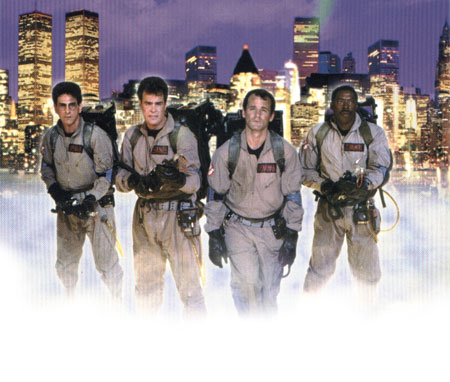
When you think public libraries, you probably have the Schwarzman Building in mind.  Located on Fifth Avenue at the intersection of 42nd Street, the “Main Branch” of the the New York Public Library is home to the famous Rose Main Reading Room, and has been featured in many movies and television shows.  Most notably, you may remember the library from a Seinfeld Season 3 episode titled “The Library,” or from the 1984 classic, Ghostbusters.  If interested in learning more neat facts (a.k.a. secret hiding places) about the NYPL, see Faculty Services Librarian Pam Brannon (who used to work at NYPL).

Thomas Jefferson Building, Library of Congress

You can’t talk  about great libraries without mentioning the nation’s library, the  Library of Congress.  The Library of Congress is the official research library of the United States Congress. Although the library encompasses several buildings, none are more recognizable than the Thomas Jefferson Building.  The Thomas Jefferson Building houses the Main Reading Room, which was featured in the Disney movie National Treasure: Book of Secrets.  Daily hour-long tours highlight the history of the building, its art and architecture, and some of its special collections.  So next time you are in D.C., take a break from the heat and enjoy a tourist attraction that continues to serve a vital role in the United States government.

Seattle Central Library

If you happen to find yourself on the West Coast this summer, make a point of seeing the Seattle Central Library.  The flagship library of the Seattle Public Library system, the Central Library has one of the most unique architectural designs ever utilized for a public library.  Completed on May 23, 2004, the Central Library attracted more than 8,000 visitors a day in its first year alone.  Talk about one popular public library.  The Central Library has all you would want in a travel destination.  Grab a cup of joe at the coffee shop on the third level and admire the public art displays throughout the building.  Stay in touch with family through WiFi or one of the 400 public computers.  Before you exit, don’t forget to pick your friends up a souvenir from the library’s retail shop.

These are just a few options for you to explore this summer as you take a break from law school.  So get out there and experience what libraries have to offer.  And remember, as Robin Leach always said, “champagne wishes and caviar dreams.”  Enjoy your summer.

Under Construction

by Flickr user jphilipg

You may notice several construction projects throughout the library this summer.

The back half of the computer lab (113B) is getting new furniture and computers. This project will take all summer. The front section of the lab (113A) will remain open during this time, so you’ll still have full access to the printers, help desk and 12 computers.

Room 184 (currently the second level lounge) is being transformed into three additional study rooms. Construction is expected to last through mid-June.

We’re also adding in some additional soft seating on the lower level.

Professors Offer Summer Reading Suggestions

The semester is drawing to a close, and you may be thinking that a bit of non-caselaw reading could be just what your brain needs after a busy school year. But what to read? The law faculty has a few suggestions for you.

Pam Brannon

A Supposedly Fun Thing I’ll Never Do Again by David Foster Wallace
The idea of David Foster Wallace going to the Illinois State Fair is really funny in and of itself, but his report on the experience is even funnier. Besides, like me, Wallace was a geek who loved footnotes.

James Bross

Sarah Caudwell was the pseudonym of Sarah Cockburn (1939 – 2000, Cheltenham), a British barrister and writer of detective stories. She is best known for a series of four murder stories written between 1980 and 1999, centred around the lives of a group of young barristers practicing in Lincoln’s Inn and narrated by a Hilary Tamar, a Professor of Medieval Law (gender unknown), who also acts as detective.

This series of four books, described as “legal whodunits”, were written over a period of twenty years. Their primary setting is the top floor of 62 New Square at Lincoln’s Inn, where four young barristers have their chambers: Michael Cantrip, Desmond Ragwort, Selena Jardine and Timothy Shepherd. While the last named only appears sporadically, taxes barrister Julia Larwood, who works in the adjacent premises, is a regular visitor and is in effect the fourth member of the group. These characters are in some ways thinly drawn, never communicating in anything other than in an ironic tone, so that even when they are in deadly danger the atmosphere remains uniformly light-hearted. Even though the characters are sexually active, their cheerful friendship is sometimes reminiscent of the chummy gangs encountered in juvenile fiction.

Mark Budnitz

Iphigenia in Forest Hills: Anatomy of a Murder Trial by Janet Malcolm
This book includes several elements that make up a riveting story and that raise significant legal and moral issues. The main story is a murder trial, but the motivation for the murder was likely a child custody battle presided over by a judge who made a questionable ruling. The book also illustrates how poorly the legal system operates when the persons involved come from a culture that is different from mainstream American society.

Meg Butler

Broken by Karin Slaughter
Grady doctor Sara Linton returns to her home town and finds herself drawn into the investigation a rural Georgia murder. In her 10th novel featuring these characters, Karin Slaughter builds suspense and tells a compelling story, weaving together the lives of unlikely characters.

Sylvia Caley

The Spirit Catches You and You Fall Down by Anne Fadiman
Cultural sensitivity, bioethics, communication in health care setting

The Curious Incident of the Dog in the Night-Time by Mark Haddon
Understanding, accommodating, accepting disability

Coma by Robin Cook
Scare resources, bioethics, buying/selling organs, organ sharing policy

Jennifer Chiovaro

The most memorable book I’ve read in the last year or so is Columbine by Dave Cullen. [It’s] the most definitive account of what really happened and why, although the entire truth won’t be known until the parents’ depositions are unsealed in 2027. Meticulously researched, the book dispels most of what was reported about the massacre. An essential read for understanding America’s deadliest high-school mass murder.

William Edmundson

For anyone saddened by the end of the US manned space program, I can recommend Mary Roach’s Packing for Mars and Riding Rockets by former astronaut Mike Mullane.

Anne Emanuel

Born on a Blue Day: Inside the Extraordinary Mind of an Autistic Savant by Daniel Tammet
An easy read and a fascinating story.

Jessica Gabel

The Edgar Award Nominees for Best Novel, Best Debut Novel, and Best Paperback were a particuarly good crop this year, and I read most of them. Here are a couple of my favorites.

Laura Lippman, I’d Know You Anywhere. A woman who was kidnapped as a child comes to terms with why she survived the ordeal when other victims did not. A interesting read that goes back and forth between 1985 and 2010(ish) as the main character realizes that events she tried so hard to forget have shaped her adult life. Nominated for a 2011 Edgar Award for best novel.

The Lock Artist by Steve Hamilton. Winner of the 2011 Edgar Award for best novel. A mute man-child (i.e., he’s 18) with a knack for opening locks and cracking safes shares his escapades with the reader. I learned probably more than I wanted to know about picking locks, but the dialogue – both internal and between supporting characters is fantastic.

For those who prefer less mystery and more dialogue: Karen Russell, Swamplandia. A young girl aims to save both her family’s alligator theme park and her wayward older siblings. Nice to know that there is a family more dysfunctional than mine.

Lynn Hogue

I have two really great books to recommend: The Lincoln Lawyer by Michael Connelly and The Fifth Witness by Michael Connelly. Both are great yarns about lawyers and law. I finished both very recently and highly recommend them. Readers can learn something about the profession of law and be entertained at the same time. What could be better.

Nancy Johnson

The Confession by John Grisham takes the reader on an incredible roller coaster ride of emotions all centered around one hot-button issue: the death penalty. Grisham very clearly has strong opinions against the death penalty and The Confession makes absolutely no attempt to be an unbiased display of the facts of the matter. It is a quick read and a great story.

Julian Juergensmeyer

Although it is law related – I still recommend The Lawyer Myth: A Defense of the American Legal Profession by Rennard Strickland and Frank T. Read. I just think it gives a perspective that we tend to miss when we are involved with the “law” – in whatever capacity – on a daily basis.

Deborah Schander

If you’re the type of person to read the book once you’ve seen the movie (or vice versa), check out Ed Brubaker’s run on Captain America (2005-present). It’s not the full 70 year history of the comic, of course, but the upcoming movie is apparently heavily influenced by Brubaker’s take on the story (which has even made the national news a few times). He focuses as much attention on Cap’s WWII origins as he does on what’s happening in the modern Marvel universe — and my bet’s on the inevitable movie sequel giving major screen time to something Brubaker introduces in his very first issue. The collection starts with Winter Soldier, Book One.

But if I can’t convince you to read a comic, try Alan Bennett’s novella The Uncommon Reader. It’s a funny, insightful look at the influence reading can have on people (in this case, the Queen of England).

Roy Sobelson

These are some of the books that have brought me the greatest enjoyment in the last couple of years. Most I’ve read, but some I’ve listened (unabridged) to.

Mudbound by Hillary Jordan
Life in the Mississippi Delta at the end of WWII. A central character is an African American man who, after serving nobly in the Army, returns home to be treated precisely as he and other African Americans have been for ages.

Bossypants by Tina Fey
If you think Tina Fey is smart and funny (and who doesn’t?), check this out. Given the fact that she reads the audiobook, I recommend it over the written version.

The History of Love by Nicole Krauss
I’m not going to describe it. I’ll just say this is one of my favorite books of all time.

Galileo’s Daughter by Dava Sobel (no relation, so far as I know)
Using the correspondence between Galileo and his illegitimate daughter, Sister Maria Celeste (so named because of Galileo’s obsession with the heavens), the author tells a good bit of the story of the trial of Galileo, who had the gall to argue that the Earth revolved around the sun.

Austin Williams

February 18, 2011 was the 10 year anniversary of Robert Hanssen’s arrest at Foxstone Park. The Bureau and the Mole by David A. Vise is a thorough and concise overview of Hanssen’s life prior to and during his time at the Federal Bureau of Investigation. Read about how he initially created contact with the Soviet Union and what clues eventually led to his demise after 22 years of spying on the United States.

Doug Yarn

Out of the Flames by Lawrence and Nancy Goldstone
True story of the survival of a book that John Calvin tried to destroy. This book makes one appreciate the sacrifices people made to express ideas and the extraordinary effect that the emergence of printing had on the history of ideas.

Cochrane: The Real Master and Commander by David Cordingly
If you like Hornblower or the Patrick O’Brian series about early 19th century naval warfare, you have to read this book to appreciate the real historic figure on which the main characters of those two series are based. Cochrane story is much more compelling and exciting.