Be an Informed Voter

Ballotpedia is one of the more fascinating sites that you’ve probably never heard of. It’s a freely editable wiki, like Wikipedia, but much, much more specialized. With a couple of clicks, you can find out what measures are currently on the ballot across the country, details on all of the state legislative elections, and all sorts of information on what’s going on with the Georgia elections.

Ballotpedia also has a lot of historical information. Want to see what measures were on the Georgia ballot in 2004? Or 2000? You can find them there. In many cases you can even find a link to the full text of the measure or the official election results. And, of course, Ballotpedia will be updating the site tomorrow with all of the latest results.

Additional Study Rooms

From October 25th until December 17th, law students will be able to take advantage of 3 new study rooms at the Georgia State University College of Law.  The Career Services Office will be allowing students to use rooms 141, 142, and 143 as study rooms during this time.

Students can check out these rooms at the Career Services Office from 9am to 5pm, Monday through Friday.  After 5pm and on the weekends, students can check out these rooms at the Law Library Circulation Desk.

We’re Hiring!

The law library has several GRA openings for the Spring 2011 semester. Research GRAs report to Pam Brannon, Faculty Services Librarian, and assist with faculty research requests. Reference GRAs work at the Reference Desk, answering research requests for library users, and report to Deborah Schander, the Reference/Student Services Librarian. If you are interested in either type of work, we encourage you to apply. You can apply for one or both types of position.

Library GRAs receive a one-half reduction in tuition as well as a $1,000 stipend each semester. Applicants must have completed all 1L requirements by December 2010. To apply, submit a completed application, resume and your anticipated Spring 2011 class schedule to Pam Brannon by Friday, November 5.

Use FDsys.gov for federal gov docs

If you’ve been using www.gpoaccess.gov to access federal government documents, prepare yourselves for a long-awaited arrival:  the Federal Digital System, found at www.fdsys.gov!   The Government Printing Office has announced that, at the end of 2010, FDsys will be the GPO’s electronic system of record for government publications.

From now through the end of 2010, the sites will operate concurrently, but in 2011 you’ll have to use FDsys to retrieve the United States Code, Code of Federal Regulations, presidential documents, the Federal Register, the United States Government Manual, and many other useful government resources.  The COL Library encourages you to take the time to explore the FDsys site and how it functions.  There are helpful tutorials available, demonstrating how you can search or browse using the site.  Because the site is currently in public beta, the GPO is seeking public feedback.  Now is the time to share your thoughts about the new site!

An exciting feature of FDsys is the number of authenticated government documents.  The GPO takes a number of steps to assure that many of the electronic government documents are unaltered from their original publication.  The authenticated  documents available on FDsys have visible digital signatures.  A verified, authentic document will contain a Seal of Authenticity.  The seal is a graphic of an eagle and the words “Authenticated U.S. Government Information.”  Visit www.fdsys.gov and click on a recent piece of popular legislation–like the Dodd-Frank Wall Street Reform and Consumer Protection Act–to see the digital signature.
Angelo Herndon: Race, Communism, Free Speech, and Atlanta

The College of Law’s Henry J. Miller Distinguished Lecture Series continues on October 21st, when Harvard’s Mark Tushnet will talk about a case that originated in Atlanta in a lecture entitled “The Hughes Court’s Treatment of Radical Dissent: The Angelo Herndon Case.”

Angelo Herndon, an African-American, member of the Communist Party, and labor organizer, was arrested in Atlanta in1932 for attempting to “incite insurrection” and convicted the following year. His case, which went to the Supreme Court in 1935 and 1937, features a stunning cast of characters, including future 5th Circuit judge Elbert Parr Tuttle, renowned historian C. Vann Woodward, poets Don West and Langston Hughes, and Charles Hamilton Houston, special counsel for the NAACP. The final verdict in Herndon v. Lowry was a narrow 5-4 reversal of Herndon’s conviction.

Of course, the Law Library has much more information on this fascinating case. The Law Library has put together a display of books and videos related to the case and its major issues, and you can find the complete record of the case in U. S. Supreme Court Records & Briefs, a database available through the College of Law Library.

Baseball & The Law

It’s playoff time here in Atlanta, something people have not been able to say since 2005.  For that reason, I encourage anyone who has the chance to go out and support your local team this postseason.  Many law students can use the playoffs as relaxation in the midst of upcoming midterms and papers.

One might wonder what business does a law library blog have talking about baseball?  Baseball and law have been very interconnected over the past century.  Several former managers, and current St. Louis Cardinals manager Tony LaRussa, have law degrees.  Additionally, one cannot forget about the steroid saga and its legal implications in baseball over the past several years.

But still, what does this have to do with the library?  Like everything in the world, if something is important enough, a book will be written about it.  The College of Law Library has several books for anyone interested in law and baseball.  Here are just a few:

For additional books, please go to the following link.

For more information on the Atlanta Braves’ playoff run.

50th Anniversary of “Mockingbird”

The novel To Kill a Mockingbird turned 50 this summer. Harper Lee’s classic story features Atticus Finch, perhaps the most famous fictional lawyer in the world.

Did you know … ?

  • The character of Dill is based on Truman Capote, Harper Lee’s own childhood friend.
  • Robert Duvall made his film debut in the movie version of To Kill a Mockingbird playing Boo Radley. To prepare, Duvall dyed his hair blond and stayed out of the sun for six weeks before filming.
  • In 1997, the Alabama State Bar erected a monument in Atticus Finch’s honor.
  • To Kill a Mockingbird is currently #4 on the American Library Association’s Top 100 Banned and Challenged Classics list.

The library owns copies of both the book and the movie in our Leisure Collection.

Resources for Law Student Life

The COL Library recently published a new research guide called “Life as a Law Student.”  The guide focuses on providing law students with resources about life in law school.

Whether you’re a 1L—new to law school—or a 3L looking forward to graduation, this guide includes resources that may be of interest to you.  There are links to books in the library that offer exam preparation advice.  You’ll find links to movies about life as a lawyer, perfect for relaxation after a hard day of classes and studying.  If you have a hard time turning off your technology, the selection of links available for both the iPhone and Android platforms is broad.  The links include both law-related and leisure sources.  Of course, the research guide also includes links to other online resources, including blogs that will keep you up to date on both legal gossip and legal news or provide you with information about life in Atlanta.

It’s Banned Books Week!

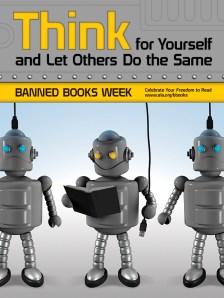
ALA Banned Books Week Poster 2010

This past Saturday, September 25th, marked the beginning of Banned Books Week. Established in 1982, Banned Books Week highlights attempts to  remove books from library and store shelves.

Being a law library, we’re interested in Banned Books Week as librarians, and also because there happens to be a lot of case law resulting from efforts to ban books. Removing books from school libraries was the primary focus of Board of Education, Island Trees Union Free School District No. 26 v. Pico, 457 U.S. 853 (1982). There are also cases about the suppression of specific books,  including James Joyce’s Ulysses, Henry Miller’s Tropic of Cancer and Tropic of Capricorn, and William S. Burroughs’ Naked Lunch.

The Law Library has a number of books on the First Amendment and book banning, including:

120 Banned Books: Censorship Histories of World Literature, by Nicholas J. Karolides, Margaret Bald, & Dawn B. Sova

Freedom for the Thought That We Hate: A Biography of the First Amendment, by Anthony Lewis

Girls Lean Back Everywhere: The Law of Obscenity and the Assault on Genius, by Edward De Grazia

Ulysses in Court: The Litigation Surrounding the First Publication of James Joyce’s Novel in the United States, by Irving Younger & James W. McElhaney