The GSU College of Law Library is excited to announce an all new Blackacre Times Series – “Dear My 1L Self.” In this series, Librarians, Law Library GRAs, Students, and maybe even alumni will write letters to their 1L selves giving them advice and telling them what to expect from law school and the practice of law. We hope that some of this advice will be transferable to our readers, and show that even the most experienced of us have made a lot of mistakes. So, without further ado…
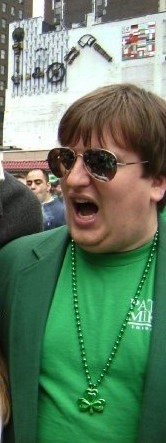
Dear 1L Patrick,
DO NOT fake it till you make it. You are starting law school and are so much less prepared than you actually think. The things that made you good at high school and college, mainly being really good at remembering lots of information, are NO LONGER USEFUL. I mean, they’ll always be useful, but if you don’t strip down your intellectual process and rework your approach from the ground up you’re not going to do very well. Read books about how to succeed in law school and do a ton of practice problems. Having a really well put together outline will not matter if you don’t spend some time learning how to take law school exams. In fact, you’ll end up getting a C+ in contracts, the class you basically explained to everyone all semester, because you didn’t really get what the professor wanted in the exam.
This “clever slacker” persona that you’ve whole heartedly accepted for yourself will no longer work. You’ll need to learn to ask for help, and give things enough time so asking for help is an option. Remember when you were an undergrad and took symbolic logic and were terrified you’d fail, so you went to every office hour and ended up getting the best grade in the class? You need to be that engaged for every. single. class. I know you are very confident about your ability to do this. That’s great, but it’s basically unfounded. Innate ability alone is not going to be enough to do well. You have a lot of work to do, and it’s better that this gut check comes from me (us?) now than after a whole semester of very inefficient work. Go see your professors now. Be engaged in class. Stop asking other 1L’s for advice – they’re more clueless than you. Instead, bite the bullet and utilize your professors and academic success department. Do things the right way. This is the only way you’re going to do as well as you want.
Also, stop going to chicken wing night every Tuesday at the William Penn Tavern. If you can’t stay in, at least go late and leave early. You can watch the Pittsburgh Penguins by yourself at home.
Normally, this would be a blog post welcoming new students and welcoming back returning students from the summer. However, like many things over the past 18 months, things are different this year. We are so excited to welcome our new students but we are also looking forward to seeing “returning” students who we may have only seen virtually, if at all, in over a year. On behalf of everyone in the library, WELCOME!
The library offers a wide variety of services and resources that can help you on your law school journey. You can access everything from hefty legal treatises and study aids to books and movies in our leisure collection. Use a study room (2 or more students, please), table, or carrel to find just the right study space on either the 5th floor or 6th floor (our designated quiet floor). Stop by the Circulation desk to check out course reserves, white board markers, USB screens, or pick up some ear plugs to prevent distractions. Swing by the Reference desk (next to Circulation) to chat with a reference librarian about a research question, get some study aids suggestions, or just to say hi to your Research Methods professor.
Not on campus? You can use most of our databases from home, including two large collections of electronic study aids. You can also open a chat with a librarian from the library home page. (Look for the red box on the left.)
If you’re a 1L, you’ll be taking Research Methods from one of the librarian faculty and you’ll be assigned a different librarian as your Personal Librarian. Your Personal Librarian will send you occasional emails (really, we won’t fill your inbox – usually just 3-4 emails a semester) with information and tips that may be helpful as you progress through the semester. You can also always contact your Personal Librarian with any questions. Even if your question isn’t library-related, the librarians can often point you in the right direction.
There are many other services and resources available to you. You can learn more (or brush up if it’s been awhile since you’ve visited the library) at our introductory guide to the library. Want to keep up with the library? Follow us on Facebook and Twitter.
If you’re new, welcome to the GSU Law family! If you’re returning, we’ve really missed you and can’t wait to see you in the library!
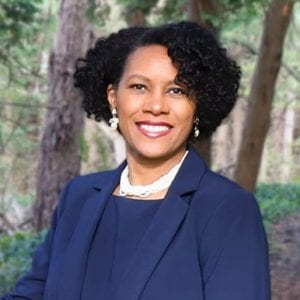
Dean LaVonda Reed is taking the helm at the College of Law.
Earlier this month, GSU Law welcomed aboard LaVonda Reed as our new dean. As the former Associate Provost for Faculty Affairs at Syracuse University, our new dean is an experienced leader and administrator. But did you know that Dean Reed is also an accomplished scholar?
One of Dean Reed’s research interests is Communications Law, especially as it relates to broadcast regulations. In Radio Regulation: The Effect of a Pro-Localism Agenda on Black Radio, she examines the effect of the FCC’s ownership regulations on radio stations serving the African-American community. Although Reed sees potential negative effects from deregulatory moves allowing for greater concentration of radio ownership, she simultaneously questions whether a pro-localism agenda limiting that concentration would, in and of itself, promote minority ownership. Instead, Reed argues that the FCC should explicitly pursue a goal of greater racial diversity in broadcast ownership alongside any such a pro-localism agenda, seeking “diversity in ownership, a diversity of sources, and ultimately, diversity in programming choices.”
Dean Reed has also written about the effect of FCC indecency regulations on political speech. In a 2010 article, she looked at the dilemma posed by “truly indecent” political advertisements, examining a potential conflict between statutes requiring broadcasters to give reasonable access to candidates for federal elective office and statutes prohibiting them from broadcasting indecent materials.
Another scholarly interest of Dean Reed’s relates to the regulation of clean energy. In Dirty Dishes, Dirty Laundry, and Windy Mills: A Framework for Regulation of Clean Energy Devices, she uses her familiarity with the telecommunications regulations to suggest that the FCC rule protecting a homeowner’s right to install satellite dishes might serve as a useful blueprint for a similar rule protecting the right to install solar panels, windmills, and other clean energy devices.
Here at the law library, we’re excited about Dean Reed’s leadership and scholarship. What about her deanship excites you? Would you like to see more blog posts discussing our faculty amazing’s scholarship? Let us know in the comments!
Summer seems to be flying by. The law library has been busy this summer, and we’ve had some exciting updates.
The study rooms are open!
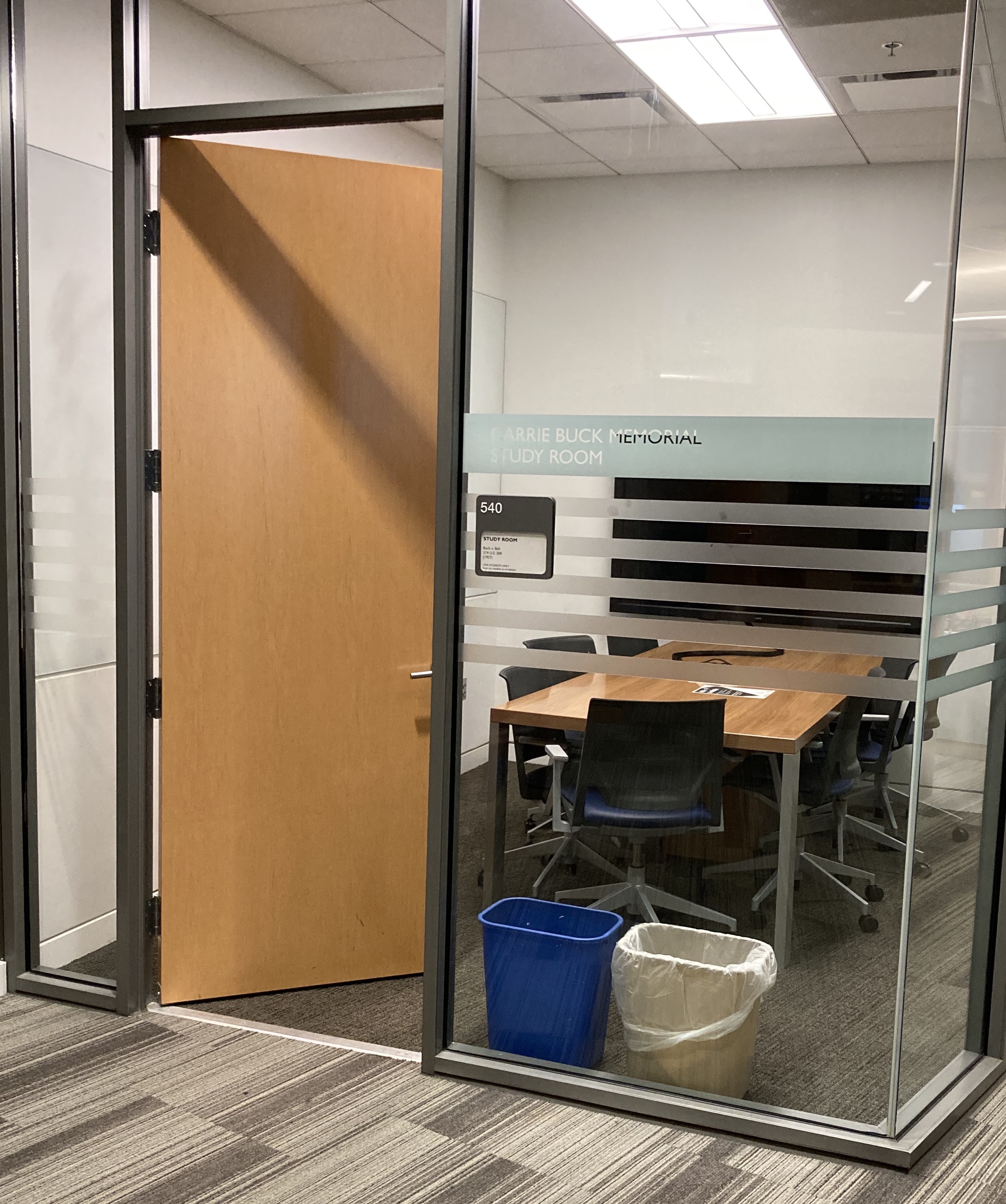
Law Library study rooms are available for reservation by law students. The study rooms vary in size and location and can accommodate groups as large as 10. On the fifth floor, there are rooms with monitors that you can use for group work. Some rooms have dry erase boards. To learn how to reserve a room, check out this blog post or the First Year Guide.
Circulation and Remote Reference remain available, with live reference resuming on July 29th.
The library building is open now through Wednesday, July 28th, during the following hours:
Monday – Thursday, 8:30 am – 10 pm
Friday, 8:30 am – 6 pm
Saturday & Sunday, 10 am – 6 pm
Reference remains available by chat (by using the red Chat Reference button in the upper left corner of the Law Library’s home page), by email, and by leaving a phone message at 404-413-9102. For current reference hours, please check out our homepage. Starting July 29th, live reference will resume, and the Reference Desk will be staffed to assist you during reference hours.
We moved the database list.
On Wednesday, May 26th, the Law Library launched a new database list tool titled “Law Library Databases A-Z.” It was initially housed on the main library page and has moved to our research guide platform. This new database list allows you to filter by subject, access platform, and vendor/publisher. It also provides featured popular law student databases. Learn more about this tool in this blog post.
If you’re an admitted law student—or a current law student or a recent graduate or a practicing attorney or—well, you may be interested in some law-related entertainment options this summer!
We all know that books and movies do not accurately portray lawyers and the practice of law. (Exception: some non-fiction books or documentary films.) That said, that can be what makes it entertaining to read about lawyers in a book or watch lawyers on a screen.
Following are some movies (the focus for today) that feature “lawyers” or “the law” that may be of interest to those who would like to take a vacation by way of the screen. There is little rhyme or reason to this list. I started with Chicago because I think the music is wonderful, and I got to see it performed in the West End with Lynda Carter as Matron “Mama” Morton. I am ending the list with Legally Blond, which I had the pleasure of seeing on Broadway. Don’t worry, there are no musicals in the middle.
*Chicago: This American musical is set in the jazz age, and it is definitely a satire. The lawyer to watch in this is Billy Flynn, whose Press Conference Rag is hilarious.
*I Am Not Your Negro: This documentary film made by Raoul Peck is based on James Baldwin’s notes for a book project about his three assassinated friends, Medgar Evers, Malcolm X, and Martin Luther King, Jr. The trailer for the movie raises questions of what freedom means, encouraging us to consider how the law has shaped and continues to shape our country.
*To Kill a Mockingbird: I first read this book in an 8th grade English class, and the number of attorneys I know who have named their dogs after Scout is surprisingly high. Whether you’ve read Harper Lee’s famous book or not, this is a compelling story. Atticus Finch’s closing argument is freely available.
Just Mercy: You may have read Bryan Stevenson’s book. This movie tells Bryan Stevenson’s story as well, focusing particularly on the case of Walter McMillian. Though much of the filming was done in Montgomery, Alabama, some was done in East Point and Conyers, Georgia.
The Trial of the Chicago 7: If you weren’t alive for it (I wasn’t), you may not know that there were big protests at the 1968 Democratic Convention in Chicago. Well, seven anti-Vietnam war organizers were accused of trying to incite a riot, and this movie tells that story.
The Law Library includes in its resources some law-related entertainment that may be of interest. We have some of these movies available in our collection at the Law Library or at GSU Libraries—the * before a title indicates those titles!
The Georgia Code regulates many aspects of when and where fireworks can be used; however, those statutes also indicate that local noise ordinances can place further limits on when you can use fireworks that cause noise. Most Georgia local codes are available in Municode, which makes it easy to look to see if any local ordinances limit when you can use fireworks over the weekend!
Law Library study rooms are available for reservation by law students, we are happy to announce!
Study rooms range in size and location—we have rooms that accommodate groups as large as 10. On the Law Library’s fifth floor, we have study rooms with monitors that you can use to do group work on a big screen. Rooms have dry erase boards that groups can use to share notes, develop outlines, etc.
Reserving a study room is pretty simple, and if you’ve used the booking system before it will be very similar. Start from the library home page and checkout the booking explorer, so your group can find the right time and room that will work for your study plan.
You can book the rooms in 15 minute increments, with each law student in a group eligible for up to three hours of study room time per day.
In the picture below, Room 501 is unavailable, but 503 and the other rooms are each available for a reservation.
When you book your room, you will still need to have (and list) the two or more law students who will be using the room for studying. Remember, when you’re finished using a study room that you need to lock the door and tell the folks at the circulation desk if you are leaving before the end of your reservation, so we can make sure that the room shows up as available to other students who may want to reserve the room. Knowing who is in the group can really help us with this part of reservation management!
Here’s a sample of the booking form:
We look forward to checking the keys out to your groups as you work on your summer classes and prepare for exams!
President Biden signing the Juneteenth National Independence Day Act. Image from President Biden’s Twitter Account.
Tomorrow, Saturday, June 19th, marks our most recently enacted federal holiday, Juneteenth. After the bill swiftly made its way through Congress, President Biden signed the Juneteenth National Independence Day Act yesterday. The Act makes Juneteenth the 12th federal holiday and the first new federal holiday since 1983, when Dr. Martin Luther King, Jr. Day was established. Juneteenth commemorates the end of slavery, and much of the federal government was closed today to commemorate the new federal holiday. We wrote a blog post on Juneteenth a few years ago; for that post, see below.
This isn’t the only news regarding Juneteenth in recent years. More states adopted Juneteenth as a holiday, and last year the National Archives located the original written order. What a great update to our post and something to celebrate over the weekend!
On June 19, 1865, Maj. Gen. Gordon Granger stood on the balcony of a house in Galveston, Texas, and read out the text of General Order No. 3, informing the people of Texas of the effects of the Emancipation Proclamation. Annual celebration of Juneteenth (a portmanteau of “June” and “nineteenth”) began the next year; although celebration of the day declined in the early 20th century and was primarily centered in Texas, in more recent years recognition of the day has increased and spread. Juneteenth was officially recognized as a state holiday in Texas in 1980. Today, 46 states and the District of Columbia recognize Juneteenth through legislation.
All the scholarship in the world doesn’t mean a thing if no one reads it or knows about it. Our institutional repository is designed to help get the word out about the exciting and innovative work of GSU Law’s faculty.
To do that, we’ve collected nearly 10,000 works, many of them made even more accessible by the inclusion of full text. And these works do reach people all over, with readers from over 200 countries downloading them 1.1 million+ times since the repository’s inception in 2010. Our most popular publication is Professor Emeritus Paul S. Milich’s definitive overview of the 2011 overhaul of Georgia’s Evidence Code.
But this may change soon, with our repository recently attracting record-breaking traffic. For example, in March alone, we had over 33,000 downloads, almost double the previous record. During that month, Professor Todres’s Human Trafficking and Film: How Popular Portrayals Influence Law and Public Perception found an especially wide readership, with 268 downloads.
As you can see, the repository is growing in importance as a vehicle for promoting our faculty’s impressive scholarship within the broader public conversation while also ensuring that it remains easy to find and accessible. Have you used this valuable resource or its counterparts at other universities and law schools? If so, what did you think? Let us know in the comments!
Books, movies, podcasts, music, and game suggestions from your favorite law faculty.
“Dead Sea newspaper” by inju is licensed under CC BY 2.0
Hello everyone. It has become a Georgia State University College of Law Library tradition to solicit summer leisure reading suggestions from our faculty and provide said suggestions via a well-written and entertaining blog post (typically by yours truly.) Last year, we decided to open the content suggestions up to more than just books due to our new, more remote existences. We liked the results from those submissions, so we decided to try asking for a variety of content mediums again.
So, without further delay, here are some suggestions for books, movies, games, shows, podcasts, and music from GSU College of Law faculty.
A (somewhat fictional) story about Cora, a slave on a cotton plantation in Georgia. When she meets Caesar, also a slave, he urges her to join him on the Underground Railroad. In Colson Whitehead’s conception, the Underground Railroad is no mere metaphor: engineers and conductors operate a secret network of actual tracks and tunnels beneath the Southern soil. Cora embarks on a harrowing flight from one state to the next, encountering, like Gulliver, strange yet familiar iterations of her own world at each stop.
Jack Williams
Books
Breath by James Nestor
No matter what you eat, how much you exercise, how skinny or young or wise you are, none of it matters if you’re not breathing properly. There is nothing more essential to our health and well-being than breathing: take air in, let it out, repeat twenty-five thousand times a day. Yet, as a species, humans have lost the ability to breathe correctly, with grave consequences.
Killers of the Flower Moon: The Osage Murders and the Birth of the FBI by David Grann
In the 1920s, the richest people per capita in the world were members of the Osage Indian Nation in Oklahoma. After oil was discovered beneath their land, the Osage rode in chauffeured automobiles, built mansions, and sent their children to study in Europe. Then, one by one, they began to be killed off.
In this last remnant of the Wild West—where oilmen like J. P. Getty made their fortunes and where desperadoes such as Al Spencer, “the Phantom Terror,” roamed – virtually anyone who dared to investigate the killings were themselves murdered. As the death toll surpassed more than twenty-four, Osage, the newly created FBI took up the case, in what became one of the organization’s first major homicide investigations.
Notes from Underground by Fyodor Dostoevsky
Dostoevsky’s most revolutionary novel, Notes from Underground, marks the dividing line between nineteenth- and twentieth-century fiction and between the visions of self each century embodied
They are a couple, Liz and Matt, and they are informative and sure-fire fun. Liz is a journalist now writing for The Atlantic. Matt is a labor lawyer turned policy wonk. They have two young girls and mix together parenting advice, cultural commentary, policy analysis, and irreverent humor —all in roughly equal measure. (Disclosure: Matt blurbed my forthcoming book.)
The Chapos take vulgarity, brilliance, and the mercurial to the bleeding edge. If you sometimes feel as if events are shoving you to the point of madness, this crew could serve as your guardrails. Topical, opinionated —even perhaps, biased. If you know of someone funnier than Felix Biederman, sassier than Amber D’Allee Frost, or more insightful than Matt Christman, please let me know.
Books
The Founders Coup by Michael J. Klarman
…should be on every American’s bookshelf. No —on every American’s bedside table. Beginning law students should especially give this book their attention. Klarman teaches at Harvard Law, and he writes clearly while telling an unforgettably compelling story —the story of the rowdy formation of our basic norm, the U.S. Constitution of 1789.
Lincoln by David H. Donald
…is not to be missed. “Honest Abe” Lincoln —”with all flaws”— has to be at least the provisional model of every decent lawyer. Forget Atticus Finch, that “white savior” figment of the Southern literary imagination. Put aside the estimable Bryan Stevenson, who will never come close to holding political power. Lincoln’s was a life lived by a real, powerful, imperfect human being, who was also a lawyer to his bony marrow.
Pam Brannon
Video Games
Breath of the Wild
Any and every other Zelda game
Psychonauts
Mass Effect, especially since the Legendary Edition just came out
TV Shows
Haikyuu!! – A shōnen sports anime series based on the manga by Haruichi Furudate, and produced is by Production I.G and Toho in conjunction with Japanese television network MBS. The anime consists of four seasons, four movies, and five OVAs.
Zoey’s Extraordinary Playlist – A woman starts to hear people’s innermost desires through songs.
Pose – A drama spotlighting the legends, icons, and ferocious house mothers of New York’s underground ball culture, a movement that first gained notice in the late 1980s.
Podcasts
Archive Atlanta – A weekly history podcast sharing stories about the people, places, and events that shaped the city of Atlanta.
Revolutions – A podcast exploring the great revolutions of history
…in which you have to get your teammate(s) to say the word by describing it to them using only single syllables. It’s pretty hilarious, can be enjoyed by all ages, and a game can be played quickly.
Quiddler
If you like word games, my husband and I have played a round of “Quiddler” every single night since the pandemic started. It’s a game that uses cards with letters on them, and players use a combination of luck and strategy to create words using their cards and try to outscore the other player(s). I also love the game “Code Names.”
Kris Niedringhaus
Books
How Beautiful We Were by Imbolo Mbue
Pipeline spills have rendered farmlands infertile. Children are dying from drinking toxic water. Promises of clean-up and financial reparations to the villagers are made—and ignored. The country’s government, led by a brazen dictator, exists to serve its own interest. Left with few choices, the people of Kosawa decide to fight back. Their struggle would last for decades and come at a steep price.
Told through the perspective of a generation of children and the family of a girl named Thula who grows up to become a revolutionary, How Beautiful We Were is a masterful exploration of what happens when the reckless drive for profit, coupled with the ghost of colonialism, comes up against one community’s determination to hold onto its ancestral land and a young woman’s willingness to sacrifice everything for the sake of her people’s freedom.
The Great Library Series by Rachel Caine
Ruthless and supremely powerful, the Great Library is now a presence in every major city, governing the flow of knowledge to the masses. Alchemy allows the Library to deliver the content of the greatest works of history instantly—but the personal ownership of books is expressly forbidden.
Jess Brightwell believes in the value of the Library, but the majority of his knowledge comes from illegal books obtained by his family. Jess has been sent to be his family’s spy, but his loyalties are tested in the final months of his training to enter the Library’s service.
When his friend inadvertently commits heresy by creating a device that could change the world, Jess discovers that those who control the Great Library believe knowledge is more valuable than any human life—and soon, both heretics and books will burn….
Ink and Bone
Paper and Fire
Ash and Quill
Smoke and Iron
Sword and Pen
Podcast
Buried Truths Podcast – We can’t change our history, but we can let it guide us to understanding. Buried Truths investigates still-relevant stories of injustice, resilience, and racism in the American South.
Terrance Manion
Books
Our Band Could Be Your Life: Scenes from the American Indie Underground, 1981-1991 by Michael Azerrad
This is the never-before-told story of the musical revolution that happened right under the nose of the Reagan Eighties–when a small but sprawling network of bands, labels, fanzines, radio stations, and other subversives reenergized American rock with punk rock’s do-it-yourself credo and created music that was deeply personal, often brilliant, always challenging, and immensely influential.
Cool Town: How Athens, Georgia, Launched Alternative Music and Changed American Culture by Grace Elizabeth Hale
In Athens, in the eighties, if you were young and willing to live without much money, anything seemed possible. Cool Town reveals the passion, vitality, and enduring significance of a bohemian scene that became a model for others to follow. Grace Elizabeth Hale experienced the Athens scene as a student, small-business owner, and band member. Blending personal recollection with a historian’s eye, she reconstructs the networks of bands, artists, and friends that drew on the things at hand to make a new art of the possible, transforming American culture along the way.
American Moonshot: John F. Kennedy and the Great Space Race by Douglas Brinkley
As the fiftieth anniversary of the first lunar landing approaches, the award-winning historian and perennial New York Times bestselling author takes a fresh look at the space program, President John F. Kennedy’s inspiring challenge, and America’s race to the moon.
Madhouse at the End of the Earth: The Belgica’s Journey into the Dark Antarctic Night by Julian Sancton
The harrowing true survival story of an early polar expedition that went terribly awry–with the ship frozen in ice and the crew trapped inside for the entire sunless, Antarctic winter–in the tradition of David Grann, Nathaniel Philbrick, and Hampton Sides
Music (all on vinyl)
fIREHOSE
the Replacements
Husker Du
Dinosaur Jr (including their brand new album, Sweep It Into Space, which is actually good)
B-52’s
Pylon
Yaniv Heled
Books
The “Culture” series by Ian Banks
The Culture series or Culture cycle refers to a series of novels and short fiction written by Scottish author Iain Banks. The stories center around the Culture, a post-scarcity semi-anarchist utopia consisting of various humanoid races and managed by very advanced artificial intelligence.
Within the Culture series:
Consider Phlebas by Ian Banks
The war raged across the galaxy. Billions had died; billions more were doomed. Moons, planets, the very stars themselves, faced destruction, cold-blooded, brutal, and worse, random. The Idirans fought for their Faith; the Culture for its moral right to exist. Principles were at stake. There could be no surrender.
Within the cosmic conflict, an individual crusade. Deep within a fabled labyrinth on a barren world, a Planet of the Dead proscribed to mortals, lay a fugitive Mind. Both the Culture and the Idirans sought it. It was the fate of Horza, the Changer, and his motley crew of unpredictable mercenaries, human and machine, actually to find it and with it their own destruction.
The Algebraist by Ian Banks
It is 4034. Humanity has made it to the stars. Fassin Taak, a Slow Seer at the Court of the Nasqueron Dwellers, will be fortunate if he makes it to the end of the year. The Nasqueron Dwellers inhabit a gas giant on the outskirts of the galaxy, in a system awaiting its wormhole connection to the rest of civilization. In the meantime, they are dismissed as decadents living in a state of highly developed barbarism, hoarding data without order, hunting their own young & fighting pointless formal wars.
Nirej Sekhon
Book
East West Street by Philippe Sands
A renowned international law scholar discovers that this family history is wound up more intimately with international criminal law than he ever might’ve imagined. This history/memoir/biography recounts Sands’ genealogical journey in gripping detail.
Lauren Sudeall
Book
Transcendent Kingdom by Yaa Gyasi
Gifty is a fifth-year candidate in neuroscience at Stanford School of Medicine studying reward-seeking behavior in mice and the neural circuits of depression and addiction. Her brother, Nana, was a gifted high school athlete who died of a heroin overdose after a knee injury left him hooked on OxyContin. Her suicidal mother is living in her bed. Gifty is determined to discover the scientific basis for the suffering she sees all around her.
But even as she turns to the hard sciences to unlock the mystery of her family’s loss, she finds herself hungering for her childhood faith and grappling with the evangelical church in which she was raised, whose promise of salvation remains as tantalizing as it is elusive. Transcendent Kingdom is a deeply moving portrait of a family of Ghanaian immigrants ravaged by depression and addiction and grief–a novel about faith, science, religion, love. Exquisitely written, emotionally searing, this is an exceptionally powerful follow-up to Gyasi’s phenomenal debut.
Patrick Parsons
Podcasts
Cocaine and Rhinestones – a podcast about the history of 20th Century Country Music and the lives of those who gave it to us.
Broken Record – a musical artist interview podcast by Rick Rubin, Malcolm Gladwell, and former New York Times editor Bruce Headlam. Most notably, Rick Rubin is the producer responsible for albums like Tom Petty’s Wildflowers, Red Hot Chili Peppers’ Californication, Johnny Cash’s The Man Comes Around, and System of a Down’s Toxicity. He is undoubtedly one of the most influential music producers in American popular music. This link goes directly to Rick’s interview with Atlanta’s own Andre 3000.
Video Game
Dragon Age Inquisition – I hadn’t owned video games since the Playstation 2. This is still the only game I own, and it took more time to finish it than I’ve spent on anything in the past few years. I might not buy another video game until the next Drago Age installment comes out.
TV Show
The Last Narc – In 1985, DEA agent Enrique `Kiki” Camarena is kidnapped, tortured and murdered by Mexican drug lords. Special agent Hector Berellez reveals the truth about the conspiracy behind Camarena’s murder that stretches from Mexico to Washington, D.C.
You must be logged in to post a comment.