Booking A Study Room

DSC_0191Study space will be in high demand as we get closer to the exam season. The study rooms located in the Law Library are some of the best places prepare for exams if you prefer group study. The study rooms come in several sizes, include whiteboards, and have hardware for you to hook your laptop to a projector. While you can always go to or call the circulation desk to reserve a study room, it is generally more efficient to book at study room online using the Law Library Study Room Booking System.

By using this system, you can book a study room while away from the library and then simply pick up the keys from the Circulation Desk. The online system allows you to reserve a study room up to 7 days in advance. Please be aware that only groups of 2 or more law students can reserve a study room. Additionally, to avoid forfeiture of a study room, 2 members of the group must be present within the first 10 minutes of the reservation.  For more policies, see the Policies webpage.

To reserve a study room online, follow the steps below.

1. Go to the Law Library’s homepage and click on Book a Study Room.

Homepage


2.  Using the calendar at the top of the screen, select the day you would like to reserve a room. Next to each room you will see how many people are recommended for a room (Ex. Room 120 (6) means 6 people). Click on the time for the room you would like to reserve. At this point, you will need to log-in with your Campus ID and Password.

BookingSystem

3.  Using the form, provide your name, the names of your group members, and the reservation times. Do not forget to click save!

Form


4. Lastly, when your reservation time is due, stop by the Circulation Desk to pick up the key. At this time you can also check out markers for the whiteboard. If you need to cancel a reservation, just stop by the Circulation Desk or call at 404-413-9100.


Legal Encyclopedias

UBN_Collier's_EncyclopediaBy this time in the semester, if you have heard it once you have heard it a thousand times, start your research with a secondary source. Easier said than done, right? With a library full of treatises and law review articles, it can be hard to nail down which source is the best source to use when beginning a research project. Believe it or not, one of the best sources (at least I think) to start your research with is the tried-and-true legal encyclopedia.

Now, this is not your parents’ encyclopedia – or maybe it is if your parents were attorneys. Vaguely similar to the encyclopedia you used to write grade school papers, the legal encyclopedia provides users with a concise overview of a variety of legal topics. Name one other resource in the library you can use that defines the basic elements of assault, explain consideration, and cites to primary sources? A legal encyclopedia is a treasure trove (not in the legal sense) of information. And the best thing about it is you can access it online or in print.

Popular Legal Encyclopedias


The Supreme Court Is Back

United_states_supreme_court_buildingIt’s October, which means the Supreme Court of the United States is back in business. The Court started hearing oral arguments on  Monday, October 6th. The following are a few helpful resources for those interested in keeping up with the latest term of the Court.

For those interested in learning more about the Court, the Law Library has several books on the Court:

Meet Austin Martin Williams

10474675_10101977959525169_7086341506432026106_nThis is the fourth installment of our Meet a Librarian series. In the first three installments you met Deborah Schander, Pam Brannon, and Terrance Manion. In honor of my birthday today, I thought I would interview myself for the series.


Austin (AQ): What is your name and what do you do?

Austin (AA): Austin Martin Williams, Coordinator of Research Instructional Services  


AQ: How long have you been at Georgia State University College of Law Library? 

AA: 4 years. I started way back in August 2010.


AQ: What books are currently on your night stand?

AA: I just finished up Command Authority by the late Tom Clancy and I am a few hundred pages into Path of the Assassin by Brad Thor. Both are excellent reads.


AQ: What is an interesting fact about yourself that you would like to share with our readers?

AA: I am the most interesting man in the world…ok, not really. Interesting fact is the only time I ever had cable TV during my entire life was when I was in law school, which is usually the time when people cancel cable.


AQ: When you are not saving the world here at GSU Law Library, what do you enjoy doing outside of work?

AA:  Play the guitar sparingly, read, watch Manchester United, and catch up on all the TV shows I never got to see on cable. Thank you Netflix!


AQ: Lastly, what is your favorite vacation spot? The place you go to leave it all behind for a few days.

AA: Anywhere in North Carolina. It has everything, the beach, the mountains, and a professional hockey team (Go Canes!)


There you have it folks. The complete, unedited,  behind the scenes interview with me, Austin Martin Williams.

Need Help? We Can Help!

DSC_0430Whether you have been spinning your wheels for hours on a Legal Bibliography assignment, unable to get started on a research paper, or are having trouble tracking down a source for your law review article, we can help. The reference librarians are here to help you with all of your research needs. You are asking yourself then, “How can I get in contact with a reference librarian?” Here are a couple of ways.

1. Chat Reference: Whether you are at home, on the train, or at a baseball game, you can always get in contact with a reference librarian by using our chat reference service. The chat reference service is located on every page of the Law Library’s website. Just look for the little red tab on the left side of the screen. Chat reference is operated while the reference desk is open. To see the reference desk hours, consult our calendar.

2. Reference Desk: If you are on campus, stop by the reference desk. The reference desk is staffed by reference librarians and reference graduate research assistants (GRA). To see the reference desk hours, consult our calendar.

3. Email, Telephone, In Person: If you would like to get help from a specific reference librarian, you can contact us by email, phone, or in person. To get our email addresses, phone numbers, and room numbers, refer to the Law Library’s directory. Generally, if you would like to meet in person, send us an email ahead of time with information about your question, so that we can set aside time to meet with you and do some preliminary research on your topic.


I Have Bloomberg Law, Lexis Advance, & WestlawNext…Now How Do I Use Them?

During the first week of orientation, you should have received authorization codes for Bloomberg Law, Lexis Advance, and WestlawNext. During your first year here at Georgia State Law, you will be using them predominately in Lawyering: Foundations and Legal Bibliography. While these classes will go over each of the systems in-depth, you can get a head start on familiarizing yourself with each one by watching the following introductory videos created by the Law Library.

Bloomberg Law 


Lexis Advance 


WestlawNext 

Lost? Don’t Worry, We Have a Guide for That

flickr photo by Christopher Bulle

flickr photo by Christopher Bulle

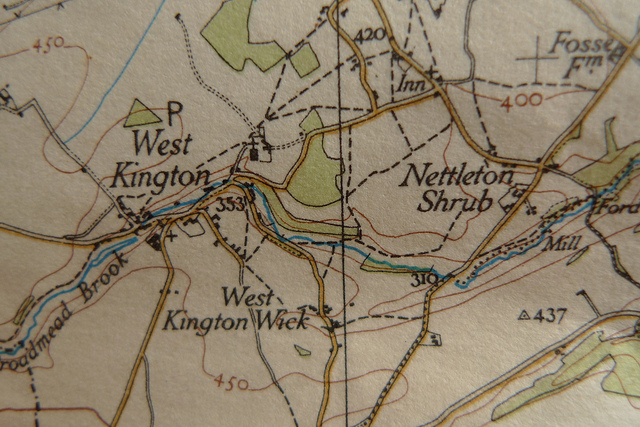
For most people now a days, if you need to directions to somewhere, you just punch it into your phone, and within a second, you know exactly what route to take. Although it may be hard to remember, there was a time in life when cell phones didn’t act as tiny computers. No email, no Facebook, and definitely no GPS. Instead, if someone needed to go from point A to point B, they used a map. A printed map allowed a user to plan out which route to take to most effectively get to a desired location. In the realm of legal research, research guides are very similar to maps.

When conducting legal research, a researcher is trying to get from point A, the legal question at hand, to point B, the sources that will answer that question. For someone unfamiliar with a certain area of law, it can be hard to begin research without a little bit of guidance. Research guides act as a map for a researcher, helping navigate the open wilderness of primary and secondary sources.

Like a map you would buy at a store, research guides come in all shapes and sizes. Some guides are in print, while others are web based. Even within the realm of web based research guides, there are some that are mostly text based, while others employ charts, tables, and video. Each has its on drawbacks and benefits. Users can write notes on print guides, while electronic guides can be accessed from outside of the library. The decision of which one to use will ultimately come down to user preference. Here at Georgia State University College of Law Library, we have a variety of guides to help assist our users.

So before you start researching an unfamiliar subject, try to find a research guide on your topic. Just like a good map, the guide can help you get from point A to point B more efficiently.

You can find our print guides located across from the Reference Desk. To access our web based guides, go to our LibGuides homepage. Below is a small sample of some of the guides we offer our users.

Print Guides 

  • Call Number Guide
  • Major Title Locator
  • Locating Forms

Online LibGuides

 General 

Topic Specific 

Student Life 

Bar Exam Logistics

With the Georgia Bar Exam quickly approaching, here are a couple of logistical questions you need to decide before the first day of exams:

1. Know the exam date.

6812481635_ed463ae1fa_z

Flickr photo by photosteve101

2. Know the exam schedule.

flickr photo by John Ward

flickr photo by John Ward

3. Decide on where you will stay. Family, Friends, Hotel, etc. Try to stay somewhere close by and stress free.

flickr photo by William Warby

flickr photo by William Warby

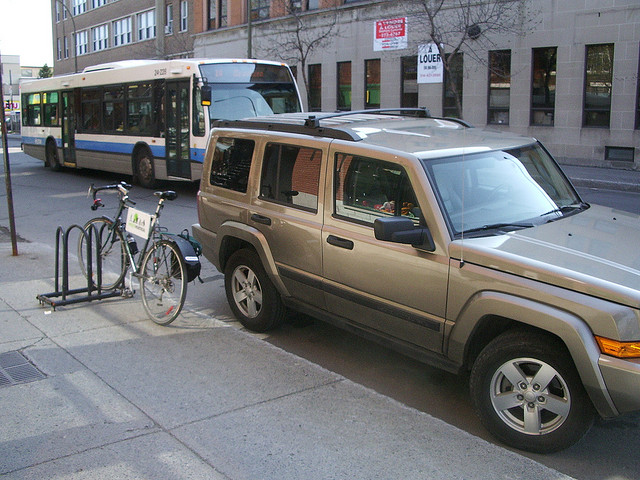
4. How will you get to the exam? Train, Car, Bike, or Shuttle. If you are going by car, build in extra time. Atlanta traffic is notorious.

flickr photo by Nicolas Marchildon

flickr photo by Nicolas Marchildon

5. Food. Whether it is room service, take out, or bringing your lunch from home, make sure you plan ahead of time what you are going to eat. Additionally, GSU Law provides a complimentary lunch for alumni taking the exam.

flickr photo by Louis Vest

flickr photo by Louis Vest

6. What are you going to wear? Comfort is key, so dress in layers, that way you are prepared for the summer heat and the air conditioning inside the testing center.

flicr photo by Kate Tomlinson

flicr photo by Kate Tomlinson

These were just a few helpful tips to remember as you prepare for the exam. For more information, see the following sources:


Microsoft Office for your phone

unnamed

You just thought of the perfect opening sentence for your environmental law paper, but your at the gym – miles away from a computer. Or you want to review your professor’s PowerPoint presentation from last class, but you forgot to print them out prior to boarding the train. Law students are constantly on the go, shuffling class time, externships, classes, and student organizations, not to mention their outside of law school lives.

For Georgia State students who need to access and edit documents when they are away from their computers and laptops, their is a solution. Using your Campus ID and Password, you have access to two services that will allow you to not only save Word documents to cloud storage, but also access documents in the cloud storage, and create and edit documents on your smart phone. The best part of all, these services are absolutely FREE to current students.

Using OneDrive (also called SkyDrive), students can save files to the OneDrive cloud and access them on their computers, tablets, and phones. For information on how to access OneDrive, refer to the Using OneDrive post by GSU IS&T.

In order to access, edit, and create documents from your smart phone, you will need to download Office 365 Mobile. This service allows students to access Word, PowerPoint, and Excel documents in their OneDrive account, and also edit and create Word and Excel documents. To find out more information on how to download Office 365 Mobile, refer to the Download Office 365 Mobile post by GSU IS&T. 

Research Plan

Flickr photo by Orange County Archives

Flickr photo by Orange County Archives

Plans are apart of life. Even those who like to live spontaneously make some plans. Law students definitely plan the courses they will take during law school, tourists hopefully plan what to see on their summer trip, and teachers always plan the topics they will discuss in class. Plans also come in handy when conducting legal research.

To conduct efficient legal research, you need a plan. What sources will you consult? What order will you consult them in? How long do you have to complete the project? These are all questions you can answer by making a research plan. To assist with research planning, the GSU Law Library produced a Legal Research Worksheet. Think of this worksheet as a museum map. When you go to a museum, you know there are certain exhibits you want to see, and a museum map helps you see those items in the most efficient manner. When doing legal research, you know you need to determine your issue, figure out your key terms, and consult cases, statutes, administrative materials, and statutory sources. The legal research worksheet helps you do just this.

What are the legally significant facts? Should I consult a secondary source? What are the citations for the relevant cases I have found? By using the worksheet, you are able to walk through each of the research steps, check off completed items, and then incorporate your research into a finished product, such as a memo or brief. Without a plan, you could find yourself stumbling through the legal research wilderness with no end in sight.

Remember, as John “Hannibal” Smith from the A-Team says, “I love it when a plan comes together.”