Scary Books

More Halloween Clip Art Illustrations at http://www.ClipartOf.comIn conjunction with the season, and inspired by the LibGuide created by The University of Iowa College of Law Library, here are a couple of books that we have at the Law Library that will get you in the mood to celebrate Halloween.

And if you need any last minute costume ideas, the University Library has several books on costuming.

Halloween 2013

Image by Flickr User kwan_c

Image by Flickr User kwan_c

It’s almost Halloween and there’s still time to fit in some fun! Here are a couple of places that are still offering tours and some of costume shops just in case you need a whole new identity or just some finishing touches.

What are you going to be for Halloween? Doing anything fun?

Events:

Netherworld: one of the Top Haunted Houses in the Nation (Norcross, GA)

http://www.fearworld.com/index.php

Containment underneath Atlantic Station, the only large-scale haunt inside the Perimeter.

http://containmentatl.com/

Ghosts of Marietta Tour

http://ghostsofmarietta.com/

Southern Belle Farm Corn Maze and Pumpkin Patch, in McDonough, GA.

http://www.southernbellefarm.com/

Costumes:

Spirit Halloween Superstore at several locations in and around Atlanta

http://checkout.spirithalloween.com/StoreLocation.aspx?zipPostalCode=30303

Halloween HQ at Ansley Square on Piedmont Ave.

http://atlhalloweenhq.com/

Barefoot Bubba’s Costumes on Howell Mill Rd.

http://barefootbubbas.bmbnow.com/

Listening to the Law (or Other Things)

podcasts

Photo by Flickr user DennisSylvesterHurd.

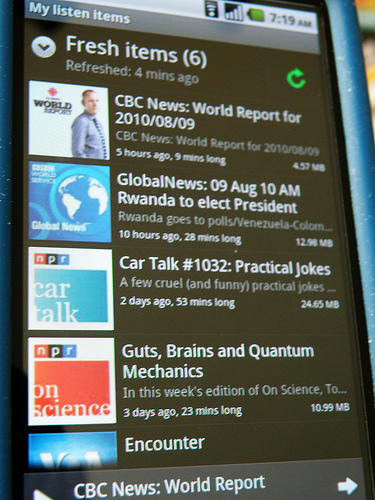
By now you’ve probably seen a sign or a post somewhere, and you know that we have access to AudioCaseFiles so that you can listen to cases rather than reading them. But what if you want to listen to something else?

That’s where podcasts come in. And while there are a lot of podcasts out there (Stuff You Should Know and Pop Culture Happy Hour are my personal favorites), there are a number that are focused specifically on legal topics and are worth a listen.

For example, interested in what’s going on in the Supreme Court? Check out the PBS News Hour’s Supreme Court Watch or the Federalist Society’s SCOTUScast.

Other legally-related podcasts worth checking out include:

Finally, no discussion of law-related podcasts would be complete without a mention of Judge John Hodgman. Judge Hodgman hears disputes submitted for resolution in his court of Internet justice, which comes complete with a bailiff, occasional expert witnesses, and an opportunity for summary judgment.

Have a favorite podcast that we missed? Let us know in the comments below!

Exam Tips

by Joshua Kahn

Image by Flickr user albertogp123

Image by Flickr user albertogp123

You’ve spent what seems like the longest couple of months since you-were-6-and-summer-felt-like-forever doing your reading, going to class, and outlining.  Now, you’re wondering, how to ace your 1L exams, land the job of your dreams, make tons of money and guarantee a lifetime of blissfully safe employment. . . right?

So, here are a few helpful pointers for exams:

Learn Your Professor’s Style

Every professor has a specific exam style, which they’ll generally telegraph over the course of the semester. If not, then ask them about it in person.  Also, make sure to track down 2L’s and 3L’s to ask them about that professor’s style.  Often, they’ll have helpful insights into what to expect on the exam.

Short Test Outline

Once you begin studying, the first thing you should do is write a concise version of your outline.  It should have big font, not be spaced in tiny clusters of sentences, and focus on the elements of each claim.  Cut as much as possible until you only have the core elements and tests for the areas of law you learned.

This short outline is your cheat-sheet for the exam, not a security blanket.  It’s a way to remind you of the elements to make sure you don’t forget something, not re-teach you the material on the fly.

If your professor only lets you have a single front-and-back sheet, then use different colors to differentiate elements and tests visually. The idea is to be able to quickly glance at the sheet and know what you’re looking for.

If you have a closed book exam, just ignore this and do more practice tests, memorize what you need with flash cards or both.

Taking Practice Exams

Practice exams are by far the best way to study for law school exams.  Take a few untimed and fully write out your answers, don’t just outline them (which will be tempting).  Then, take at least one fully timed practice exam for each course.  That process will help you with both analysis and speed once the pressure is on.

Many people find it helpful to go over their practice exams with a study group to see if they got the answers right, and get suggestions from classmates.  Often, they’ll actually take the exams together all at once in a library room to simulate the pressure of an in-class exam.

This is one of the very few things study groups are useful for, but, don’t let it take too much time.  Practice exams are painful and it’s very tempting to talk through them to avoid having to take another.

Finding Practice Exams

GSU has an exam archive and professors often give out a copy of past exam, but it’s a good idea to practice on exams from other schools.

Most exam archives are password protected, but here are a few which are not:

http://lawmedia.pepperdine.edu/exam/examlookup.php

http://www.law.berkeley.edu/library/dynamic/exams.php

Readability

Law school exams reward clear writing.  If you’re a good, concise writer, your grades will probably be one step or so higher than otherwise (from, say, a B+ to and A-).  If you are not a good writer, there probably isn’t much you can do about it in the next month, so pretend I didn’t just say this. (But consider reading this over your break).

There is one thing anyone can do to quickly improve their exam readability however, and that’s clearly organize your paper.  Include headings for each section and subsection so your professor knows exactly what points you are addressing, start a new paragraph for each element of the claim you’re proving, etc.

It is OK to Be Nervous

Finally, it is ok to be nervous.  Law school exams are a horrible hazing ritual, especially 1L exams, and they never stop being nerve-wracking.


A Faint Light at the End of the Tunnel

by Nirvi Shah

Flicker photo by jjpacres

Flicker photo by jjpacres

Law school is hard.  You are told this before you begin, but have no idea what you signed up for until you are in the thick of it—like right now. Due to the sheer anxiety and stress from preparing for classes and outlining for exams, it can be difficult to appreciate the art of legal writing and citation.  Learning how to “think like a lawyer” is very important, but this skill will not be effective if you do not learn how to write like a lawyer.

No matter where your legal career takes you, you will write memorandums, briefs, and emails to colleagues and clients.  You will also consistently cite your text to confirm that what you say is based on law and merited sources.  And after practicing to write in this seemingly secret language for some time, you will begin to understand how to approach legal issues and feel your sense of belonging in the legal community.

If this is still not enough to inspire you to continue working on legal writing and citation, read the cited case written by Judge Kent.  He publicly humiliates attorneys for their lack of professionalism by broadcasting that “[b]oth attorneys have obviously entered into a secret pact–complete with hats, handshakes and cryptic words–to draft their pleadings entirely in crayon on the back sides of gravy-stained paper place mats, in the hope that the Court would be so charmed by their child-like efforts that their utter dearth of legal authorities in their briefing would go unnoticed.”  Bradshaw v. Unity Marine Corp., 147 F. Supp. 2d 668, 670 (S.D. Tex. 2001) (emphasis added).

You do not want to be these attorneys, so take the time to practice legal writing and citation while you are in law school, where the stakes are not as high.  You will definitely find these skills valuable later.

Good luck with the rest of the semester!

Research Assistance

Library_CTR_CaricatureStudy rooms, laptop chargers, and free coffee – there is a lot to love about the Law Library. There is one more reason to love the Law Library…research assistance. Sure we have plenty of study aids and an abundance of comfortable seating, but one of our best services we provide to students is research assistance.

If you hit a bump in the road, or you don’t know where to start when working on a paper, why not stop by the Reference Desk. We can help you find that pesky source you have been trying to track down, or give you some tips on which sources will get you started down the research trail. If you can’t make it to school, try using our chat reference service (located on the homepage). If the desk is open, we can assist you in person or via chat. Remember to check the hours page to see when reference is open.

What if you need a little more in-depth assistance? No problem, just contact one of our reference librarians to set up a one-on-one meeting. If you send us the topic in advance of the meeting, we will have time to think about the sources available for your topic before you arrive.

In addition to personal assistance, don’t forget about our research guides. The Law Library has an ever expanding collection of research guides on a wide array of topics, including administrative, environmental, Georgia, intellectual property, sports, and tax. Each guide will provide you with links to primary and secondary sources on your topic.

So next time you scratch your head and wonder how you are going are to locate all of the materials you need, remember that we can help!

Clinic Open House

by Mark Stuckey

Members of the GSU Tax Clinic

Members of the GSU Tax Clinic

On Wednesday, October 16th, the Low Income Tax Payer, Investor Advocacy, Health Law Partnership (HeLP) Legal Services, and Faculty of Fundamentals of Law Practice/Domestic Violence Clinics will be hosting open houses from noon to 1. While clinics may not initially come to mind when you think about the traditional law school experience, there are multiple reasons you should take at least one semester of a practicum.

First, in the clinics offered at GSU Law, law students interact with clients one on one. For example right now I work in the tax clinic, and I am responsible for six client’s cases before the IRS. Communication with clients in clinic environments helps develop interpersonal communication skills that the trepidation instilled by the Socratic Method in traditional courses frankly cannot.

Next, working in a clinic looks good on a resume, and can help you produce a proper writing sample. Don’t have any actual legal working experience? Bolster your resume with some non-profit legal work on actual cases while earning course credit. Additionally, in GSU Law’s clinics, (Tax Clinic especially) students produce memos on behalf of their clients. Let’s face it, a well-crafted memo for a real client (redacted of course) under the supervision of experts in the field (shout out to Professor Blasi) is better than Harvey Woodley any day.

Also, clinics are great if you have no idea which area of law you want to practice in. You, the directionless law student, can sample a broad scope of fields, and who knows you might fall in love with the delicate nuances of the I.R.C.

Finally, the fringe benefits. I haven’t paid valuable consideration for a cup of coffee for well over 2 months. And as a law student, I drink a liquid ton of the stuff. How have I pulled off this wallet-friendly feat? Well, there’s always a hot pot of coffee in the Tax Clinic! And don’t get me started on the random acts of pizza and chicken biscuits.

So do yourself a favor and go check out all the clinics! Click here for the info!

Be sure to check out the websites for more details about the particular clinics.

Video Game Look-alikes

video gameBy Ryan Van Horn

Is that Aaron Murray?

You know it is! Well—when you’re dominating the Gators in NCAA Football 2014 with the unnamed quarterback from your Georgia Bulldogs—you know it is. So what if that “little digital guy with the big heart” has the same number, height, weight, build, skin tone, hair color, and playing style as Aaron Murray. He’s not hurting anyone but opposing defenses, right?

Apparently, some college athletes don’t appreciate not being paid when their likeness is used, and they have been fighting to get paid for years. The effort led by ex-players such as Ed O’Bannon and Sam Keller has finally started to pay off. In July, the 9th Circuit dealt EA a huge blow by ruling that use of the likeness of college athletes in its video games was not protected by the First Amendment. Following the ruling, EA has agreed to a $40 million settlement.  Additionally, even though no language prevents EA from continuing to produce college football games, EA has stated they will not be producing a college football game in 2014—most likely from the fear of future liability or the costs associated with paying the players. Whether or not active college athletes are allowed under NCAA rules to immediately accept money from the settlement is unclear according to Warren Zola, a sports law professor at Boston College’s Carroll School of Management.

Despite this huge victory for the players, the fight continues. The NCAA continues the battle on their own. Zola believes that NCAA is in a difficult position as “the last defendant standing in a case where everyone else felt that settling was the best solution.” The indefinite amount of liability could deal a crushing blow to the NCAA if they were to lose, especially as the larger conferences begin to work their way out of the NCAA’s powerful grip.

Maybe someday in the future, student-athletes will be able to work and get paid. We’ll have to wait and see.


Article References

EA drops football in ’14, settles cases as NCAA fights (USA TODAY)
Players to receive $40 million (ESPN)
O’Bannon lawyer: Settlement would require NCAA payment (USA TODAY)
Lawyers never intended for EA to stop making NCAA Football games (Polygon)

The Wayback Machine

image by flickr user mwphillips75

image by flickr user mwphillips75

I was eating lunch at Grindhouse Killer Burgers the other day, and they were showing an old movie adaptation of The Time Machine, which is a classic sci fi book about a man with, well, a time machine. In one sequence, the time traveler and his machine become encased in rock as they travel quickly through time but do not change location. Despite that rather horrifying possibility, I have to admit that I still think it would be cool to own a time machine. (Especially a TARDIS. But I digress.)

But how likely is that, right? Technology probably has a little way to go. Still, in the mean time, you can use a time machine-like website called The Wayback Machine from the Internet Archive to look at a small portion of the past. The Wayback Machine allows you to type in a URL, click Take Me Back, and see what a website has looked at various stages in its history.

So, for example, typing in http://law.gsu.edu/library will show you that our website has been around since 1998. Here’s even what it looked like back then. And in 2005. And in … well, you get the point.

So where are you going to travel to?


What’s Open, What’s Closed?

capitol3Today marks the second day into the U.S. Government shutdown. Since the last government shutdown was back in 1995, many people are wondering what exactly is open and closed during a government shutdown? Below are a list of services that are or are not affected by the shutdown.

Open/Functioning

  • U.S Postal Service
  • Social Security
  • Air Traffic Control
  • Federal Law Enforcement
  • Supplemental Nutrition Assistance Program (SNAP)
  • Amtrak
  • Supreme Court (at least until Oct. 4th)

Closed/Not Functioning

  • National Parks and Museums (Is it free? If so, it’s probably closed).
  • Passports (some offices closed)
  • E-Verify
  • Library of Congress
  • Federal Websites
  • IRS Walk-in Centers

Of interest to those doing legal research:

  • Federal Register – Available only on FDsys, but limited to documents necessary to safeguard human life, protect property, or provide other emergency services consistent with the performance of functions and services exempted under the Antideficiency Act.
  • THOMAS.gov – Only legislative information is available
  • U.S. Code –  Available at uscode.house.gov
  • FDsys – Except for Federal Register, remaining collections are not being updated

Learn more about the government shutdown: