Applied Legal Experience, Research, & Technology (ALERT)

The Law Library has a program called the Applied Legal Experience, Research, & Technology Program (or ALERT).  The non-credit program provides students with additional opportunities to learn advanced legal research and technology skills outside of the College of Law’s curriculum. By completing ALERT sessions, students can demonstrate to potential employers that they have obtained skills that will enable them to hit the ground running.

Fall 2016 Topics

Topic 1: Note Taking and Productivity Tools

RSVP: Tuesday, 8/23/16, 4:00 p.m.  RSVP: Thursday, 8/25/16, 5:00 p.m. 

Topic 2: Research Plans

RSVP: Tuesday, 9/20/16, 3:15 p.m.  RSVP: Thursday, 9/22/16, 5:00 p.m. 

Topic 3: Research Resources Beyond Wexisberg, or “Other good Stuff”

RSVP: Tuesday, 10/04/16, 3:15 p.m.  RSVP: Thursday, 10/06/16, 5:00 p.m. 

Topic 4: Study Aids and Finals Resources

RSVP: Tuesday, 10/18/16, 3:15 p.m.  RSVP: Thursday, 10/20/16, 5:00 p.m. 

Additional information is also on the ALERT webpage.

Library: location, location, location

Hopefully you have most of the law school ‘space’ figured out by now and have fully perfected attending the right class at the right time–the low hanging fruit of success.

Eventually you will need to know where to locate things in the library. See infra.

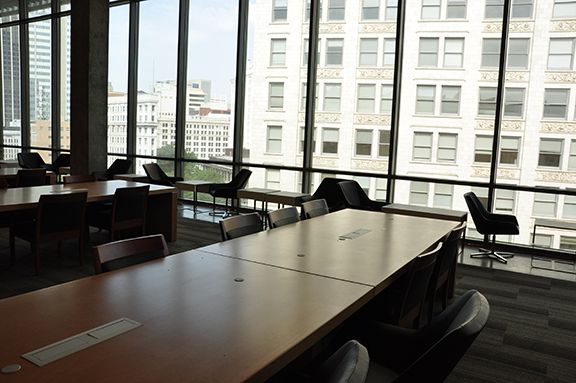
From the 6th floor Reading Room

A view from the 6th floor Reading Room


Study Aids:  The Study Aid Collection can be found in the back of the collaboration space—just behind the Technology Support desk.  We also have online availability.

Reserve Items: Course required books, book stands, lap desks, games, chargers, and more are available on request at the Circulation Desk.

Reference Collection:  Heavily-used resources and other reference materials, including the Official Code of Georgia (O.C.G.A.) are located just to the right of the Reference Desk.

Leisure Collection:  The DVDs, fiction, and fun non-fiction are all still available for you to check out and enjoy—they are located next to the reference collection.

Georgia Collection:  The Georgia state materials are located on the library 5th floor behind the elevators, in free-standing shelves.  The collection includes Georgia primary sources including Georgia Laws and West’s Annotated Code of Georgia.  You will find secondary sources including past editions of Georgia treatises (current editions are in the Reference Collection) such as Redfearn Wills and Administration in Georgia and a wide variety of Georgia continuing legal education materials.

Core Practice Collection:  A number of our practitioner tools, such as legal encyclopedias, form books, and practice guides are located the Core Practice Collection on the 5th floor behind the elevators, right next to the Georgia Collection

General Stacks:  Material in General Stacks are located on both the 5th and 6th floors.  Call numbers beginning with AC and running through KE will be found on the 5th floor, starting behind the elevators.  If the call number starts with KF1 or comes later in the alphabet, you’ll want to start looking for the title on the 6th floor, just as you walk off the elevator.

Law Periodicals:  If you want to look at a journal article that you can’t access online because it’s too recently published(cough cough, perhaps not very likely), you may want to try the 6th floor behind the elevators.  The journal titles are in alphabetical order.

If you have any questions about finding our other special collections—state materials or the Young Adult Collection (yes, we have that!)—please stop by the reference desk and we will be happy to help you.

The 2016 Presidential Race: A Chance for History

By John Evans

If you are anything like me, right now two sets of stories dominate your social media feeds; stories of the Olympics and stories about the presidential elections. With the Olympics already receiving a blog post, I figured I will focus on the presidential election.  What is a possible implication of the Electoral College?


1908The 12th amendment to the Constitution of the United States changed the Electoral College and in part established that in the event no candidate receives a majority of electoral votes, the House of Representative shall choose the president from the top three candidates. However, each state only gets one vote.

As of 8/15 the fivethiryeight.com forecasts Clinton receiving 322 votes and Trump receiving 216. 270 electoral votes are needed for a majority. If Trump is able to rally and win back Florida and North Carolina that would change the totals to Clinton 278 and Trump 260.

But what happens when a third party candidate breaks up the two party political monopoly?  The only candidate currently running who seems to have any chance would be Gary Johnson of the Libertarian Party.  To stage this upset, Johnson would only need to take away 9 electoral votes from Clinton. Johnson’s home state, New Mexico, holds 6 votes and the “Free State Project”–New Hampshire–holds 4 more.  If Johnson wins these two states the final tally would be Clinton 268, Trump 260 and Johnson 10.  The election would then move to the House.

Many people, at this point, would say that the idea of a third party candidate winning even one state is impossible and not worthy of any analysis. However Gary Johnson may be the first third party Candidate even allowed to debate in modern history. Presidential debates are planned and sponsored by The Commission on Presidential Debates (CPD).  The FEC requires the CPD to choose the participants in the debates based on “pre-existing, objective” criteria.

The CPD’s criteria: “[c]onstitutionally eligible … appear on a sufficient number of state ballots to have a mathematical chance of winning a majority vote in the Electoral College, and have a level of support of at least 15 percent of the national electorate as determined by five selected national public opinion polling organizations.”

Historically, many third party choices have met the first two criteria and are held out by the third.  Johnson has recently received his own bump in the polls.

Johnson media attention has also been significant, including large articles in Politico and Time Magazine. This additional media attention could lead to a last big push to the 15% mark and get Johnson on the big stage. Johnson could then use the momentum from getting into the debate to win some electoral votes.

With the likelihood the republicans retaining the house, and the unpopularity of Trump among house republicans, who knows the outcome.


Study Aids

Study_Aids

How you study, prepare for class, and prepare for exams is a decision you must eventually make.  Here are are a few resources to help you along the way.


Traditional Study Aids

  • The Law Library’s collection of study aid resources and supplements (i.e. hornbooks) have varied approaches to helping you understand core concepts. The collection includes many notable series, including Examples & Explanations, Crunchtime, and Acing.  They are available in the interactive learning area with many titles also fully available online.

Audio and Flash Cards

CALI Lessons

  • The Center for Computer-Assisted Legal Instruction maintains a collection of almost 1,000 interactive, computer-based lessons covering 33 legal education subject areas.

To access CALI lessons:

  1. Go to www.cali.org
  2. Enter the email and password you created at registration. (If you have not registered, you will need to create a new user account. Contact Patrick Parsons to obtain an authorization code.)
  3. Select Lessons (from Quick Links) and then choose a specific lesson

Exam Archive


Doping allegations – who decides whether athletes compete in the Olympics?


SugarLoafMtnRioBBCWorldService

Sugar Loaf by BBC World Service, CC

The summer Olympic Games begin soon in Rio with the opening ceremony set for August 5th. (Actually, women’s soccer begins August 3rd and men’s soccer begins August 4th. You can check the schedule here.) In addition to news reports about Zika, infrastructure and societal problems, and stunning poverty in Rio, you may have also heard reports of doping issues and other rules violations. But what regulatory bodies govern participation in the Olympics and how should you begin your research in this area?

Let’s take a look at the recent decision of the Executive Board of the International Olympic Committee (IOC) regarding the Russian doping scandal. Reports of government supported doping by Russian athletes abounded after the Sochi games. The World Anti-Doping Agency appointed Canadian lawyer Richard H. McLaren to lead an Independent Investigation of the Sochi allegations. The report was issued on July 16, 2016 and detailed 3 key findings: (1) a Moscow testing laboratory operated, under the direction of the government, a system to protect Russian athletes described in the report as the “Disappearing Positive Methodology”; (2) a Sochi laboratory used a sample swapping technique to protect Russian athletes; and (3) the deliberate mishandling and swapping of samples at both laboratories was done under the supervision of the Russian Ministry of Sport.

On July 18th WADA’s Executive Committee recommended that the International Olympic Committee consider banning all athletes submitted by the Russian Olympic Committee and the Russian Paralympic Committee from participating in the Rio 2016 games.


MaracanaStadium

Estadio do Maracana by Luciano Silva, CC

So now what? Why does the IOC get to decide and what does it base its decision on? First, some history. The Olympic Games were re-established in the late nineteenth century and the IOC was created on June 23, 1894 as the governing authority for the Olympics. All organizations affiliated with the Olympics, such as International Federations (IFs), must agree to abide by the Olympic CharterIn order to participate in the Olympic Games, athletes must comply with the Olympic Charter and follow the rules of the International Federation (IF) for their sport.

After the McLaren Report, the IOC Executive Board had to quickly make a decision about the participation of Russian athletes in the Rio Olympic Games. On Sunday, July 24, 2016, they issued their decision. The Executive Board did not issue an outright ban, however, the onus was placed on the athlete to “rebut the applicability of collective responsibility in his or her individual case.” No Russian athlete will be able to participate in the Games without meeting certain criteria. The determination of eligibility will be made by the IFs after the athletes have met certain criteria including an individual assessment of the history of their anti-doping testing, mere absence of a positive test will not be sufficient. The athletes who are being banned from the games are failing to meet the criteria set out in Sunday’s IOC decision.

You can find official documents relating to the IOC through the Olympic Studies Centre. Some of the Centre’s documents collection is available online here. For links to more information about the International Federations for Olympic sports go here; and for more information about National Olympic Committee’s go here.

Asking Other Questions

Legal databases and search tools available online continue to grow–new tools and metadata continually created.  It is ripe opportunity for creativity.  What creative questions and queries should you ask?

Perhaps you want to find out what clichés to avoid in legal journal writing?  A few targeted searches in HeinOnline’s Law Journal Library can yield interesting results.

Hein


Perhaps you want to quickly find the holding of a case.  Let later citing judges do the heavy lifting for you. Perhaps you want to find out when they don’t particularly agree?

Row2.JPG


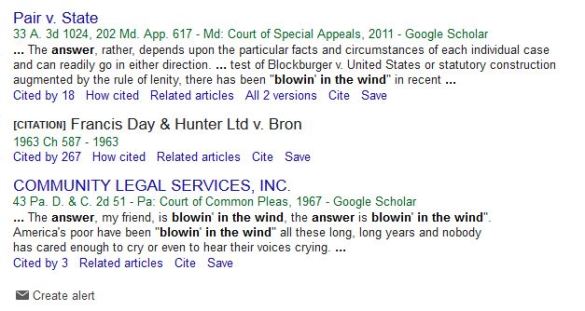
Or perhaps you merely want to see what songs show up in opinions.

Blowin

What answers can we ask our legal databases to uncover?

Law School for Dummies, and Smarties

I have good news and bad news for all you law students out there. The good news is you still have about 1/3 of your summer break left. The bad news is that means Georgia State College of Law classes start in about a month, with our new students starting orientation August 8 and our returning students beginning classes on August 15. I know, it went by quickly for me too.
So, for this post I wanted to talk about some resources from the library that can help you do better in your law school classes. I know what you’re thinking. “Won’t all of the library resources help me do better in law school?” Short answer: maybe. While I’m sure everyone will need to find a section in the O.C.G.A. or U.S. Code, locating regulations from before the days of the C.F.R probably won’t mean a whole lot. What I’m talking about are resources that will actually help you “do” law school.
Law students often struggle because they do not understand the expectations of their work, their answers, or themselves. What should you be getting out of the cases you read? How do legal rules work together? What does a good law school exam answer look like? What’s the deal with these weird exam hypotheticals and is there a better way to approach them? Luckily, there are a number of books that answer these types of questions. Many students spend so much time making outlines and memorizing that they don’t ever think strategically about how they study and learn the law. Do yourself a favor and take an hour to skim some of these books. At the very least, they will give you some useful suggestions and at most change the way you approach your legal education.gtm

Getting to Maybe: How to Excel on Law School Exams by Jeremy R. Paul and Richard Michael Fischl

Professors Fischl and Paul explain law school exams in ways no one has before, all with an eye toward improving the reader’s performance. The book begins by describing the difference between educational cultures that praise students for ‘right answers,’ and the law school culture that rewards nuanced analysis of ambiguous situations in which more than one approach may be correct. Enormous care is devoted to explaining precisely how and why legal analysis frequently produces such perplexing situations

reading like a lawyer

Reading Like a Lawyer : time-saving strategies for reading law like an expert by Ruth McKinney

The ability to read law well is a critical, indispensable skill that can make or break the academic career of any aspiring lawyer. Fortunately, the ability to read law well (quickly and accurately) is a skill that can be acquired through knowledge and practice. The sooner the student masters these skills, the greater the rewards. Using seven specific reading strategies, reinforced with hands-on exercises at the end of each chapter, this book shows students how they can read law efficiently, effectively, powerfully, and confidently.


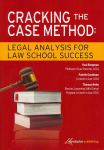
cracking caseCracking the Case Method: Legal Analysis for Law School Success by Paul Bergman

Cracking the Case Method is a concise and down-to-earth guide to the intellectual content of law school instruction, particularly in the first year. Readers will discover why and how law school instructors use appellate court cases as vehicles for teaching legal analysis. This book explains that legal analysis is a process by which judges and lawyers use argument (or rhetoric) to connect stories to legal conclusions, and reveals how to read judges’ appellate court opinions as arguments rather than merely as sources of rules. To succeed in law school, students have to apply analytical skills to novel stories by crafting arguments of their own, both in class meetings and when answering final examination essay questions. This book promotes readers’ ability to apply analytical skills by: Demonstrating how to “brief” cases in a way that captures both arguments and rules; Explaining and illustrating common types of arguments; Using actual law school classroom dialogues annotated by the authors to explain how instructors use classes to further law schools’ goal of teaching argument skills.


Bar Preparation/Study Hacks

July 26th and 27th—the Georgia bar exam– is slowly but surely approaching.  Recently graduated law students will have to climb one more hill.  Below are some popular science tips to help with the day-in-and-day-out studying:

296747958_8c15e91e3f_z

Hopefully you are not using a graphing calculator for bar prep (Image by Steven S. via Flickr, CC BY 2.0)


Working out, specifically cardio of just 30 minutes a day can give your memory a boost.

Change things up.  Moving to different locations can increase retention.

Practice.  The taking of practice tests can enhance performance.

Study right before going to sleep for superior retention.

Chewing gum = extra blood flowing to the brain.

Stay positive and remind YOURSELF to keep up the good work

Faculty Summer Reading Suggestions

14886739226_a642163c9a_z.jpg

Summer is fast approaching.  Before you know it the trials and tribulations of the academic year will be behind us, exchanged for internships, jobs, conferences, and hopefully vacation.  Many of us use this time to catch up on our leisure reading.  If this is you, the GSU law faculty would like to suggest a few of their favorite titles.  All of these titles will appear in the Law Library leisure collection.


Jessica Gabel Cino

Girl on the Train by Paula Hawkins

Rachel takes the same commuter train every morning. Every day she rattles down the track and stops at the signal that allows her to daily watch the same couple breakfasting on their deck. And then she sees something shocking. It’s only a minute until the train moves on, but it’s enough. Now everything’s changed. Unable to keep it to herself, Rachel offers what she knows to the police, and becomes inextricably entwined in what happens next, as well as in the lives of everyone involved. Has she done more harm than good?


Washington’s Spies: The Story of America’s First Spy Ring by Alexander Rose

Based on remarkable new research, acclaimed historian Alexander Rose brings to life the true story of the spy ring that helped America win the Revolutionary War. For the first time, Rose takes us beyond the battlefront and deep into the shadowy underworld of double agents and triple crosses, covert operations and code breaking, and unmasks the courageous, flawed men who inhabited this wilderness of mirrors—including the spymaster at the heart of it all.


Neil Kinkopf

A Man for All Seasons by Robert Bolt

The classic play about Sir Thomas More, the 16th-century Chancellor of England, who refused to endorse King Henry VIII’s wish to divorce his wife Catherine of Aragon, who did not bear him a son, so that he could marry Anne Boleyn, the sister of his former mistress. The play portrays More as a man of principle, envied by rivals such as Thomas Cromwell and loved by the common people and by his family.


Jonathan Germann

High Output Management by Andrew S. Grove

The essential skill of creating and maintaining new businesses—the art of the entrepreneur—can be summed up in a single word: managing. In High Output Management, Andrew S. Grove, former chairman and CEO (and employee number three) of Intel, shares his perspective on how to build and run a company.


The Moth (Podcast).  https://themoth.org/stories/my-first-day-at-the-yankees

Founded in 1997, the organization presents storytelling events across the United States and abroad, often featuring prominent literary and cultural personalities. The Moth offers a weekly podcast and in 2009 launched a national public radio show, The Moth Radio Hour, which won a 2010 Peabody Award. The 2013 story collection The Moth: 50 True Stories reached #22 on The New York Times Paperback Nonfiction Best-Seller List.


Pam Brannon

The 100-Year-Old Man Who Climbed Out the Window and Disappeared by  Jonas Jonasson.

It all starts on the one-hundredth birthday of Allan Karlsson. Sitting quietly in his room in an old people’s home, he is waiting for the party he-never-wanted-anyway to begin. Slowly but surely Allan climbs out of his bedroom window, into the flowerbed (in his slippers) and makes his getaway. And so begins his picaresque and unlikely journey involving criminals, several murders, a suitcase full of cash, and incompetent police. As his escapades unfold, we learn something of Allan’s earlier life in which – remarkably – he helped to make the atom bomb, became friends with American presidents, Russian tyrants, and Chinese leaders, and was a participant behind the scenes in many key events of the twentieth century.


Russell Covey

Ghettoside by Jill Leovy

An engaging tale told by an L.A. Times crime reporter about the difficulties of investigating homicide cases in inner-city minority communities. Leovy casts light on problems such as the under-resourcing of policing in the urban ghetto that go far toward explaining the violence crisis that has long afflicted black communities.

Serial, Season One (podcast) –  https://serialpodcast.org/season-one

If you haven’t listened to it yet, do so. It’s awesome entertainment, examining the case against Adnan Syed, a possibly wrongfully convicted man currently serving a life sentence in Maryland for the murder of his ex-high-school girlfriend.

Undisclosed (podcast) –  http://undisclosed-podcast.com/

This is a follow-up podcast on Serial, and digs into the case in gory legal detail. For Serial enthusiasts, it is a must-listen, and it digs up some truly shocking new details that were not discussed on Serial.


Bill Edmundson

Egil’s Saga, author uncertain – http://sagadb.org/egils_saga.en

Egil’s Saga, is I think the best of the Icelandic sagas. If you are unfamiliar with the sagas, you may be surprised by the simplicity and directness of the narration. “Game of Thrones” fans are probably aware that the story lines owe a lot to the sagas. The aspect that makes them especially apt for law students is the way that Icelandic law structures the conflicts that drive the story.  An excellent overview is Bloodtaking and Peacemaking: Feud, Law, and Society in Saga Iceland by Michigan law professor William Ian Miller.


Meg Butler

Pretty Girls by Karin Slaughter

Meg’s top pick for summer reading would be anything by local author Karin Slaughter.  She writes compelling thrillers, often set in Atlanta or in Georgia. Her most recent is Pretty Girls, a stand-alone novel just released in paperback this week.  Slaughter is a library champion, founding the Save the Libraries project, which has raised over $250,000 for the Dekalb County Library Foundation. “On Second Thought” posted audio of Celeste Headlee’s interesting recent interview with Slaughter—the author explains why she sets her novels in Atlanta and Georgia.

Jack Williams

The Art of Racing in the Rain by Garth Stein

Enzo knows he is different from other dogs: a philosopher with a nearly human soul (and an obsession with opposable thumbs), he has educated himself by watching television extensively, and by listening very closely to the words of his master, Denny Swift, an up-and-coming race car driver.A heart-wrenching but deeply funny and ultimately uplifting story of family, love, loyalty, and hope, The Art of Racing in the Rain is a beautifully crafted and captivating look at the wonders and absurdities of human life…as only a dog could tell it.

Kris Niedringhaus

Citizen: an American lyric by Claudia Rankine

Move over, ethereal poetry. Make room for a collection from Claudia Rankine titled “Citizen: An American Lyric.” Rankine is Jamaican-born, raised both there and in New York. Her book was a finalist for the National Book Award. And while Rankine did not win last night, our reviewer Tess Taylor says, this powerful collection is the perfect book to appreciate the racial dynamics at play today.

How to be a woman by Caitlin Moran

Part memoir, part modern feminist discussion, Times columnist Caitlin Moran’s book How to be a Woman tackles what it means to be female in the 21st century.

Trigger warning: short fictions and disturbances by Neil Gaiman

Neil Gaiman pierces the veil of reality to reveal the enigmatic, shadowy world that lies beneath. Trigger Warning includes previously published pieces of short fiction—stories, verse, and a very special Doctor Who story that was written for the fiftieth anniversary of the beloved series in 2013—as well “Black Dog,” a new tale that revisits the world of American Gods, exclusive to this collection.

Patrick Parsons

Blood Meridian: Or the Evening Redness in the West by Cormac McCarthy (No Country for Old Men, The Road)

An epic novel of the violence and depravity that attended America’s westward expansion, Blood Meridian brilliantly subverts the conventions of the Western novel and the mythology of the “wild west.” Based on historical events that took place on the Texas-Mexico border in the 1850s, it traces the fortunes of the Kid, a fourteen-year-old Tennesseean who stumbles into the nightmarish world where Indians are being murdered and the market for their scalps is thriving.

Yelping With Cormac McCarthy (Tumblr)

If you liked Blood Meridian, you’ll love these McCarthy stylized Yelp reviews.

The Last Waltz (movie, concert documentary)

A wise man once said it’s better to burn out than fade away, and on Thanksgiving Day of 1976, the Band, one of the best live acts of the rock era went out in a blaze of glory that was called The Last Waltz.After spending more than 15 years on the road – first as a backing band and then as a recording act in their own right – they called it quits as a touring entity by leading an all-star ensemble through an epic night of food, dancing and rock ‘n’ roll. Commemorated by director Martin Scorsese, the event would later serve as the grist for one of the most beloved concert films of all time.



Visualize What?

Networked digital information creates many new opportunities. One is visualizations.

Humans have the ability to understand and interpret visual representations quickly. Pouring over millions of documents or data points to gain a similar understanding could take years if not a lifetime.

Computers, on the other hand, have the ability to crunch millions of megabytes with speed and ease–while possessing no end understanding or interpretation(I hope).  Computers are also very good at rendering visual representations.

Take, for example, Fastcase and CourtListener citation visualizations:

This slideshow requires JavaScript.

Or West Monitor Suite and Docket Navigator judicial visualizations:

This slideshow requires JavaScript.

Information is quickly communicated and manipulated.

What data sets or corpora should we be examining?  What questions should be asked?  And how should answers be presented visually for maximum understanding? Data manipulation and end visualization is completely dependent on the question(s) being asked.

What do you want to know?