C-SPAN

White House photo 2/24/09 by Joyce N. Boghosian

White House photo 2/24/09 by Joyce N. Boghosian

When you want to see Congress in action, the best place to go is C-SPAN. Created by the cable television industry in 1979, C-SPAN provides the public access to the United States political process.

If you have cable, you have probably stumbled across C-SPAN a few times. C-SPAN and C-SPAN2 offer “gavel-to-gavel” coverage of the House and Senate. Viewers can watch all the of the floor debates and votes. You can also find public committee hearings on C-SPAN as well. Additionally, the networks will provide coverage of key judicial events, and will even rebroadcast oral arguments from major Supreme Court cases.

C-SPAN currently has three television channels and a radio station that provide political coverage. If you don’t have access to a television, not to worry. Viewers can watch all of the channels on the C-SPAN Website for free (links provided below).

To keep up with all the programming C-SPAN has to offer, check out their schedule. If you had your heart set on seeing a particular event, but missed the live showing, you can locate an archived video in the Video Library.

Blueacre

by Mark Stuckey

Urban Life 1With the momentous ground breaking that took place on GSU’s new law building last Thursday, I wanted to take some time to reminisce about my favorite aspects of the current law school. Sure, the new building will be state of the art and sustainable, but I will undoubtedly miss the Urban Life Building, the place that has been much more of a home to me over the last arduous year than my dingy, dark Atlanta apartment. There are too many things to list, but here are some of my personal favorites ULB has to offer:

1. The Lack of Stairs

The designers of the Urban Life Building, like all self respecting Americans, had a robust disdain for aerobic activities. Hence the fact that the law school’s upper floors are only accessible via elevator. This revolutionary feature is exceedingly convenient when exiting a 6th floor lecture hall with 90 of your closest friends. Pro tip: There is a semi-secret staircase connecting the first and second floors by the career services office.

2. Weird Bathrooms

If you have not noticed go check out one of the numerous bathrooms that call the Urban Life Building their domicile. Not only is the decor cold war chic, but also the acoustics are redolent of Atlanta Symphony Hall. Additionally, the bathrooms in the Urban Life Building make it easier to get closer to your classmates (physically at least) when navigating their narrow thoroughfares. Pro tip: I am pretty sure the sixth floor men’s bathroom is haunted by a friendly ghost.

3. Intermittency of Cell Service

Probably the best features of the Urban Life Building are the random black holes that renders that device on which you play Candy Crush useless. This is especially helpful when you need a little extra motivation to pay attention in Civ Pro, or when you’re seeking isolation on the second floor of the library from you non law school friends (who will never understand what you’re going through).

There you have it, a short and rather incomplete list of the parts of the Urban Life Building I will miss the most. Luckily, there is still time to enjoy the idiosyncrasies. Comment below and tell me what you like about the Urban Life Building!

A Key Day for Indigenous Peoples

On September 13, 2007, an event over two decades in the making happened: the United Nations General Assembly adopted the Declaration on the Rights of Indigenous Peoples. 143 countries voted in favor of the Declaration; although the United States voted against it, the U.S. has since voiced its support for the Declaration.

The Declaration addresses issues such as the right to self-determination, preservation of cultural heritage and ethnic identity, and the forcible removal of indigenous peoples from their lands or territory. Work to ensure the implementation of the Declaration continues, particularly by the United Nations’ Permanent Forum on Indigenous Issues, which meets for its thirteenth session in May 2014.

How to Outline

by Joshua Kahn

MacBook writing (Håkan Dahlström) / CC BY 2.0

Today, we have our second installment in the Blackacre Times’ “how do I do this whole law school thing” series—how to write an outline. If you haven’t already read the quick and dirty guide for 1Ls, you should probably start there.

Like almost everything in law school, outlining is one of those things that sounds scarier than it really is.  Basically, an outline is just a scaled down version of your notes that 1) only includes the things that actually matter, and 2) puts those things that matter in an order that shows how they relate to each other.  It is NOT a compilation of every word that has ever fallen out of your professor’s mouth bound in a pretty little binder with tabs.

The real value of outlining is that it forces you to recognize what is important and how it’s important.  That’s why you should always write your own outline, that process is some of your best studying.

So how should an outline look?  Well, everyone has their own method that fits the way they think, but I’m going to use a section of my Corporations outline as an example.  Please take a minute to scroll down and look over it.  It’s discussing situations where an individual or corporation can be liable for the dumb things someone working for them does, even without the employer’s permission.  This is only about 1/3rd of my outline’s agency section, so don’t worry if you don’t understand exactly what it’s talking about.

Ok, finished reading?  Good.  Now I’m going to break down the specific components of the outline.

Easy to Read

First, my outline is formatted to be easy to read.  For some reason I’ll never understand, it’s traditional to write outlines in one font size, without much space between the lines and without a ton of underlining or bold type.  Obviously, I don’t hold by that.  If you want to use your outline on a test, it should be easy to read. I make headings bigger and bold, underline cases, and put citations in parenthesis, etc.

Logical Categories

Next, outlines should be broken down into logical (to you) categories.  A lot of this is optional and more art than science.  I based my contracts outline around the various ways a contract can be formed, for example.  In the example below, I thought that the torts consequences of agency deserved its own section because it’s very easy to spot in a fact pattern.  I could, however, have chosen to include it as a subcategory of the consequences of the formation of an agency relationship and if I had done that, I would have had a completely different organization for the section.

Elements

This is the meat of an outline. Your goal when outlining should be to break anything you possibly can down into clear legal tests with specific elements.  Then, when you see that point on a test, you can just run through those elements.

Take a look at the three numbers listed under “elements” towards the top.  Those are the test to run to see whether an employer is liable for someone else’s actions.  Below, I have a section labeled “notes” with numbers that correspond to each of those elements. You’ll find that most of the content of a law school class boils down to a few main tests, and all the special rules for various exceptions to those main tests. The exceptions are usually exceptions to one of those elements, not all of them, and I put the exceptions into notes corresponding to those elements.

In this case, there are a lot of ways to meet the various elements, so I’ve chosen to organize them under the notes section.  So, to see if you have met element one—an “agency relationship”—you go down to note one and see that you can do that with either “actual authority” or “apparent agency.”

Look more closely at “actual authority” under note 1.  It includes a list of factors that suggest that an employer either has, or does not have, enough control over the employee to create actual authority.  On a test, you’d look at those factors in the fact patter the professor gives to you, and discuss as many as possible.

Citations

Although most professors do not require it, a number like it when you include citations to specific cases or statutes on your final. Don’t try and remember all of that off the top of your head. What I do is include citations to cases and statutes in my outline next to whatever it is those cases show.  For example, under note 1, the sentence “parties cannot disclaim agency” is followed by a citation to the case “Holiday Inns.” That means that the Holiday Inns case shows that parties can’t disclaim agency.  So, when you run into a situation where that applies on the test, just write it down and throw “(see Holiday Inns)” into your answer.  You don’t have to remember the case name, and have all the citations right in front of you to grab quickly.

When to Start Outlining

The traditional answer is about half way through the semester, but that’s not set in stone.  If you can pull it off, you can literally take your notes directly into outline form (don’t try this until your second semester at the earliest).  For your first semester though, you’re better off waiting until you get a feel for how the areas of law you are studying fit together.  Early on, you won’t be able to pick out what’s important and what isn’t.  Later, you can do that much more quickly.  The main thing in 1L is not to wait until the last second to do your outline.

———————-

Agency Tort Liability

Vicarious Liability

-Principals are liable for acts if…

Elements (2nd Rest. §§ 219(1) & 250))

  1. 1.      Agency Relationship (e.g. Master-Servant)
  2. 2.      Act was within Scope of Employment

OR          

3.  Independent Contractor doing Inherently Dangerous Activity

Notes:

1.  Agency Relationship (Master Servant vs. Independent Contractor)

Actual Authority

-Established by sufficient Control (2nd Rest. § 220)

-Parties Cannot Disclaim agency (Case: Holiday Inns)

(Case: Humble control can exist even when contract disclaims, ex of franchise with enough control for master-servant)

(Case: Hoover ex of franchise without enough control for master-servant)

(Case: Holiday Inns ex of franchise without enough control for master-servant)

Factors showing Control: (Case: Conoco factors for scope discussed )

NOTE: Control associated with the harm is stronger evidence

-Controls Time of work

-Controls Method of work

-Controls Manner of work

-Works for one boss or many

-Can complete task however they see fit

-1099 or W-2?  (not definitive)

-Who has the right to hire/fire?

-Do they bring own supplies & tools?

Apparent Agency

(Definition Note:  Apparent Agency establishes agency where none would have existed, Apparent Authority expands authority that already exists)

Elements for Apparent Agency liability (2nd Rest. § 267) (Case: Miller)

  1. Principal Held Out party as an Agent
  2. Plaintiff relied on that holding out

(Case: Miller ex apparent agency establishing apparent agency over franchisor even without enough control for master-servant)

2.  Act was within Scope of Employment

-Scope of Employment if “Employer Benefits from Action”

(2nd Rest. § 228) (Case: Bushey)

Test: Conduct Reasonably Related or Reasonably Foreseeable

Intentional Torts (2nd Rest. § 231 & 228(2))

-Reasonable Related if:

1.  Foreseeable by Master (2nd Rest. § 228(2)

OR            2.  “Manning” Standard (Case: Manning)

A.  In response to P’s conduct

B.  Which was interfering w/ employees ability to perform duties

3. Facilitated by access the position provides (Case: Conoco)

3.  Independent Contractor doing Inherently Dangerous Activity

Principal is liable if…

1.  “Inherently Dangerous Activities” (e.g. a “nuisance per se”)

(2nd Rest. of Torts § 416)

(Case: Majestic ex of inherently dangerous activity)

TEST:  Particular risk of substantial harm

in the absence of special precautions

-factual inquiry

-remember: NOT strict liability/ultra-hazardous

-Harm must come from the basic reason the act was dangerous

-Otherwise, Collateral Negligence and employer not liable

2.  Hiring Incompetent Contractor (Case: Majestic)

3.  Principal Retains Control over manner & means of work (Case: Majestic)

Do This Now, So You Don’t Pay Later. Seriously.

by Nirvi Shah

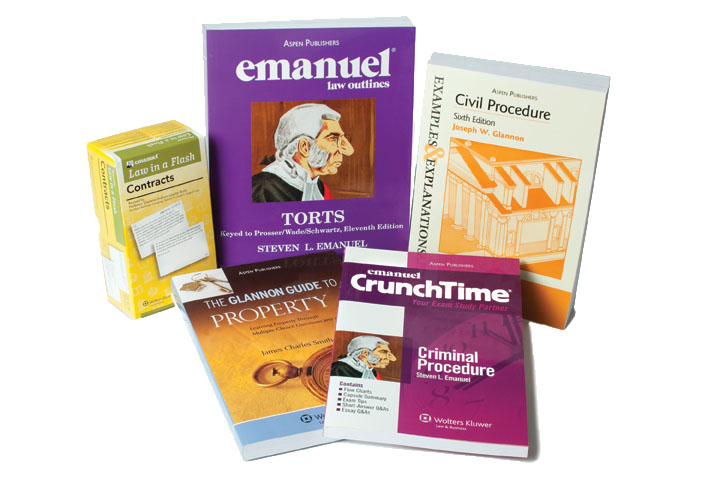
Study_AidsA few weeks ago my friend, Joshua Kahn, posted “A Quick & Dirty Guide for 1Ls.”  Each of his points are accurate and helpful.  One topic in particular, however, I found most beneficial during my 1L year.  Practicing hypotheticals helps you score better on exams.  The more you practice, the better you do.

Buying study aids can get expensive, and Googling examples may take up too much time.  That is where the Law Library comes in.

The library has study aids.  Many, many, many study aids.  Multiple copies of some books.  While they are all on the shelves right now, they probably will not be around exam times.  That is when you will need them the most.  Why am I pushing you to use the study aids now, before you have even started outlining?

Most law students aren’t really sure about what is going on during their 1L year—especially when it comes to learning class materials and giving professors good answers on the exam.  (If you are one of the few who knows exactly what is going on, that’s awesome—good for you.)  Some professors may claim that students don’t need any study aids or supplements to do well in their class, but honestly, it can’t hurt.

This is why you should get up, walk to the “Law Student Study Aids” section, pick out a book that is written in a way you find easy to read and understand, and start skimming the relevant chapter.  If you don’t start now, you will not have time to search and scan appropriate examples, find the book when exams roll around, or you will have to come to terms with paying more money on books this semester just to use the study aids for a few weeks period, if even that.

Just remember, always put the study aids back in the area, where the sign says, “PUT STUDY AIDS HERE WHEN YOU’RE DONE.”

Good luck with 1L year!

Undocumented Lawyer

The California Supreme Court held oral arguments today in a case that will ultimately decide if Sergio Garcia can become a licensed attorney. While Garcia has already passed the California Bar Exam, he has hit a roadblock in obtaining his law license because of his citizenship status. Garcia, 36, was born in Mexico, but his parents brought him to the United States when he was only 17 months old. Splitting time between Mexico and California, Garcia decided to permanently stay in California at age 17.

For 19 years now, Garcia has waited to receive a green card. During that time he completed college, finished law school, and passed the California Bar Exam on the first try. However, a 1996 federal law passed by Congress prohibits immigrants residing illegally in the United States from receiving “professional licenses.” The Justice Department further determined that the California Supreme Court cannot admit Garcia to the bar because the court is funded by state money. Interestingly enough, the State Bar of California and the California attorney general are both on the side of Garcia.

While no opinion has been rendered yet, the Associated Press stated that the justices “appeared reluctant Wednesday to grant a law license to Sergio Garcia.” (Source: Washington Post).  The court will now have 90 days to rule on the case.

For background on the Garcia case, check out the following sources:


What to Do: Labor Day Weekend

ATLfireworks_imagebyflickruser_paigehenderson

Not sure what to do this weekend? Here’s a couple of things that may be of interest…

SPORTS

Braves v. Marlins

Friday, Aug. 30 / 7:30 pm

Saturday, Aug. 31 / 7:10 pm

Sunday, Sept. 1 / 5 pm

Braves v. Mets

Monday, Sept. 2 / 1:10 p

http://atlanta.braves.mlb.com/schedule/index.jsp?c_id=atl&gclid=CKvor5_KpbkCFazm7Aod3lsAyA#y=2013&m=8&calendar=DEFAULT

Chick-fil-A Kickoff Game

Alabama vs. Virginia Tech

Saturday, Aug. 31, 2013

Georgia Dome, Atlanta

http://www.atlanta.net/sports/chickfilacollegekickoff.html

Labor Day NASCAR Night Race Weekend @ Atlanta Motor Speedway, Hampton, Georgia

Sunday, September 1

http://www.atlantamotorspeedway.com/events/advocare500/

2:30 pm – Gates Open

3:00 – 8 pm – Hospitality tent open

3:00 pm to 5:00 pm – Pit Tours

7:30 pm – race begins

Action Dash : Race to Beat the Cycle of Poverty 5K Run/Walk and Fun Run @ Piedmont Park, Atlanta

Monday, Sept. 2 : 8 am

http://www.actiondash.org/site/TR/Events/General?fr_id=1090&pg=entry

This Labor Day, put on your best super hero costume and join other Action Heroes as they race for the cause. Proceeds from the Action Dash will aid Action Ministries in ending the cycle of poverty throughout Georgia. Action Ministries provides housing and education opportunities and prevents hunger through programs in Atlanta, Athens, Gainesville, Rome, and Augusta.

FESTIVALS IN METRO ATLANTA

Dragon*Con @ Atlanta Marriott Marquis

Aug. 30-Sept. 1

Parade, Saturday, Aug. 31, 10 am: see website for parade route

http://www.dragoncon.org/?q=node/387

Largest multi-media, popular culture convention focusing on science fiction and fantasy, gaming, comics, literature, art, music, and film in the universe!

Pure Heat Community Festival / Project Turn Around Carnival and Coming Out Party @ Piedmont Park

Sunday, Sept 1  Noon-7 pm

http://www.pureheatcommunityfestival.com/

Pure Heat Community Festival showcases the different meaning of unity with pride. Equipped with Market and Food Vendors, Health Fair, a hair show, sponsor moments, community forums, giveaways, performers & a world re-noun artist, our day of unity brings together a collective spirit of community. We are honored to utilize this opportunity to bring awareness of a community impacted by HIV/AIDS, and spearhead campaigns towards Environment Protection, Youth Mentorship, Education & Career Advancement, Women’s Health & Wellness, and Homelessness Transition. The Pure Heat Community Festival is a front seat into an awesome gathering of people from all walks of life.

Lasershow Spectacular in Mountainvision® @ Stone Mountain Park in Stone Mountain, GA

8:45 pm Saturday, Sunday, Monday nights

Park amenities open 10:00 am – 9:15 pm

http://www.stonemountainpark.com/events/Labor-Day-Weekend.aspx

Great place to hike, run, walk, ride on the cable car or scenic train, explore the many other sites at the park. Finish off the day with a lasershow and fireworks at the mountain. An experience every Atlantan should experience at least once.

Art in the Park @ Historic Marietta Square in Marietta, GA

Aug. 31-Sept 2

http://www.artparkmarietta.com/
This outdoor event boasts plenty of enjoyment for all ages with a large Artist Market, the Children’s Art Alley, the famous Painted Pots, historic sites and nearby dining

8th annual AJC Decatur Book Festival @ Decatur, Georgia

August 30-September 1

http://www.decaturbookfestival.com/2013/index.php

The eighth annual AJC Decatur Book Festival is finally upon us! With over three hundred best-selling authors to a vibrant street fair we’re bringing the heat in 2013.

Backyard Campout @ Chattahoochee Nature Center / 9135 Willeo Road Roswell, GA 30075

Saturday, August 31 – Sunday, September 1, 5:00pm-10:00am

http://www.chattnaturecenter.org/calendar-events/

A close-by staycation at CNC for Labor Day is a perfect weekend!  Sleep out under the stars, enjoy night hikes, play games on the meadow, visit with nocturnal animals, roast marshmallows around the campfire and more!

FESTIVALS WITHIN A TWO HOUR DRIVE

Sky High Hot Air Balloon Festival @ Callaway Gardens, near LaGrange, GA

Friday, Aug. 30-Sunday, Sept. 1

http://www.callawaygardens.com/events/signature-events/sky-high-hot-air-balloon-festival

The weekend kicks off with the extraordinary Friday Night Balloon Glow and continues all weekend long. Watch beautiful balloons in flight or hop in a basket for your own tethered balloon ride. Saturday is filled with family-friendly events, including live music, beach activities, a Kids Zone and much more. There’s something for everyone with a classic car show, disc dog demonstrations, a pyrotechnic skydiving demonstration, as well as a 5K Race and Triathlon event. If you’re a photography buff, you can sign up for our hands-on “Mastering Night Photography” course. Plus, you’ll find drink specials and sports on the televisions at the Beach Bar as well as some of Atlanta’s top-rated food trucks throughout the festival. Cap off the weekend with a final balloon glow Sunday night on Robin Lake Beach.

*Free admission to Callaway Gardens on Monday, Sept. 2.

Riverdale Seafood & Beer Festival @ Riverdale Town Center, Riverdale, GA

Saturday, Aug. 31 / Noon-9:30 pm

http://www.riverdaleculture.com/Calendar.aspx?EID=84

The City of Riverdale’s Seafood & Beer Festival is Riverdale’s biggest event of the year! This signature event features live music, international beer stations and an alluring display of fish, crab, scallops, and other seafood to entice the palate. The event also includes activities for children of all ages.

Amazon Sales Tax Starts Sept. 1

image by flickr user 401(K)2013

image by flickr user 401(K)2013

Starting on Sept. 1, the online retailer Amazon will begin collecting sales tax from Georgia residents. Georgia is just one of many states to recently pass legislation that affects online sales.

Here’s a quick look at the history of this legislation:

The Georgia General Assembly passed HB 386 in March 2012. This legislation amended the current Georgia code’s definition of the word “dealer” to encompass online retailers. The changes were codified in OCGA 48-8-2 and went into effect in January 2013. More information on the passage of this bill can be found in the Peach Sheets, which are produced by Georgia State University Law Review students and are a source of unofficial legislative history for the state.


The Right Study Space

study roomEven after you have registered for classes and picked up your books, you still have one more important selection to make – where will you study? Where you will study will have implications on how you do in your classes. While some of you may choose to study outside of the Law Library, I think the library has a couple of nice options for those who choose to spend your time in the library. Here are a couple of options you will have if you choose to study in the Law Library this coming semester.

The Study Carrel 

The tried and true friend of a law student. The study carrel has been around for generations. The perfect place to get “in the zone” and focus on your studies. For your convenience  each of the study carrels located in the library includes an electrical outlet and an network plugin. When it comes to studying, you can always count on old reliable.

The Small Table 

The small table is a great place to work if you like the size of the study carrel, but prefer to have more open space. The small table is also great for studying in small groups of two people.  But watch out, talk too loud and you may suffer the wrath of an angry 3L.

The Big Table 

The big tables are exclusive to the 2nd floor of the library, also known as the Quiet Zone. While we encourage students not to do group work at these tables, they are great if you really want to spread out or have a friend close by.

Soft Seating 

What it lacks in a place to lay your book on, it makes up for with pure comfort. The soft seating can be heaven on your back after a long class. A few of the chairs also have a small end table next to them, so don’t forget to bring that cup of coffee with you.

Study Rooms 

When you need to bounce topics of a friend, there is no better place than one of our 17 group study rooms. All of the study rooms include a whiteboard, and most of them also include a projector that you can hook your Laptop or iPad into. While you don’t need to whisper in these rooms, do remember that the walls are thin, so try to maintain a respectable volume. Study rooms are a hot commodity during the semester, so book in advance. You can book a study room a week in advance, at 3 hours per person, using the Study Room Reservation System.

A Quick & Dirty Guide for 1Ls

by Joshua Kahn

Image by Flickr user your_teacher

Image by Flickr user your_teacher

This post is for all the 1Ls.  We know you are new to campus, wracked by fear of the unknown, overwhelmed by readings, terrified that your entire grade is dependent on a single test… confused about what you’re supposed to do in class, before class  and. . . and. . . and. . . STOP!

Now, take a deep breath and repeat:  It is not that bad.

The faculty will offer a number of talks this semester about how to outline, what it means to take good notes, how to take a test, etc.  And that’s all well and good.  You should go.  Really.  But in the meantime one 3L working at the library would like to offer his short take on surviving and prospering in law school, in addition to all the other worthy advice you’re being bombarded with.  This advice is NOT the official opinion of the library or its staff, but, hopefully, it will help put things in perspective.

To Thine Own Self Be True

First, and most importantly, know your own learning style.  If you find you remember the somewhat esoteric jurisdiction law in civil procedure when you read the cases carefully, great.  If you prefer a hornbook, great.  Right now, try both and see what works for you. That’s probably the most productive thing you can do the first month; experiment with different pieces of advice, see what works for you, stop doing the things that don’t work, and do more of the things that do. That way, you’ll be using your time productively by mid-semester.

Preparing for Class

You do not need to show up every day with a typed brief of every case. You do not need to highlight every word of your casebook in your own special highlighter code. If these things help you, fantastic, but they are not necessary or helpful for most law students.

You do need to read the cases, but remember this:  Every case is designed to illustrate one point of law. The facts of each individual case are only important in so far as they illustrate that point of law. Yes, getting used to seeing how facts and law interact in cases is good general lawyer training, but it’s not the central takeaway for your grade (however, see the “because” section of this post below).

A word on being called on in class. . . don’t worry about it. As long as you don’t go out of your way to seem like you know everything, it’s not embarrassing to be stumped by your professor (if you are that guy/gal who always talks, your classmates will probably indulge in some Schadenfreude when they watch you twist in the wind).

More importantly, being called on is irrelevant to your grades. It helps professors run their classes smoothly when students know the facts of the cases inside and out. For students, however, spending too much time memorizing the facts of a case that is just there to illustrate a point of law takes time away from potentially more helpful studying. (more on this later)

Many 2L or 3L law students read a case, then write down a sentence or a few words reminding them what it’s about and what the main point is. For example: “guy falls down stairs, stairs not up to code, negligence per se?” Please though, READ the cases.

Taking Notes

Every case in your case book is there to tell you some important issue of law. If you can’t write down the point of the case in one sentence after the professor goes through the case in your class, you have probably missed something important.  In many classes, the professor will explicitly tell you what this important point is.

Those individual points of law all build into a complete picture of the area of law you’re studying.  It’s rare that one case will, say, explain all of contract law (although a few later cases are a good review, and many professors will point these cases out).  Nearly all cases either tell you a piece of the basic law (“this is what causation means in torts”), or explain a specific exception to that general rule (“these are the special damage rules for breach of construction contracts”).

You should focus your notes on what each individual point is, and how they all fit together. If you don’t understand these main points by the end of class, ask your professor.  Or, go look at a hornbook later and if you still don’t understand, ask after the next class.

Please, please, please don’t focus on the facts of the cases when you are taking notes.  That’s almost never the important takeaway—it’s just a tool to help you get to that takeaway.  Write the facts down if it’s helpful to you, but know that it’s not the main thing.  The exception is sometimes a brief summary of a case can be helpful later, especially for classes where the reasoning of past important cases matter (in 1L, that’s usually the constitutional law cases in Civ Pro I).  And, it’s always helpful when the professor tests on it.

At the beginning of the semester, ask your professors if they want you to cite cases or statutes on their exam.  Most professors don’t, but if they do, you want to know about it and write that information down.  It’s especially common for contracts professors to want those citations. If they do, be more careful about taking notes on specific cases and placing them in your outline later.

Study Groups

I never went to one and firmly believe they are a huge waste of time. I hear they can be helpful towards the end of the semester for taking practice exams and going over the answers together, but during the year, they can be a massive time-waster with little or no productive output.  But maybe they’ll be good for your social life, so there’s that.

Outlines

You shouldn’t worry much about outlines until mid-semester, but for your piece of mind, they are basically a distilled, organized version of your notes.  You should have your outline formatted so you know how each of the little pieces of law those cases teach you fit together into a whole, and see how they form nice little rules with different tests and factors to consider.

Extra Things that Help: Practice Problems

Probably the most helpful thing you can do with your “extra” study time, especially early in the semester, is do practice problems. The study aid section of the library has plenty of books with practice problems. Personally, I think most students would benefit far more—at least as far as grades go—from spending less time, say, carefully briefing (note: still read!) or going to a study group and using the extra time to do practice hypotheticals.

Taking Notes BEFORE Class

If you want to be extra diligent, one way to do this is to do your readings carefully, and BEFORE class, write down the key “takeaway” point of law from each case as if you had taken notes in class already. If you understand it well enough to do this, you’re in great shape and class will be both a review and a way to help catch whether or not you are wrong.

Outside Sources

I found listening to the life of a law student podcasts well before class while, say, commuting or working out, was helpful. I didn’t take it too seriously, but it exposed me to concepts before class started so my reading and class time was the not the first time I heard an idea. Often, concepts stick more effectively the second and third time you hear or read them, and this is a painless way to get that repetition.

Legal Writing

GSU just finished a massive overhaul of its legal writing program, so I don’t have so much guidance to offer here except the following two tidbits.

First, everyone complains that they spent way more time on their legal writing class than their other classes. It just works out that way, but at least be conscious of it and try not to lose perspective.

Second, I found it helpful to just sit down and try to make a good argument, then go back and make that good argument fit into all the stylistic or formatting points they try to teach you. Getting overly caught up in the formatting can hurt the substance of your writing. That said, DO write in IRAC from the start. They’ll tell you what that is in legal writing class (write you exams in IRAC as well).

 “Because”

Without getting too into final exams, which are still very far away, the most important word to your grade is the word “because.” When you write anything in any law school context, ask yourself if you answered the question “because.”  It is very tempting to just restate the rule when writing an exam, but adding the word “because” and filling in everything after is what will get you an A.

The Librarians Are Your Friends

This may sound self-serving coming from the library, but, really, the librarians are paid to help you. If you’re stuck on a research problem, they’ll help you. If you have no idea where to start looking, they’ll help you. If you have no idea how to BEGIN a legal research project, they’ll teach you from scratch if necessary.  This is more important second semester when you start having to do more serious legal research for your writing class, but if you’re stuck on something, ask them.  Very few students take advantage of the librarians’ help.

Summary: What You Should Be Doing Regularly

*Read for class—in whatever depth is helpful to you—focusing on picking out the important point of law the casebook author is trying to teach you.

*Write down sufficient notes on the cases to remember what they were about. This could be a little as a few words or as much as a few paragraphs. But for most people, it’s a few words to a sentence.

*Listen in class, and write down the key point of law each case illustrates. If possible, write how that relates to the other points of law you’ve already learned.

*Take notes on whatever else your professor tells you will be on the test.

*If you don’t understand these key points of law, ask your professor and/or consult a hornbook.

*Optional: Do practice problems, found in the study aid section of the library.

*Optional: Listen to a podcast on the subject matter like http://www.lifeofalawstudent.com.

*Later:  About mid-semester, begin outlining.

*Even Later:  Towards the end of the semester, take practice exams.