Study Aid Spotlight- Select Upper-level Selections

This super-deluxe mega Spotlight is a sequel to our earlier post with guidance on the premier study aids for this semester’s 1L courses. This time, we’re movin’ on up, hitting up some of those current upper-level courses and telling you which study aids are undoubtedly the very best.

As a 2L or 3L, you’ve already endured law school finals, so you basically know what to expect. This increased familiarity may have also given you a better sense of how to prepare. Perhaps you’ve decided to sharpen your outlines into a more exam-ready ‘attack’ format? Maybe you’ve pledged to work more practice exams into your study routine? If you reflect upon your previous exam experiences, you can probably find some ways to ‘level up’ your approach to finals this time around.

But do you know which study aids work well for your upper-level courses? Perhaps you’ve noticed that truly helpful study aids are a bit harder to find for these courses, especially the electives. Fewer students take them, so it’s natural that fewer study aids are published to supplement them. Moreover, quite a few of the upper-level courses are rooted in constitutional jurisprudence, which is less suited to the example-based format of many study aids than the common law courses of your 1L year.

So, if you’ve thoroughly perused the study aid shelves in the back of the library, failed to find Glannon’s trusted name on any of the pertinent spines, and skulked back to your study station empty-handed, this is the post for you. I’m going to help you choose the best study aids for your courses. That is, I’m giving you the inside scoop on which titles are the tip-top, best-in-class study aids to illuminate your courses and position you to triumph over another round of exams. Of course, in the interest of keeping this post of a manageable length, there aren’t selections for every upper-level offering, but most of the required courses (and two important electives) are here.  

Constitutional Law I- Constitutional Law: Principles & Policies (Chemerinsky)

This study aid has a well-deserved reputation for being a game-changer for this challenging course. It’s an absolute classic, and we’ve sung its praises before. It offers tight, lucid descriptions of the key cases that nonetheless manage to capture many of their nuances, while also placing them in the context of SCOTUS’s evolving doctrines. I remember finding it to be a huge help when reworking my outline, but it can also work very well as a general refresher when you have trouble recalling the specifics of those early-semester cases. However, its format is designed to serve as a quick reference, not to help you learn to apply these doctrines. ConLaw exams tend to vary quite a bit from professor to professor, so that may be for the best, but that does mean it’s more important than ever be attentive to your professor’s hypotheticals. You should also see if they have any past exams available, in our archive or elsewhere. Note that this one isn’t available in the library’s online collections, so you’ll need to use it in print.

Evidence- Examples & Explanations for Evidence

In contrast to ConLaw, the rule-based structure of this course is particularly well-suited to the E&E format. The short examples allow you to gain some insight into how the FRE actually work, both in the real world and on your exam. This one also has the virtue of a writing style that makes intimidating topics quite approachable. In particular, I could appreciate how it discusses “hearsay’s appearance of difficulty to ‘outsiders’ and its relative simplicity to initiates” before proceeding to swiftly induct you into the ranks of the latter via two succinct chapters demystifying this topic.

Criminal Procedure: Investigations- Examples & Explanations for Criminal Procedure: The Constitution and the Police

It’s tricky to choose the best approach for this course, which combines ConLaw’s policy orientation with the labyrinthine analytical constructs more often associated with courses like Evidence or CivPro. Fortunately, this E&E does a solid job of addressing both of these aspects. This study aid tries to ‘simulate the Socratic classroom at its best’ and it shows. The examples are shorter than what I’ve seen in other E&Es, but they build upon one another in a way that does a good job of illuminating not just the boundaries of the applicable doctrines, but the justifications behind those boundaries.

Criminal Procedure: AdjudicationPrinciples of Criminal Procedure: Post-Investigation

The Concise Hornbook series is my go-to study aid for if you’re chiefly after a summary of the law. In particular, this one does a great job of tying together the many disparate topics covered in this course. A great example is the early discussion of the CrimPro’s “cornerstone objectives,” which supplies just the type of valuable context that can help make the whole course ‘click.’

Do you like these choices? Do you disagree with them? Which study aids are your top choices? Let us know in the comments!

Study Aid Spotlight- Aman & Mayton’s Administrative Law (Hornbook Series)

In Admin Law, Organization is Everything

By Luke Smith

In this edition of Study Aid Spotlight, Ref GRA Luke Smith takes a closer look at a study aid that’s been a huge help to him in this challenging upper-level course. This one is an excellent example of the most O.G. study aid of them all, a hornbook.

Remember all those things you learned in Con Law about the nondelegation doctrine? Me neither. You’ll have about a week to relearn it all before you move on to the next equally complicated aspect of administrative law. Admin Law is not a required class, so its study aids might not get as much love as someother classes (I’m looking at you Civ Pro study aids), but having a good study aid is absolutely critical for this behemoth of integrated legal concepts. One that I’ve come to love is Aman & Mayton’s Administrative Law hornbook. To me, it stands out for two key reasons.

Reason #1: This aid is well-written and well-organized. It succinctly defines topics to give you an edge when preparing for exams. It’s organized into 5 sections: agency legislative power, agency adjudication, consistency in agency action, control of agency discretion, and access to government information. Within each part, it is broken down further into chapters that each explain an aspect of that overall topic. This might not sound like much if you haven’t taken Admin Law yet, but this easy-to-follow organization is absolutely perfect for the course, making it easy to fill in the gaps you have when it comes time for exams.

Reason #2: One of the worst parts of studying for exams is the limited 3-hour check out time for study aids, which can leave you fighting to make sure you get your preferred study aid. But this hornbook is available online through the library as well as in print. Waiting your turn for a study aid during exam time is a thing of the past. Now you can study all night long from the comfort of your home with a great study aid!!! Additionally, online it features the same great topical organization, with the added benefit of hyperlinks to each section, so you can easily access the exact section you need without having to navigate a table of contents like with those outdated print study aids.

Whether you’re using it to prepare for class or study for exams, this classic hornbook is a must for anyone in Administrative Law.

Dear My 1L Self- You Are in the Right Place

The GSU College of Law Library is excited to post another exciting installment of “Dear My 1L Self.” In this series, Librarians, Law Library GRAs, Law Students, and other interesting folks write actual, time-traveling letters to their 1L selves, giving them advice and telling them what to expect from law school and the practice of law. We hope that some of this advice will be helpful for our readers. Today, we get to hear from Terrance Manion, our Discovery & Research Services Librarian and a GSU Law graduate…

Dear 1L Terrance,

I want to offer you a couple of words of encouragement and reassurance as you begin your law school career.

Law school is a challenge, yes, and attending the part-time evening program at Georgia State Law while working full time is a truly unique challenge. The program is a marathon that runs for four to five years, depending on whether you take your summers off. Pace yourself and do not count the hours until nearing the end (particularly after that second calendar year). Take comfort in the following:

First, Georgia State Law is dedicated to the part-time evening program being as academically rigorous and meaningful as its full-time day program. It is not a satellite program taught by adjuncts or a less ambitious program as some part-time law programs seem to be. It will be the same curriculum. All Georgia State Law faculty will teach in the evening program. All of the college’s educational opportunities (Law Review, Moot Court, experiential learning, study abroad, etc.) are accessible to evening students, albeit you may need to prioritize which opportunities are most important to you. Take confidence that you will be on equal footing at graduation with your full-time counterparts, if not better because you have actual life and work experience, right?

Second, in the part-time evening program, you will not find professional students but student professionals, each facing the same challenges you are facing. They are juggling jobs, classes, personal lives, and copious amounts of reading and outlining. Their days start when they get to their jobs in the morning and do not end until classes wrap up around 9 PM (and 10 PM when you take evidence). They commute home (sometimes making a stop at a bar) knowing they will do it all over again tomorrow. They have the same anxieties about managing their time and energy. They have the same questions about whether they still have the intellectual stamina and aptitude for learning. They, too, have been out of school for a couple of years, if not longer. Because of this shared starting point (and the fact they will be in all your classes for two years), there is an inherent camaraderie in the part-time evening program. You will learn soon enough that your fellow students are not your competition. They are your safety net. They are your foundation. You will look after each other. They will become some of your closest friends and remain a resource and support network for the rest of your career.

Former GSU Law Library Director (& Associate Dean) Nancy P. Johnson

Third, you are incredibly fortunate, and I am not talking about having the most manageable commute from your office in the law library to the classroom. You have a mentor and boss in Nancy Johnson that also navigated the part-time evening program at Georgia State Law. At the very least, she will offer a little misery-loves-company, but you know she never does the very least. She will be your advisor, cheerleader, coach, sounding board, counselor, and yes, teacher. You will take her class, and you will not get the highest grade in that class. It will haunt you the rest of your days; however, knowing your study partner, good friend, and fellow part-time evening student got the highest grade makes it a little more bearable. She’ll have you teaching the class in the a year or so anyway.

Nancy will provide the space and support foundation for you to be successful, both in the part-time evening program and at your day job. While not all of our part-time evening students are fortunate enough to have a mentor of Nancy’s caliber, I’m nonetheless confident that the support of their friends, colleagues, teachers, and librarians will be a defining feature of their success.

In short, you are part of this community, you can do this, and you found the right place to do it.


Librarian Manion

P.S. While in law school keep a list of the books you want to read for your own enjoyment. You do not get much time to read recreationally in law school but when you graduate, you will go on a reading binge like at no other point in your life. Have the list ready.

Constitution Day and Citizenship Day

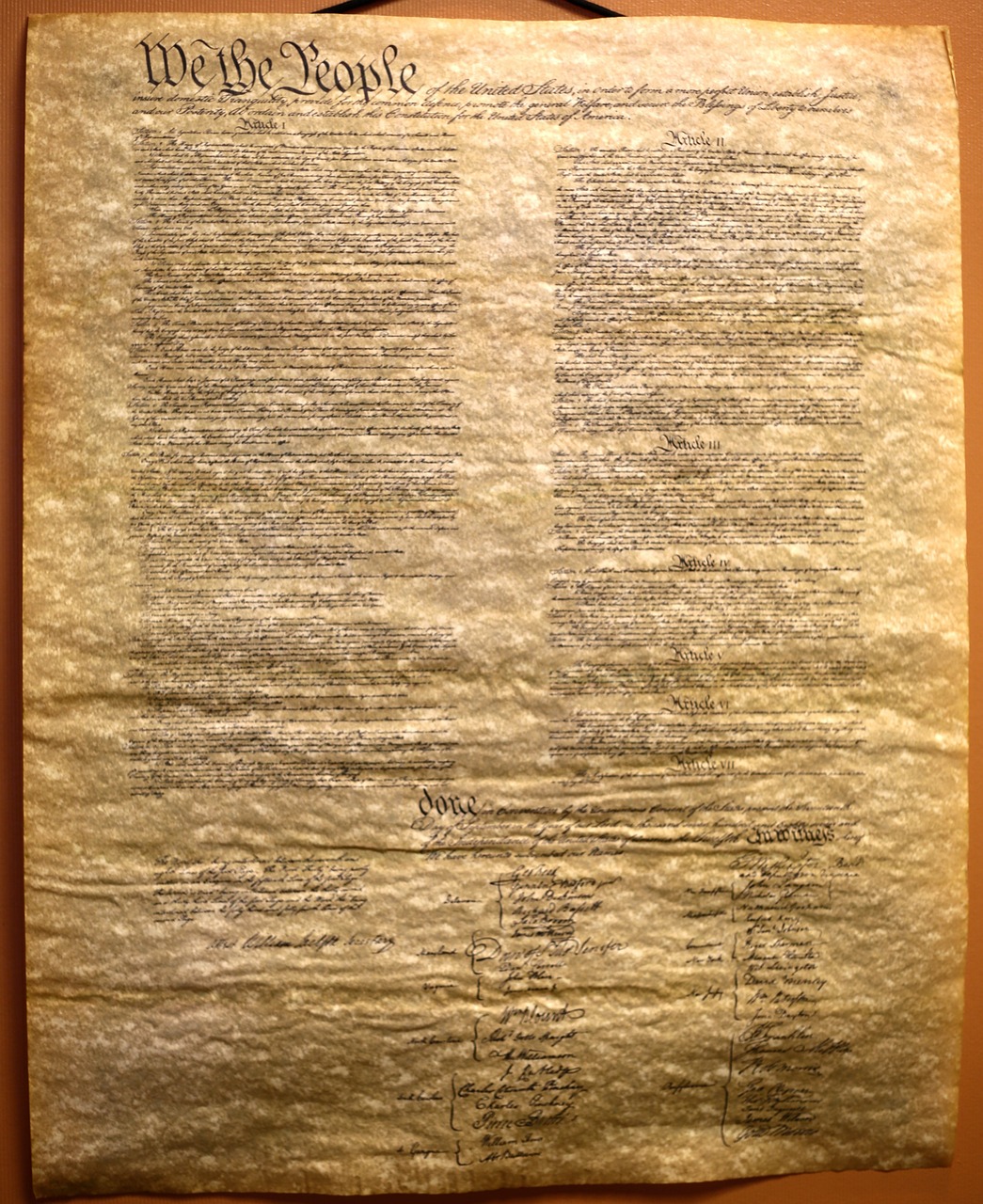
The United States Constitution
Image by John R Perry from Pixabay

“Constitution Day and Citizenship Day” became a federal observance in 2004. Constitution Day is observed on September 17 to commemorate the day in 1787 when delegates to the Constitutional Convention signed the Constitution. Prior to the addition of Constitution Day in 2004, September 17 was observed as Citizenship Day, intended to celebrate U.S. citizenship. Naturalization ceremonies may be scheduled to coincide with Constitution Day and Citizenship Day celebrations.

The original 2004 law mandated that public schools and federal agencies observe the day each year by providing opportunities for education about the U.S. Constitution. In 2005, the Department of Education expanded this mandate to include any educational institutions that receive federal funds, including federal student financial aid. GSU is celebrating Constitution Day and Citizenship Day the week of September 13-17, 2021. For a full list of campus events and educational resources see the GSU Civic Engagement website. If you are interested in researching Constitutional issues, University Library has a handy National Constitution Week research guide or browse one of the many Law Library research guides.

Dear My 1L Self – Breathe.

The GSU College of Law Library is excited to post this 2nd installment of our all new Blackacre Times Series – “Dear My 1L Self.”  In this series, Librarians, Law Library GRAs, Students, and maybe even alumni will write letters to their 1L selves giving them advice and telling them what to expect from law school and the practice of law.  We hope that some of this advice will be transferable to our readers, and show that even the most experienced of us have made a lot of mistakes. So, without further ado, here’s 3LP (& Reference GRA) Meri Elkin…

Dear My 1L Self,

Take a breath. Maybe take a few breaths. Are we consistently breathing yet? Great! Now, go to office hours. Show up to talk to the GRA that aced this class before you. Swing by the Professor’s office that teaches the class. Do not wait until we get our first Lawyering Foundations memo back to ask questions. Do not wait until after our first cold call in Civil Procedure to admit we could possibly be confused. Go now. Ask the questions!

A pic of Meri Elkins

As it turns out, we do not know all of the things. If I am being honest, we don’t even know what we don’t know. We are going to spend a lot of time reading, listening, and trying to formulate coherent responses. Real talk: we do not always formulate coherent responses. We do not always have the right answer. Just remember, it does not do to dwell on missed cold calls. Let it go. Thank me later.

Look around, and find friends who will keep a smile on our face when we are sleep deprived and studying for finals. We will have some truly great days at GSU COL! Though, and this is not to scare you, 1L Self, we will also have some less than great days. All days are better with friends. True story.

Are we doing okay? Breathe! Law school is not a sprint. Fast forward, and it is 3LP year. We still don’t know what we don’t know. We still don’t always have the right answer. Some days are still less than great, but we learned to embrace the journey and get outside of our comfort zone. We built a network of friends, classmates, mentors, and faculty to turn to when we stumble. It may take a minute to find our footing, but take a breath and know that we will hit our stride. Trust me.

Still breathing,

3LP Meri

Dear My 1L Self – DO NOT ‘Fake it Till You Make IT’

The GSU College of Law Library is excited to announce an all new Blackacre Times Series – “Dear My 1L Self.”  In this series, Librarians, Law Library GRAs, Students, and maybe even alumni will write letters to their 1L selves giving them advice and telling them what to expect from law school and the practice of law.  We hope that some of this advice will be transferable to our readers, and show that even the most experienced of us have made a lot of mistakes. So, without further ado… 

Dear 1L Patrick, 

DO NOT fake it till you make it.  You are starting law school and are so much less prepared than you actually think.  The things that made you good at high school and college, mainly being really good at remembering lots of information,  are NO LONGER USEFUL. I mean, they’ll always be useful, but if you don’t strip down your intellectual process and rework your approach from the ground up you’re not going to do very well.  Read books about how to succeed in law school and do a ton of practice problems.  Having a really well put together outline will not matter if you don’t spend some time learning how to take law school exams.  In fact, you’ll end up getting a C+ in contracts, the class you basically explained to everyone all semester, because you didn’t really get what the professor wanted in the exam.   

This “clever slacker” persona that you’ve whole heartedly accepted for yourself will no longer work.  You’ll need to learn to ask for help, and give things enough time so asking for help is an option.  Remember when you were an undergrad and took symbolic logic and were terrified you’d fail, so you went to every office hour and ended up getting the best grade in the class?  You need to be that engaged for every. single. class.  I know you are very confident about your ability to do this.  That’s great, but it’s basically unfounded.  Innate ability alone is not going to be enough to do well.  You have a lot of work to do, and it’s better that this gut check comes from me (us?) now than after a whole semester of very inefficient work.  Go see your professors now.  Be engaged in class. Stop asking other 1L’s for advice – they’re more clueless than you.  Instead, bite the bullet and utilize your professors and academic success department.  Do things the right way.  This is the only way you’re going to do as well as you want.   

Also, stop going to chicken wing night every Tuesday at the William Penn Tavern.  If you can’t stay in, at least go late and leave early.  You can watch the Pittsburgh Penguins by yourself at home. 

Warmest regards, 

Future Patrick 

1L Patrick in the wild

Welcome (and welcome back)!

Word cloud of welcome in several languages.

Normally, this would be a blog post welcoming new students and welcoming back returning students from the summer. However, like many things over the past 18 months, things are different this year. We are so excited to welcome our new students but we are also looking forward to seeing “returning” students who we may have only seen virtually, if at all, in over a year. On behalf of everyone in the library, WELCOME!

The library offers a wide variety of services and resources that can help you on your law school journey. You can access everything from hefty legal treatises and study aids to books and movies in our leisure collection. Use a study room (2 or more students, please), table, or carrel to find just the right study space on either the 5th floor or 6th floor (our designated quiet floor). Stop by the Circulation desk to check out course reserves, white board markers, USB screens, or pick up some ear plugs to prevent distractions. Swing by the Reference desk (next to Circulation) to chat with a reference librarian about a research question, get some study aids suggestions, or just to say hi to your Research Methods professor.

Not on campus? You can use most of our databases from home, including two large collections of electronic study aids. You can also open a chat with a librarian from the library home page. (Look for the red box on the left.)

If you’re a 1L, you’ll be taking Research Methods from one of the librarian faculty and you’ll be assigned a different librarian as your Personal Librarian. Your Personal Librarian will send you occasional emails (really, we won’t fill your inbox – usually just 3-4 emails a semester) with information and tips that may be helpful as you progress through the semester. You can also always contact your Personal Librarian with any questions. Even if your question isn’t library-related, the librarians can often point you in the right direction.

There are many other services and resources available to you. You can learn more (or brush up if it’s been awhile since you’ve visited the library) at our introductory guide to the library. Want to keep up with the library? Follow us on Facebook and Twitter.

If you’re new, welcome to the GSU Law family! If you’re returning, we’ve really missed you and can’t wait to see you in the library!

Law Library Summer Updates

Summer seems to be flying by. The law library has been busy this summer, and we’ve had some exciting updates.

The study rooms are open!

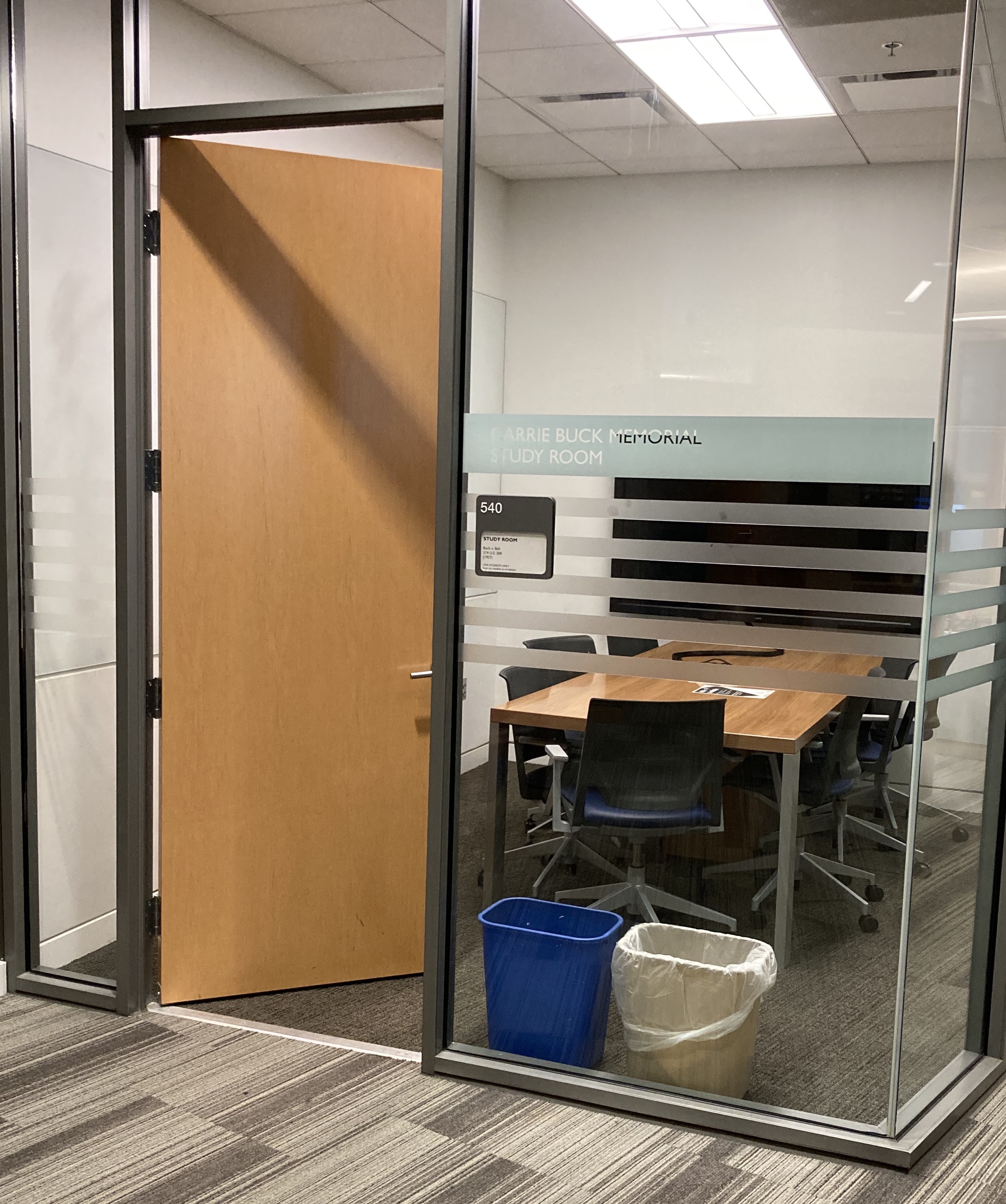
Law Library study rooms are available for reservation by law students. The study rooms vary in size and location and can accommodate groups as large as 10. On the fifth floor, there are rooms with monitors that you can use for group work. Some rooms have dry erase boards. To learn how to reserve a room, check out this blog post or the First Year Guide.

Circulation and Remote Reference remain available, with live reference resuming on July 29th.

The library building is open now through Wednesday, July 28th, during the following hours:

  • Monday – Thursday, 8:30 am – 10 pm
  • Friday, 8:30 am – 6 pm
  • Saturday & Sunday, 10 am – 6 pm

Reference remains available by chat (by using the red Chat Reference button in the upper left corner of the Law Library’s home page), by email, and by leaving a phone message at 404-413-9102. For current reference hours, please check out our homepage. Starting July 29th, live reference will resume, and the Reference Desk will be staffed to assist you during reference hours.

We moved the database list.

On Wednesday, May 26th, the Law Library launched a new database list tool titled “Law Library Databases A-Z.” It was initially housed on the main library page and has moved to our research guide platform. This new database list allows you to filter by subject, access platform, and vendor/publisher. It also provides featured popular law student databases. Learn more about this tool in this blog post.

Movie Binge!

If you’re an admitted law student—or a current law student or a recent graduate or a practicing attorney or—well, you may be interested in some law-related entertainment options this summer!

We all know that books and movies do not accurately portray lawyers and the practice of law. (Exception: some non-fiction books or documentary films.) That said, that can be what makes it entertaining to read about lawyers in a book or watch lawyers on a screen.

Following are some movies (the focus for today) that feature “lawyers” or “the law” that may be of interest to those who would like to take a vacation by way of the screen. There is little rhyme or reason to this list. I started with Chicago because I think the music is wonderful, and I got to see it performed in the West End with Lynda Carter as Matron “Mama” Morton. I am ending the list with Legally Blond, which I had the pleasure of seeing on Broadway. Don’t worry, there are no musicals in the middle.

*Chicago: This American musical is set in the jazz age, and it is definitely a satire. The lawyer to watch in this is Billy Flynn, whose Press Conference Rag is hilarious.

*I Am Not Your Negro: This documentary film made by Raoul Peck is based on James Baldwin’s notes for a book project about his three assassinated friends, Medgar Evers, Malcolm X, and Martin Luther King, Jr.  The trailer for the movie raises questions of what freedom means, encouraging us to consider how the law has shaped and continues to shape our country.

*The Lincoln Lawyer: This movie is based on the first book in Michael Connelly’s series. The movie presents an interesting approach to the practice of law—out of the back of a Lincoln. 

*To Kill a Mockingbird: I first read this book in an 8th grade English class, and the number of attorneys I know who have named their dogs after Scout is surprisingly high. Whether you’ve read Harper Lee’s famous book or not, this is a compelling story. Atticus Finch’s closing argument is freely available.

Just Mercy: You may have read Bryan Stevenson’s book. This movie tells Bryan Stevenson’s story as well, focusing particularly on the case of Walter McMillian. Though much of the filming was done in Montgomery, Alabama, some was done in East Point and Conyers, Georgia.

On the Basis of Sex: Ruth Bader Ginsberg is an icon for many, and this film presents the story of her struggle for equal rights. Like other law-related films, it has a compelling courtroom closing argument.

The Trial of the Chicago 7: If you weren’t alive for it (I wasn’t), you may not know that there were big protests at the 1968 Democratic Convention in Chicago. Well, seven anti-Vietnam war organizers were accused of trying to incite a riot, and this movie tells that story.

*Legally Blonde: This movie tells the story of Elle Woods and her arc of personal growth as she approached and went through law school.

The Law Library includes in its resources some law-related entertainment that may be of interest. We have some of these movies available in our collection at the Law Library or at GSU Libraries—the * before a title indicates those titles!

Study Rooms Are Back!

Law Library study rooms are available for reservation by law students, we are happy to announce!

Study rooms range in size and location—we have rooms that accommodate groups as large as 10. On the Law Library’s fifth floor, we have study rooms with monitors that you can use to do group work on a big screen. Rooms have dry erase boards that groups can use to share notes, develop outlines, etc.

Reserving a study room is pretty simple, and if you’ve used the booking system before it will be very similar. Start from the library home page and checkout the booking explorer, so your group can find the right time and room that will work for your study plan.

You can book the rooms in 15 minute increments, with each law student in a group eligible for up to three hours of study room time per day.

In the picture below, Room 501 is unavailable, but 503 and the other rooms are each available for a reservation.

image of the room booking system showing the date, a legend of the colors indicating available, unavailable, and your booking, and a table listing the rooms on the y axis and the times on the x axis

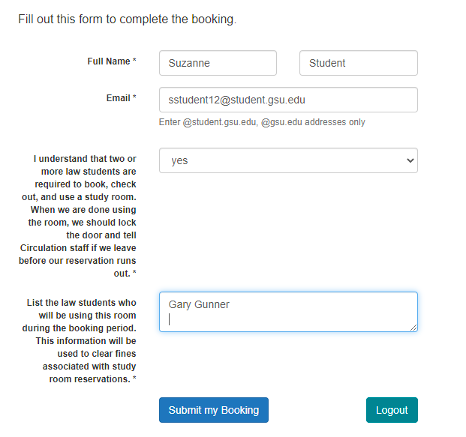
When you book your room, you will still need to have (and list) the two or more law students who will be using the room for studying. Remember, when you’re finished using a study room that you need to lock the door and tell the folks at the circulation desk if you are leaving before the end of your reservation, so we can make sure that the room shows up as available to other students who may want to reserve the room. Knowing who is in the group can really help us with this part of reservation management!

Here’s a sample of the booking form:

Screen shot of the room booking form listing the fields for name, email other law students who will be using the room, and asking confirmation that the room reservation requires two or more law students

We look forward to checking the keys out to your groups as you work on your summer classes and prepare for exams!

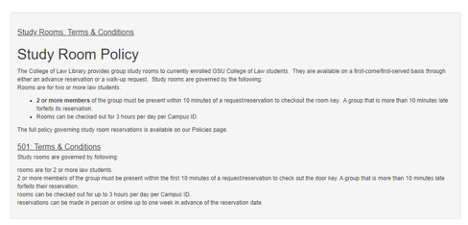
screen shot of the banner on the room booking page
Screen shot of the Study room policy, including requirmements that there be two or more law students per reservation and that there is a maximum of three hours available for reservation for each person's campus ID.