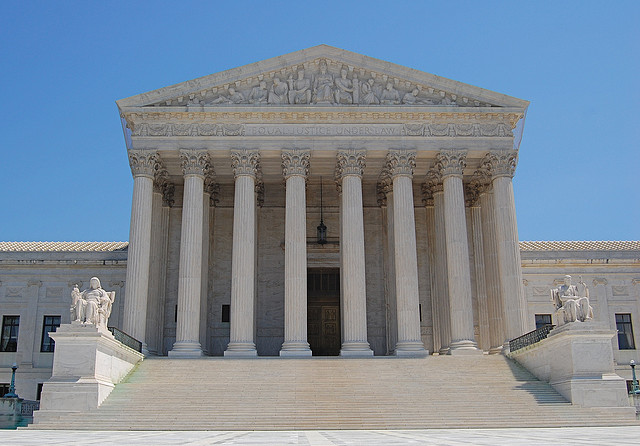
Health Care Oral Arguments

Flicker photo by massmatt

By Kristin Poland

Beginning on Monday, March 26th, the U.S. Supreme Court heard six hours of oral argument spread over three days in the case of  The Department of Health and Human Services v. Florida.  The case involves 26 states who are challenging the constitutionality of the Patient Protection and Affordable Care Act, commonly known as Obamacare.

The Court focused its inquiry on Monday on whether or not it was able to decide on the larger issues in the case in light of the Anti-Injunction Act of 1867.  The act prohibits tax issues from being challenged prior to the tax taking effect, and the issue before the court involved whether the penalty to be imposed for failure to purchase health insurance was a tax.  On Tuesday, the Court heard arguments regarding one of the act’s central provisions-the individual mandate.  The Court questioned attorneys regarding the power of Congress to require individuals to purchase insurance under the commerce clause.  On Wednesday, the Court turned its attention to two further issues: whether the remainder of the act could be allowed to stand if the mandate was struck down, and whether the expansion of the Medicaid program was a proper exercise of congressional power.

The Supreme Court’s decision in this case is expected near the end of June.  Until then, you can brush up on the arguments presented by both sides.  Audio recordings of the arguments are available at the Supreme Court’s website. You can also click here for transcripts of these recordings.

Additionally, C-SPAN has extensive coverage of the issue, including audio recordings.

Great Stuff on the Law Library Website!

by Katie Ginnane

As some of you may or may not know, the law library webpage has a great collection of a variety of resources for students. Whether you are looking for a free resource for your summer internship or booking a study room, that law library tab on the GSU College of Law’s webpage yields some great resources to navigate your way through law school and after. Here are some of those resources outside of the wealth of databases listed at the top of the page.

Student Writing Competitions– this resource can provide you with a great opportunity to participate in the variety of writing competitions offered to law students throughout the year. Currently, competitions for March, April and June are listed. These include competitions from the Environmental Law Institute, the ABA section on Dispute Resolution and the ABA section on Criminal Justice.

Research Guides– this resource can provide you with a variety of tips and tricks to conducting research within specific fields of the law.  Not only are these guides a great way to get started, but they can also direct you to resources available through the main university library that may not be on the law library’s database list.  These guides also cover subjects such as Life as a Law Student and Bar Exam Resources.

Free Legal Research– another great resource for law students and practicing attorneys alike is the research guide focused on free legal research.  Free legal research becomes particularly useful outside of law school when LexisNexis and Westlaw are not longer provided though the law school.

Old Exams– this resource is particularly useful around exam time.  In case you run out hypos (or don’t like the ones you see).  The hypos on this page range from Administrative Law to Torts, and some even have sample answers.

Audio Case Files– this resource provides MP3 files of edited judicial opinions and a brief fact summary.  This way you can bring important cases with you anywhere you need them.

Finally, if you want more information, the law library hosts Library Abridged Workshops to update students on what is going on at the law library!  You can find the schedule and topics here.

Criminal Background Checks and Georgia Law

by Korinne Lassiter

Did you know that in Georgia if you are arrested it stays on your record even if the case is dismissed or you are acquitted? It’s true.

I didn’t know this sad fact until I began my externship at the Georgia Justice Project, an organization that is working hard to change Georgia’s draconian records law. We have clients come in all the time who are unable to find a job or rent an apartment because of arrests that show up on their record. The Georgia Justice project helps clients go through the convoluted process to correct one’s criminal record. Currently, the only way to get something off your record is to request the original agency having custody or control of the records to purge, modify, or supplement them. That agency then sends your request to the prosecuting attorney who then looks through the record to determine if an individual meets the criteria to clear one’s record. This process is also known as expungement and can take up to a year. If they deny your request then you can appeal to the superior court in that jurisdiction.

Currently, as the law stands, the only arrests or charges that can be cleared off of one’s record are, pursuant to O.C.G.A. § 35-3-7:

1) If a person is arrested and released without the offense being referred to the prosecuting attorney.

2) If a person is arrested and the case is referred to a prosecuting attorney, but the prosecuting attorney decides to dismiss the charges without seeking an indictment or filing an accusation.

3) After the filing of an indictment or an accusation, a record shall not be expunged if the prosecuting attorney shows that the charges were nolle prossed, dead docketed, or otherwise dismissed because:
a. Of a plea agreement resulting in a conviction for an offense arising out of the same underlying transaction or occurrence as the conviction;
b. The government was barred from introducing material evidence against the individual on legal grounds including but not limited to the grant of a motion to suppress or motion in limine;
c. A material witness refused to testify or was unavailable to testify against the individual unless such witness refused to testify based on his or her statutory right to do so;
d. The individual was incarcerated on other criminal charges and the prosecuting attorney elected not to prosecute for reasons of judicial economy;
e. The individual successfully completed a pretrial diversion program, the terms of which did not specifically provide for expungement of the arrest record;
f. The conduct which resulted in the arrest of the individual was part of a pattern of criminal activity which was prosecuted in another court of this state, the United States, another state, or foreign nation; or
g. The individual had diplomatic, consular, or similar immunity or inviolability from arrest or prosecution.

The expungement law and process is critical for attorneys to know. One would think that dismissals would automatically be erased off a client’s record, but this is not the case. Always be sure to expunge your client’s record if they meet the criteria stated above.

Fortunately, there is hope for a change to these laws in Georgia! House Bill 663 would change the law regarding criminal records. The new bill would restrict access to the following types of information (excerpt below taken from the Georgia General Assembly website):

1. If prior to indictment or accusations:
a. The case was never referred for further prosecution to the prosecuting attorney by the arresting law enforcement agency because either such agency closed the case without referring the case to the prosecuting attorney or a period of two years for misdemeanor offenses or four years for felony offenses has elapsed from the date of arrest;
b. The case was referred to the prosecuting attorney but was later dismissed; or
c. The grand jury returned two no bills;

2. After indictment or accusation:
a. All charged were dismissed or nolle prossed or the case was placed on the dead docket with the consent of the state and a period of 12 months has expired from the date of placing such case on the dead docket;
b. The individual was convicted of an offense and was sentenced to punishment other than the death penalty, but such conviction was vacated by the trial court or reversed by an appellate court, the decision of which has been made final, and the prosecuting attorney has not retried the case within 18 months of the final order of the court unless the prosecuting attorney obtains a court order, prior to the expiration of the 18 months, lengthening the time due to ongoing investigation or other appropriate circumstances; or
c. The individual was acquitted of all charges by a judge or jury.

The new bill still has some exceptions to when a record can be cleared, however they are much more reasonable. After the filing of an indictment or accusation, a record shall not be restricted if:

  1. The charges were nolle prossed, dead docketed, or otherwise dismissed because of a plea agreement resulting in a conviction for an offense arising out of the same underlying transaction or occurrence as the conviction;
  2. The charges were tried and some but not all of the charges resulted in an acquittal;
  3. The conduct which resulted in the arrest of the individual was part of a pattern of criminal activity which was prosecuted in another court of this state, the United States, another state, or a foreign nation;
  4. The individual had diplomatic, consular, or similar immunity or inviolability from arrest or prosecution; or
  5. The individual was acquitted of all charges but it is later determined that the acquittal was as a result of jury tampering.

It is important to note that the record will not be restricted to criminal justice agencies, such as law enforcement, district attorneys, or judges.
Unfortunately, most employers will deny employment if ANYTHING shows up on a background check, even if it was dismissed. If this bill passes it will mean that people who were mistakenly arrested or did not commit a crime will be able to find employment more readily. This means less people on state assistance. It seems to be a win, win for Georgia.

For updates on the bill see: http://www.gjp.org/
To see the entire current law: O.C.G.A. § 35-3-7.
To see the proposed bill: http://www1.legis.ga.gov/legis/2011_12/sum/hb663.htm

The App Store- Compliments of the US government

by Katie Ginnane

Have you ever wished that information about prevention of food born illness, safe food handling and safe preparation of meat, poultry and egg products was right at your fingertips?  No?  Well what about exercises to help manage and reduce stress?  Well, an app that does just that, and many others, is available compliments of the US government. Below are some great, readily available apps available through the United States government’s website:

Law Students

  • Breathe 2 Relax– This app provides information about stress’s effect on the body and exercises to help manage stress through breathing exercises.
  • T2 Mood Tracker– This app helps you track your mood on a daily basis.
  • Tactical Breather– This app helps you gain control over physiological and psychological responses to stress.
  • USA Jobs– this app provides a one-stop-shop to search for jobs within the federal government.

Legal

  • Charge!– This game provides a great way to familiarize yourself with correct acquisition and contracting rules as defined in the Federal Acquisition Regulation.
  • Congress- A Pocket Dictionary– This app helps you find your representative, see how they vote, read up on bills, find out about committee hearings and other information about the day to day activities of congress.
  • Library of Congress- A Virtual Tour– This app does exactly as its name implies, it gives you a virtual tour of the library of congress.
  • SBA– This app helps you find the nearest location of Small Business Administration-affiliated advisers and other resources to help start or grow your small business.
  • The Congressional Record– This app provides the daily congressional record along with records dating back to January 4, 1995.

Fun!

  • Baby Name Playroom– This app allows you to search through popular baby names over the last 130 years.
  • Encyclopedia of Life– This app allows you to catalog the biodiversity of the planet as a part of the Encyclopedia of Life project focused on organizing and making available information about all forms of life on earth.
  • Leafsnap– This app uses photographs of leaves taken from by smartphones to determine the species of a specific tree.
  • Meanderthal– This app uses a picture taken of you or your friends and shows you what the person would look like as an early human.

Personal

  • Alternative Fuel Locator– This app allows you to find the five closest providers of biodiesel, electricity, E85 (ethanol), hydrogen, natural gas and propane for your alternate fuel vehicle.
  • FCC Mobile Broadband– This app allows you to test the quality and speed of your mobile data collection.
  • My Dietary Supplements– This app provides a way to track the vitamins, minerals, herbs and other products you take.
  • My Food-A-Pedia– This app provides nutrition information on over 1,000 foods including the calorie amounts, contribution to the five food groups and the number of extra calories from solid fats, added sugars and alcohol.
  • National Weather Service– This app provides weather, hydrologic and climate forecasts and warnings for the United States and its surrounding territories.

All of these apps and many more are available at usa.gov.

“The Simpsons” 500th Episode!

by Katie Ginnane

In case any of you law students missed it, with all that studying you are doing, “The Simpsons” premiered its 500th episode last Sunday. Along with all the regular characters we have come to know and love, the episode also included the voice talents of the infamous Wikileaks founder Julian Assange.

Now in its 23rd season, “The Simpsons” has not been the longest running comedy series without any legal issues, one of which involved a potential lawsuit from Brazilian officials for its depiction of Rio de Janeiro in the episode “Blame It On Lisa.”  The  Executive Producer James Brooks later apologized for the show’s depiction of the city.

However, the show’s most recent legal issue, and potentially continuous battle, came out of its contract re-negotiations for its main cast members in late 2011. This was not the first time cast members vied for larger salaries, or to keep their already high ones. The first big contract negotiation began in the late 1990’s, several years after the show’s advent in 1989. In 2011, however, the main character voices would not be the only ones potentially receiving a pay cut. According to Fox, it would be unable to produce “The Simpsons” under the current business model. The network called for a 45% reduction in the voice actor’s current income at the time of about $400,000 per episode.  Despite the negotiations almost costing “The Simpson’s” 24th and 25th season, a deal was reached for an undisclosed reduction in the voice actors’ pay.

Fortunately, the negotiations have assured a continued run of “The Simpsons” for the next two seasons.  Although its ratings from the current season are down 14% from last year, one cannot discount the many pop-culture contributions the show has provided through out its tenure, including the inclusion of Homer’s famous catchphrase “d’oh!” in the Oxford English Dictionary.

Atlanta and the 2012 Transportation Referendum

by Jill Skinner

The countdown has started. In 5 months the public will vote on whether it wants a penny sales tax increase that will go toward funding transportation projects in its district. In full disclosure, I am an avid proponent of public transit. I hate driving. I don’t know if it is Atlanta’s nightmarish traffic congestion or the fact that every road seems to have ten stop lights within a mile stretch that always seem to be turning red as I approach. I disclose my bias because I know this article will be slightly skewed in favor of the transportation referendum passing on July 31st. I will try to present information on the referendum in a neutral (well, maybe only slightly-biased) way.

2010 Transportation Investment Act

In 2010, the Georgia General Assembly approved the Transportation Investment Act of 2010. The Act can be found by visiting the Georgia General Assembly’s website. The Act allows designated districts within Georgia to impose a penny sales tax increase to fund transportation projects within the district. The Act divided the state into twelve transportation districts that essentially mirrored the State’s twelve regional commission boundaries. Per the Act, each region then had to create a Regional Transportation Roundtable composed of elected officials from the counties and cities within each district. The City of Atlanta and Fulton County are included in the Atlanta Roundtable Region. The Atlanta Roundtable Region includes Cherokee County, Cobb County, Douglas County, Fulton County, Fayette County, Clayton County, Henry County, Rockdale County, DeKalb County, and Gwinnett County.

Making the “List” and Regional Roundtables

Before the Transportation Investment Act passed, many people voiced concerns about the types of projects the additional money would fund. For example, people in Atlanta worried that the additional tax revenue would go to counties in rural parts of the state to build new roads and bridges. Moreover, people outside of Atlanta worried that the all of the money would go to Atlanta and its pet projects. In my opinion, the General Assembly pacified many of these fears by requiring districts to list and publicize the specific projects that would receive transportation tax revenue and the amount that each project would receive. This way, the money is “earmarked” for certain projects instead of going to some blackhole general fund where it could be haphazardly apportioned to projects based on political leanings (not that the projects on the list were immune from politics). Further, the public was able to comment on the list of projects at town hall meetings held in each region.

Counties and cities within each district submitted various transportation projects to the Roundtable for final approval. Each Regional Transportation Roundtable then had cut the list down so that project costs matched the anticipated revenue from the penny sales tax. Negotiations, concessions and compromises resulted in our current constrained list of projects submitted on October 13, 2011. As shown below, the list is almost equally split between road/bridge repair/construction and public transportation projects. Only the money raised within the transportation district goes to transportation projects approved by that district. The list of projects can be found here (note, the entire document is 192 pages!).

The Penny Sales Tax

On July 31, 2012, voters will go to the polls and vote “yes” or “no” to the transportation sales tax. If the referendum passes in a district, every county and municipality within the district must impose the tax-there are no exemptions. The penny sales tax passes if a simple majority of the voters in the district approves the tax increase. If the referendum passes in a district, the tax will be in place for ten years; after ten years, the district must again vote to renew the tax. No extension is permissible unless voters approve the extension.

In the Atlanta Roundtable district, the revenue generated from the penny sales tax is projected to be around $7.2 billion. Of the $7.2 billion, 85% will go toward projects (in the specified amounts) on the list of projects approved by the Atlanta Regional Roundtable on October 13, 2011 and is projected to be approximately $6.14 billion. The other 15% of the funds go to counties and municipalities within the district to fund smaller local transportation projects like new sidewalks and bicycle lanes. Again, it should be noted that ALL revenue from the tax stays within the district that approved it.

Projects on the “List”

Because I am biased, I will mention more of the public transportation projects on the list. Some of the larger projects include:

  • The Atlanta Belt Line (approximately $700,000,000)
  • MARTA North Heavy Rail Line Extension to SR 140 ($37,000,000)
  • I-285 and SR 400 Interchange Improvements ($112,000,000)
  • GRTA Xpress Improvements ($95,000,000)
  • MARTA Bus Rapid Transit and Road Improvements ($50,000,000)
  • Clayton County Local Bus Service ($100,000,000)
    • Clayton County’s previous bus service, C-TRAN, stopped service last year and many individuals in Clayton County are without adequate public transportation
  • Enhanced Transit from Kennesaw/Town Center/Acworth to Arts Center ($689,000,000)
  • SR 400 to I-285 North-Collector Distributor Lanes ($160,000,000)

Why This Tax Is So Important-GO VOTE!

The Atlanta region is rapidly expanding. Our population growth is unprecedented and continuing to grow. This growth inevitably means more automobiles on the roadways and more traffic congestion. Not only is our current infrastructure incapable of handling the increased growth, but our quality of life will start to (if it has not already) decrease because of worsening air quality, immobility, and disconnected neighborhoods and people. Accessibility in general will deteriorate.

If the whole “environmental/socioeconomic” thing doesn’t float your boat, maybe pure economics will instead. The more traffic we have the more business we lose. It’s that simple. Businesses are concerned with their employees being able to reliably commute to work; if traffic gridlock slows employees down, the employees are less productive which means the business is less profitable. In a sector where productivity is king, businesses are not willing to lose time and productive output to nightmarish daily commutes.

There are a thousand other reasons why this transportation referendum is vital for Georgia’s continuing vitality. With all of this in mind, PLEASE go vote on July 31, 2012 (even if you vote “no”-at least you have voiced your opinion!).

For additional information on the referendum please visit:

For information on the success of the penny sales tax increase in other cities, please look at the Charlotte Lynx system below. Charlotte, NC implemented a half-cent sales tax increase to fund its transportation projects.

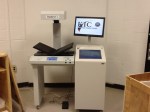
KIC Scanner in the Copy Room

by Katie Ginnane

Ever wanted to get copies of your favorite study aid but didn’t want to waste the paper?  Well the law library now has a brand new KIC, or Knowledge Imaging Center, Scanner in the copy room.

This scanner is free to anyone who wants to use it. For now, you will need a USB drive to store your scanned documents; however, the law library hopes to have the scanner set up to email digital copies in the near future.

If you have any questions about how to use the scanner, please come to the reference desk for help.  Happy scanning!

TSA Tries to Give Rand a Pat on His Back

By Jordan Alford

By Flickr user Talk Radio News Service

The Speech or Debate Clause, found in Article 1, Section 6, Clause 1 of the United States Constitution, states that members of both houses of Congress will “… in all Cases, except Treason, Felony, and Breach of the Peace, be privileged from Arrest during their attendance at the Session of their Respective Houses, and in going to and from the same; and for any Speech or Debate in either House, they shall not be questioned in any other Place.” Apparently TSA representatives in Nashville missed the memo.

On his way back to Washington, Senator Rand Paul was allegedly detained by TSA authorities. According to multiple sources, the full body scanner went off due to an anomaly found in the Senator’s knee. The freshman senator from Kentucky offered to go back through the scanner but refused to be patted down by TSA employees. He was then escorted by local authorities to an office to be questioned. The TSA has disputed these events qualify as detainment, but the Paul camp, not looking for special treatment as a Congressman, has maintained these types of invasive actions by the TSA happen far too often.

It is awfully ironic, some may say even too coincidental, that within the last year it was the director of the TSA who was being scolded and grilled by Senator Paul. He delivered a biting criticism of the TSA after a six year old girl from Kentucky was patted down by TSA employees. It seems unlikely that his feelings towards the TSA will improve much after his own run in with their procedures.

Lend an Ear

By Meghan Starr

Flickr photo by Affendaddy

On January 27, 2003, the first 50 selections to be preserved in the National Recording Registry in the Library of Congress were announced.  The Registry was established by the National Recording Preservation Act of 2000 for the purpose of preserving America’s sound recording heritage. 

Open nominations for recordings that are “culturally, historically, or aesthetically important” are accepted each year (by July 1st)  in 25 different categories with winners announced the following spring.  Categories include musical genres, technology, comedy, and documentary among others.  Recordings must be at least 10 years old.

Included in the initial 50 recordings were Gershwin’s Rhapsody in Blue,  F.D.R.’s Fireside chats, Passamaquoddy Indians field recordings,  Booker T. Washington’s 1895 Atlanta Exposition speech, Bing Crosby’s White Christmas, and Orson Wells’ War of the Worlds.

Later years have included recordings as varied as the World Series – Game 4, Oklahoma! (Rodgers and Hammerstein), Patsy Cline’s CrazyThe Girl from Ipanema, The Star Wars soundtrack, Martha and the Vandellas’ Dancing in the Street, The Button-Down Mind of Bob Newhart,  Michael Jackson’s Thriller,  and the Library of Congress Marine Corps Combat Field Recording Collection, Second Battle of Guam.

The oldest recording dates back to 1853, while the most recent is a 1995 recording by 2Pac.  They can be as short as 3 minutes to as long as an 80 hour recitation of the King James Bible.

Click here for a list of items on the Full National Recording Registry

Healthy, Hunger-Free Kids Act of 2010

by Katie Ginnane

The Federal Department of Agriculture just announced its plan for implementing the Healthy, Hunger-Free Kids Act of 2010, spearheaded by current first-lady, Michelle Obama.  The legislation funds healthy meals for children in public schools, specifically more balanced meals, including more fruits and vegetables and lower calorie meals.  Although the legislation was enacted in December 2010, the guidelines for implementation were just recently solidified.

The three main goals of this important legislation is to improve nutrition and focus on reducing childhood obesity, increase access to meals and finally to increase program monitoring and integrity.  These goals are incredibly important because one out of every three children in America are considered either overweight or obese, and over seventeen million children live in food insecure homes.  The implementation of these standards should take about three years to complete.

Several methods are being employed to assure that school lunches facilitate the above goals.  Although the original plan attempted to bar french fries from menu items within school lunch, lawmakers prevented that extra step.  The plan does focus on providing a more balanced meal to school children; however, pizza managed to slip in as a vegetable because of the tomato paste.  A new meal could consist of  whole wheat spaghetti with meat sauce, a whole wheat roll, broccoli, cauliflower, kiwi, low-fat ranch dip, margarine and low-fat milk.  This would replace meals of a hot dog on a bun with ketchup, canned pears, raw celery and carrots with ranch dip and low fat chocolate milk.

There are potential cost-reduction benefits as well.  The Environmental Working Group states that the new food regulations could help reduce medical bills related to diabetes and other obesity-related chronic diseased.