Thanksgiving Hours

Photo by Flickr user Mr. T in DC.

Photo by Flickr user Mr. T in DC.

Thanksgiving is almost here, so we wanted to let you know about our hours this week. The library will be open:

  •  Monday & Tuesday, Nov. 25 & 26 – 8 a.m. to 9 p.m.
  • Wednesday, Nov. 27 – 8 a.m. to 6 p.m.
  • Thursday – Saturday, Nov. 28 – 30 – Closed
  • Sunday, Dec. 1 – 10 a.m. to 11 p.m. (regular hours resume)

Have a wonderful break!

Swimming in the Dark is Scary

by Nirvi Shah

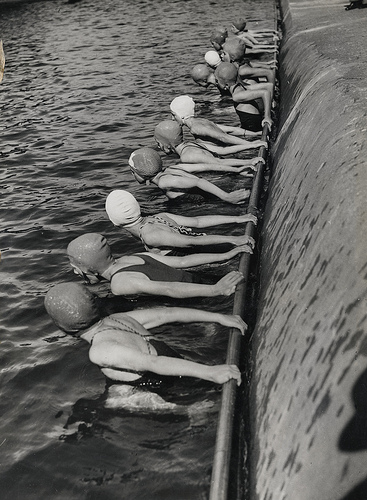
swimmers

Photo from the National Library of New Zealand’s photo commons

You’ve probably heard by now that “nothing is as terrifying as 1L first semester exams” or “you’ll never go through this feeling again.”  And for the most part, it is true.  It feels like you’re swimming in the dark and whatever flotation devices and tips that are given to you don’t exactly make sense and you can’t exactly grasp how to use the advice.  You are in the dark, after all.  Fortunately, however, once you’re done with exams this semester, you will know what to expect (for the most part) for the remainder of law school.  If you’re outlining, practicing hypos, reading through sample answers, and freaking out (just a little bit), you’re on the right track.  If you’re looking for a bit more guidance on that, try this helpful guide. And once you’re done with all of your exams, you have 25 entire days to not fret about your grades and just relax, sleep, eat, and spend time with everyone you said goodbye to on August 19, 2013—the day you were thrown into this whirlpool called Law School.

Just remember, you’ve made it this far.  There is only one more month left until you’re done with your first semester of law school.  You can do it–Good luck!

Meet Terrance Manion

retiree, retirees, retirementThis marks the first of a series of in-depth, exclusive interviews I am doing with the librarians and staff here at Georgia State University College of Law Library. I hope you enjoy!

Austin: What is your name and what do you do?

Terrance: Terrance Manion, Director of Information Technology and Librarian


A: How long have you been at Georgia State University College of Law Library? 

T: 12 years, but a third of that time I was in our evening part-time law program and do not really remember many details of that time.


A: What books are currently on your night stand?

T: I am currently reading the The Phantom Tollbooth to the brothers Manion and A Year in Provence when I actually get a moment to myself.


A: What is an interesting fact about yourself that you would like to share with our readers?

T: In a previous life I was a stagehand (IATSE local #3) and before that a bassist in a regionally-successful college-rock band (Pretty Mighty Mighty-with whom you can still seed Pandora)


A: When you are not saving the world here at GSU Law Library, what do you enjoy doing outside of work?

T: I coach soccer and pretend to know more about bourbon than I actually do (but I am still doing research).


A: Lastly, what is your favorite vacation spot? The place you go to leave it all behind for a few days.

T:  Bradenton, Florida- the spring training home of the Pittsburgh Pirates.


There you have it folks. The complete, unedited,  behind the scenes interview with Terrance Manion.

Law in a Flash!

Flash Gordon (before and after using Law in the Flash) by flickr user JD Hancock

Flash Gordon (before and after using Law in the Flash) by flickr user JD Hancock

Flash cards– they’re not just for multiplication tables and state capitols. They’re also for law school!
Your library has quite a number of Law in a Flash sets available for check out at the circulation desk. Flash your PantherCard and pick up a set for 3 hours. Take them with you to lunch, to the gym, or on a smoke break. Study on your own or play trivia with a group. Every little bit helps as you approach exam time.

Here’s a list of the topics we have for you:

  • Administrative Law
  • Contracts
  • Civil Procedure, part 2
  • Constitutional Law, parts 1 & 2
  • Corporations
  • Criminal Law
  • Criminal Procedure
  • Environmental Law
  • Evidence
  • Federal Income Tax
  • Future Interests
  • Professional Responsibility
  • Real Property
  • Sales and Leases
  • Secured Transactions
  • Torts
  • Wills and Trusts

And for after graduation, we have the Multi-state Bar Exam, but first things first. 😉

Make The Most of Your Journey Home

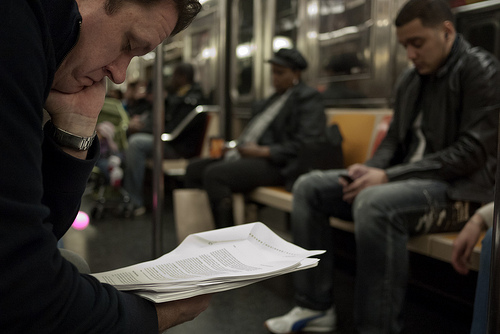
Flicker photo by pamhule

Flicker photo by pamhule

By Mark Stuckey

If you’re like me, and have quite a trek home after an arduous day at College of Law, you might just want to plug in your head phones and space out to some Devo, or whatever the kids are listening to these days, but you shouldn’t, because there are better ways to use your time on your commute home!

Read For Class

If you take MARTA, reading on the train can be a lifesaver. Using your time wisely on the train allows you to prepare for that cold-call tomorrow (well maybe), and frees up time at home for more worthwhile pursuits (like GTA 5). Pro tip: I have found that if you seem really engrossed with your case book and mutter to yourself a little, no one will sit next you… so there’s that.

Use Flashcards

Whether you make them yourself or sell your first born for some commercial ones, flash cards are extremely helpful when attempting to memorize important general terms, and elements. Plus, that guy who is looking over your shoulder on the train needs to know the elements of a prima facie negligence case. You can check out flash cards at the Circulation desk.

Also, there is a website called Quizlet where you can make flashcards and use them on the website or download an app and use them on the go. Find Quizlet here! Some law students have already made flash cards so if you are feeling lackadaisical, just use theirs. (if you trust them)

Listen to Sum and Substance Audio Recordings/Audio Case Files

Whether you’re on the train, in the car, or riding your bike, you can listen to top law professors who literally complied the casebook. Check out the sum and substance Audio Cd’s from the Circulation Desk put them on your Ipod and never look back. I especially enjoy these tapes, because it is like having a lecture on demand. See what subjects we have at the library here!

Every GSU Law student has access to Audio Case Files, which has edited audio versions of judicial opinions, as well as full opinions, fact summaries and all sorts of wonderful things to make your life easier. You can create a free account by using your GSU email address. Find out more information here.

Reflect on the Lecture

A gruff professor recommended this gem on one of the first days of my Contracts 1 class so there’s probably some merit to it. As I gather, the idea is to try to pull out the key points of the Lecture without looking at notes, and organize them in a way that make sense. Writing this down would probably be good, but a tape recorder might serve just as well.

There you have it, a few very obvious ways to get the most out of your commute home. Comment below if you have any other ways to study on the go!

Legal Bibliography Exam Tips

by Joshua Kahn

Students taking the bar exam.A lot of the legal bibliography exam boils down to memorization and, frankly, memorization is boring.  For many people, memorization means reading a list over and over again, or, for the more industrious among us, flash cards.  Neither really works all that well.

Personally, if I had to do it over again, I would try using a memory palace.

A memory palace is an old, simple, effective tool for using your spatial memory to remember non-special information (like how often different legal authority sources are updated).

Essentially, you bring a physical location you know well into your memory—like the house you grew up in, or your route to school—and populate it with vivid images representing the information you want to remember.  Then, when you need the information, you just “walk” back through your memory palace and look at the images.

You don’t need to buy any books to learn the technique, here are a few places you can look at online for free:

http://litemind.com/memory-palace/ (a helpful modern explanation)

http://www.utexas.edu/research/memoria/Ad_Herennium_Passages.html (Ad Herennium is the an ancient text that sets out the technique, don’t worry, it’s translated and very short)

http://en.wikipedia.org/wiki/Method_of_loci

http://www.wikihow.com/Build-a-Memory-Palace


Scary Books

More Halloween Clip Art Illustrations at http://www.ClipartOf.comIn conjunction with the season, and inspired by the LibGuide created by The University of Iowa College of Law Library, here are a couple of books that we have at the Law Library that will get you in the mood to celebrate Halloween.

And if you need any last minute costume ideas, the University Library has several books on costuming.

Halloween 2013

Image by Flickr User kwan_c

Image by Flickr User kwan_c

It’s almost Halloween and there’s still time to fit in some fun! Here are a couple of places that are still offering tours and some of costume shops just in case you need a whole new identity or just some finishing touches.

What are you going to be for Halloween? Doing anything fun?

Events:

Netherworld: one of the Top Haunted Houses in the Nation (Norcross, GA)

http://www.fearworld.com/index.php

Containment underneath Atlantic Station, the only large-scale haunt inside the Perimeter.

http://containmentatl.com/

Ghosts of Marietta Tour

http://ghostsofmarietta.com/

Southern Belle Farm Corn Maze and Pumpkin Patch, in McDonough, GA.

http://www.southernbellefarm.com/

Costumes:

Spirit Halloween Superstore at several locations in and around Atlanta

http://checkout.spirithalloween.com/StoreLocation.aspx?zipPostalCode=30303

Halloween HQ at Ansley Square on Piedmont Ave.

http://atlhalloweenhq.com/

Barefoot Bubba’s Costumes on Howell Mill Rd.

http://barefootbubbas.bmbnow.com/

Listening to the Law (or Other Things)

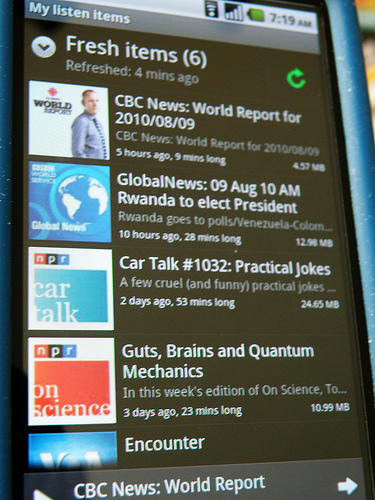
podcasts

Photo by Flickr user DennisSylvesterHurd.

By now you’ve probably seen a sign or a post somewhere, and you know that we have access to AudioCaseFiles so that you can listen to cases rather than reading them. But what if you want to listen to something else?

That’s where podcasts come in. And while there are a lot of podcasts out there (Stuff You Should Know and Pop Culture Happy Hour are my personal favorites), there are a number that are focused specifically on legal topics and are worth a listen.

For example, interested in what’s going on in the Supreme Court? Check out the PBS News Hour’s Supreme Court Watch or the Federalist Society’s SCOTUScast.

Other legally-related podcasts worth checking out include:

Finally, no discussion of law-related podcasts would be complete without a mention of Judge John Hodgman. Judge Hodgman hears disputes submitted for resolution in his court of Internet justice, which comes complete with a bailiff, occasional expert witnesses, and an opportunity for summary judgment.

Have a favorite podcast that we missed? Let us know in the comments below!

Exam Tips

by Joshua Kahn

Image by Flickr user albertogp123

Image by Flickr user albertogp123

You’ve spent what seems like the longest couple of months since you-were-6-and-summer-felt-like-forever doing your reading, going to class, and outlining.  Now, you’re wondering, how to ace your 1L exams, land the job of your dreams, make tons of money and guarantee a lifetime of blissfully safe employment. . . right?

So, here are a few helpful pointers for exams:

Learn Your Professor’s Style

Every professor has a specific exam style, which they’ll generally telegraph over the course of the semester. If not, then ask them about it in person.  Also, make sure to track down 2L’s and 3L’s to ask them about that professor’s style.  Often, they’ll have helpful insights into what to expect on the exam.

Short Test Outline

Once you begin studying, the first thing you should do is write a concise version of your outline.  It should have big font, not be spaced in tiny clusters of sentences, and focus on the elements of each claim.  Cut as much as possible until you only have the core elements and tests for the areas of law you learned.

This short outline is your cheat-sheet for the exam, not a security blanket.  It’s a way to remind you of the elements to make sure you don’t forget something, not re-teach you the material on the fly.

If your professor only lets you have a single front-and-back sheet, then use different colors to differentiate elements and tests visually. The idea is to be able to quickly glance at the sheet and know what you’re looking for.

If you have a closed book exam, just ignore this and do more practice tests, memorize what you need with flash cards or both.

Taking Practice Exams

Practice exams are by far the best way to study for law school exams.  Take a few untimed and fully write out your answers, don’t just outline them (which will be tempting).  Then, take at least one fully timed practice exam for each course.  That process will help you with both analysis and speed once the pressure is on.

Many people find it helpful to go over their practice exams with a study group to see if they got the answers right, and get suggestions from classmates.  Often, they’ll actually take the exams together all at once in a library room to simulate the pressure of an in-class exam.

This is one of the very few things study groups are useful for, but, don’t let it take too much time.  Practice exams are painful and it’s very tempting to talk through them to avoid having to take another.

Finding Practice Exams

GSU has an exam archive and professors often give out a copy of past exam, but it’s a good idea to practice on exams from other schools.

Most exam archives are password protected, but here are a few which are not:

http://lawmedia.pepperdine.edu/exam/examlookup.php

http://www.law.berkeley.edu/library/dynamic/exams.php

Readability

Law school exams reward clear writing.  If you’re a good, concise writer, your grades will probably be one step or so higher than otherwise (from, say, a B+ to and A-).  If you are not a good writer, there probably isn’t much you can do about it in the next month, so pretend I didn’t just say this. (But consider reading this over your break).

There is one thing anyone can do to quickly improve their exam readability however, and that’s clearly organize your paper.  Include headings for each section and subsection so your professor knows exactly what points you are addressing, start a new paragraph for each element of the claim you’re proving, etc.

It is OK to Be Nervous

Finally, it is ok to be nervous.  Law school exams are a horrible hazing ritual, especially 1L exams, and they never stop being nerve-wracking.