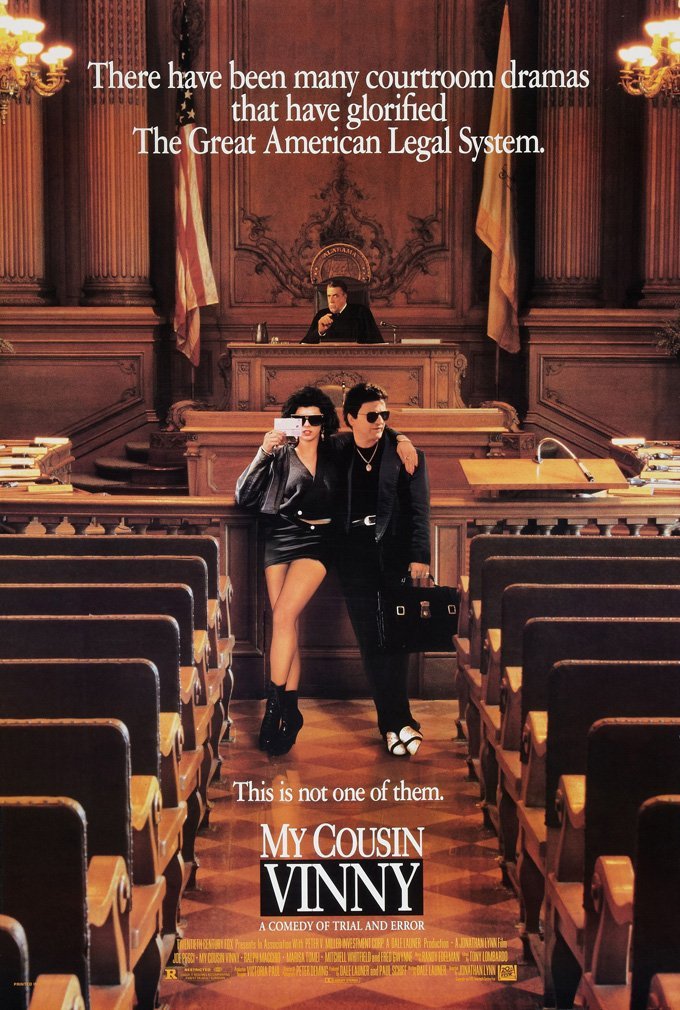
I know what (legal research) you did last summer: researching innocence

In this blog series, real GSU law students tell you about their legal research experiences over the summer.

by Carlos Becerra-Gomez , 2L

During my junior year of undergrad, I took a course called, “Eyewitness Testimony” taught by the famous psychologist, Dr. Elizabeth Loftus.  Throughout the course, we learned about how unreliable eyewitness testimonies can be, but how the general public, including juries, put a lot of weight on eyewitnesses during a criminal trial.  Dr. Loftus introduced us to the Innocence Project, a non-profit organization whose sole mission is to liberate those who have been innocently incarcerated.  After such introduction, I was intrigued by the project, and I decided to attend law school to be somehow a part of this organization.  As soon as my first semester of law school ended, I started to send out my resume and a cover letter to multiple Innocence Projects around the country.  Fortunately, the project from my hometown emailed me back and offered me an internship position.  It was impossible to say no, so I gladly took the position. 

“I decided to attend law school to be somehow a part of this organization.  As soon as my first semester of law school ended, I started to send out my resume and a cover letter to multiple Innocence Projects around the country. “

On my first day, I hit the ground running and I was immediately assigned to a case: a 1980’s homicide.  This particular case was deemed a cold case for almost twenty years until our client was tried and convicted in the early 2000s.  Sadly, our client has been imprisoned for almost twenty years for a crime that he consistently claims he did not commit.  The managing attorney provided me with at least 1,000 pages worth of records for me to thoroughly review.  The attorney asked me to read each record to find anything that could be valuable to our client and his innocence.  At first, I felt absolutely overwhelmed; a human being’s life was placed in my hands.  Each day I was reading these records was one more day he was spending in prison.  That overwhelming feeling turned into motivation to give my best effort to help our client prove his innocence.

Each day I was reading these records was one more day he was spending in prison.

My primary duties were to investigate and read all police reports, identify witnesses and potential suspects, analyze the murder scene photographs and videos, analyze the incriminating DNA data, locate and interview these witnesses and suspects.  Each day consisted of something different, we even spent hours driving throughout the state just to locate witnesses and suspects.  I quickly realized that this type of research was completely different to the traditional research work a legal intern does, but I absolutely loved it.  Every day I came into the office was a new day to challenge myself to find something helpful for our client.  There were some days that were harder than others, such as watching the brutal crime scene video that showed the lifeless body in a pool of blood.  Days like those made me truly realize that this was not just another day in law school, but this was real life.

One of my proudest moments during the summer was when I found a huge piece of evidence that had not been previously discovered that affected the state’s argument.  In fact, the managing attorney admitted that she never had seen that piece of evidence before.  I was happy to be able to contribute to the case in such a drastic way, but I was also motivated to continue to find other useful evidence.  At the end of the summer, the managing attorney asked me to write an investigative legal memorandum that included my own theory of who committed the murder and why.  In conclusion, I absolutely loved this experience and it only reassured my desire to work for the project or indigent defense to help those in need of justice and representation.

Law School and Life Lessons

by Ralaya Evans, 3L

In starting my 3L year, I began asking myself how I would describe my growth, what I have learned and my law school journey thus far. I can honestly say that these past two years have taught me so much. I have matured in many ways that I believed myself to already be mature.

So, what have I learned so far?

Confidence. Law school taught me how to be more sure of myself. Even when I was not completely certain that I would be great in an interview, present in class, take an exam or more, I learned that second-guessing myself only encouraged a negative perspective. Building confidence in myself and knowing where I needed to improve were the keys to my success. There were times I would have to fake it. However, once I became aware of where I was lacking and what subjects were not my strong suit, I was able to plan a course of attack to get better at those things. Further, knowing where you may be falling short allows you not to be insecure in those things; you just view them as a chance for growth. It is best to own that you need the help and then do something about it.

Stress Management. Law school really taught me how to deal with stress, pressure, and difficult times. When I started law school, I had been out of school and in the workforce for about 3 years. I do believe that working before going to school prepared me for law school in numerous ways. However, law school taught me the most about stress and time management. I have continued to work throughout law school, as I have bills that need to be paid (of course). So, working, transitioning back into the mode of school, and going from having no responsibilities after work to having to complete assignments after was very stressful. However, I learned that even when I feel that I do not have any free time, I always do. I always have a few minutes to spare that I can take to myself and call my mom, grab dinner with my brother/friends, watch a show, etc. The goal is always to do something that I enjoy and will take my mind off of all of my responsibilities for a second. We are not all robots and “me” time is a must to prevent burnout.

Understanding, Patience, and Letting Go of the Need to Know. Law school can test your patience like no other. Everything seems to take forever. For example, we take exams and often have to wait several weeks until we know out grades. This was one of the hardest things about my 1L year: not knowing quick enough. So, I learned the art of waiting. Yes, I still want to know my grades immediately, but I also know I will not receive them quickly. That is just how law school works. Therefore, I take the exam and remind myself once I turn it in, nothing else is within my control. This ties back into the confidence aspect mentioned earlier. I know that I put the work in for the exams and that I did just fine. So, that helps me to wait comfortably and enjoy my Winter Break after fall semester or the beginning of summer after the spring semester.

To Have Realistic Expectations and to be Real With Myself. Before law school, I always made straight A’s. I have always cared so much about my grades and have always wanted to do exceptionally well at everything. However, school never required much effort on my part.  In law school, everyone is smart. Law school takes the top students of many schools and brings them together. Although your school will tell you school is not a competition, many things are viewed as a competition. Everyone wants to CALI. Everyone wants to be in the top percent. Everyone wants to be a member of groups, and maybe even President. It is not hard being surrounded by this; it is just very different from what we are most used to. I am now in an environment where everyone cares. It is a good thing but can cause disappointment at times. I have learned that not doing AMAZING on something does not mean failure. I have also learned that having to spend a little extra time on something to learn it doesn’t mean anything negative. I appreciate this lesson because it helped me learned that the only way to really prepare for challenges and spare myself unnecessary disappointed is to always be realistic with my expectations.

Since it is only September of 3L year, I know that I will learn more. And I welcome all of the lessons that law school will teach me.

How I Prepared for My Summer Firm Job

by Ralaya Evans, 3L

As I started my 1L year, I remember the one aspect of law school that caused me the most anxiety was obtaining and working a summer job with a firm. I was unsure of myself and if I would be prepared to do the work. I thought that I had to be perfect. However, this ended up being one of my favorite parts of law school. It reinforced my desire to be an attorney and I learned so much each summer.

Obtaining a summer job is a process within itself. However, once you lock in a job, the preparation to be an asset starts. In preparation for the summer jobs, I found it important to research the firm and the type of work they do. The majority of firms have a website that details the type of law practiced there, the attorneys, and more. This was always my starting point.

Next, after researching, I would look at courses that align with their work. For example, if you are working at a Corporate firm, or planning to work at a Corporate firm, it would be a good idea to take Corporations. This way you are aware of the language, you have a foundation for the work, and everything you see and work on that summer is not completely new/foreign to you. Choosing to take courses that coincide with your chosen summer job is much more advice for 2Ls, as law students get to start choosing electives in the second year of law school.

Further, externships helped me prepare for my summer jobs. This is so helpful to those who are not sure what they want to practice yet. If you are stuck between a couple of practices, choose one and focus your externship on that. This will help you get some real practice in, work in the field and give you a better idea of what works for you and what does not work for you. In all honesty, this is also helpful to those who are certain about what they want to practice. Choosing an externship that aligns with your desired practice will either reinforce your choice of practice or let you know that you are open to other practices.

One of the biggest aspects of my preparation process that helped me get over the anxiety of summering was talking to professors and my mentor. Professors/Mentors have already gone through this process before and know what to expect. They also offer wise words and advice. In the end, you learn that summering is not something to be too anxious about. The firms know that you are still learning, and they are guiding and helping you learn while you work for them. Mistakes are expected and there will always be a learning curve. This is a mutually beneficial relationship and both the firm and you are important pieces to the puzzle.

Lastly, to prepare for a summer job, it is important to take a break. Some summer jobs start the very next week after finals and some give you a couple weeks off. No matter the length of time between the end of finals and the first day of your summer job, take a mental break after finals and let yourself breathe for as long as possible.

Summering is such a surreal experience. It provides irreplaceable practice and builds your confidence. It is not the end all be all, and it is not required to be successful as an attorney. However, if you are interested in doing it, I would say go for it!

The Path to a Smooth 3L Year

by Ralaya Evans, 3L

Congratulations! You made it!!

One of the greatest moments of a law student’s life is starting their 3L year. This is the year we all look forward to – schoolwork slows down, applications for graduation are due, many are signing contracts for their post-graduation jobs, and more.

However, 3L is also one of the most vital years pertaining to dates and deadlines. One of the main goals of 3L is to ensure you stay on top of things. Below is a list of important dates and requirements to remember to set yourself up for success during the years and after graduation.

  • Sign up for and take the MPRE , if you have not already. Doing this as soon as possible allows 3Ls to have one less requirement to worry about.
  • Ensure you lock in bar prep. There are numerous companies one can choose from for the bar prep, such as Kaplan, Themis, and BarBri. The r/bar exam subreddit has some good discussions of test takers’ experiences with these companies. Do some research and choose the one that seems like the best fit for you.
  • Apply for the Bar in the state you plan to take practice in. The following information pertains to the July 2024 Bar Exam: The regular Bar Exam Application window for this exam opens on March 1, 2024 and closes on June 1, 2024 at 4:00 PM. Those that apply after June 1, 2024, but before June 15, 2024, are still able to submit. However, the application fee will include a non-refundable $500 late fee.
  • Complete the Fitness application. If you plan to take the July 2024 bar, you must complete the Fitness Application beforehand.. The regular Fitness Application filing window opens October 25, 2023 and closes on December 6, 2023 at 4:00 PM. You can file after this time, up until March 6, 2024. However, there will be a non-refundable $500 late fee.
  • Check your credits/connect with the Registrar’s  office. Graduation will require that students have completed a certain amount of hours/credits. If you are unsure of where you stand, you can check with the Registrar’s office to ensure that you are on track before applying for graduation. It is best to do this in the Fall semester, just in case you need to register for additional classes in the Spring.
  • Network. Some will have received an offer for a post-graduation job, while others are keeping their options open. Continuing to network your 3L year, helps take some stress off of trying to find a job while studying for the bar or after taking the bar.
  • Enjoy yourself. Making it to 3L year is a major accomplishment. Making it to graduation is even more of a celebration. However, for those that plan to take the July 2024, your free time will be limited after graduation, as you prepare for the bar. So enjoy yourself this year, connect with classmates, friends, family, loved ones, etc. You deserve it!

All in all, 3L is exciting, but still requires a lot from students. Set yourself up for a smooth graduation and post-graduation studying!

I know what (legal research) you did last summer: researching conspiracies

by AJ Murray, 2L

In this new blog series, real GSU law students tell you about their legal research experiences over the summer.

This past summer, I worked at a local firm. We dealt primarily in white collar criminal law, as well as trademark infringement. The first task I was assigned to was to work on developing a memo for multiple conspiracies. Conspiracies often come in two flavors: multiple conspiracies and multiple-object conspiracies. Multiple-object conspiracies are defined by an interest in multiple objectives that may or may not support each other, but support an overall plan of action whilst multiple conspiracies are not well-related save for a figurehead or ringleader who most of the individual conspiracies are tied to.

Our objective was to illustrate how a potential defendant might be innocent of a conspiracy to commit fraud. We wanted to argue that there were multiple separate conspiracies rather than one. We also wanted to argue that the indictment was duplicitous. As pulled from Wikipedia, “duplicity is the error committed when the charge on an indictment describes two different offenses. An indictment may contain more than one count, but each count must allege only one offense, so that the defendant can know precisely what offenses he or she is accused of.” Because there are multiple conspiracies, it is possible that one of the conspiracies could be duplicitous because it did not account for the difference between the conspiracies.

My first objective was to better understand what conspiracies were. Criminal Law classes can only cover so much! Using cases provided to me by a coworker, I used the cases’ notes of decisions, headnotes, and keycites to further develop my understanding. In addition to that, I also looked at the court websites for all eleven circuits to find their jury instructions to see how they help the jury understand multiple conspiracies. They include helpful cases in their explanation and I used those as well. Unfortunately, the memo was challenging to write because conspiracies commonly exist for drug-related purposes, not for financial abuse. You don’t necessarily want to compare fraud with the distribution and manufacturing of drugs when using cases. Plus, the more similar the case, the better its utility for offensive and defensive purposes. When all was said and done, I had provided some important nuggets of wisdom, but was unable to find exactly what my attorney needed. I read hundreds of cases in pursuit of that illustrative and similar case, but, as far as I could see, it did not exist.

I learned this summer that, while there are MANY cases, sometimes the one you’re looking for just doesn’t exist. It’s totally ok that I wasn’t able to find it. Not only did I find very useful quotes and caselaw, but because I was a first-year intern, a client could have potentially paid less for my services for researching than for that of one of our attorneys. Since I could do the grunt work of sorting, analyzing, and synthesizing cases, I provided a unique benefit that no one else at the firm could, considering no one had a paralegal or another intern. It was a wonderful and insightful summer!

Welcome (or welcome back) from the law library

At the library, the beginning of the academic year is always an exciting time.  Everyone is eager to meet our amazing new students and welcome back our amazing returning students, so do make sure to come visit.

New students should have met their Personal Librarian during orientation this week. Along with your Research Methods professor, your personal librarian is a great resource when learning how to navigate law school. Don’t hesitate to reach out to them if you need help with anything library-related.

Returning students should come by and let us know about any exciting legal research you did this summer. We are also always trying to provide a better environment for the law school community, so don’t hesitate to let us know how we can help you have a successful year.

Law students are usually pretty busy, so here’s a very short guide to some of our most popular services:

  • Study rooms. Law students, get your study group together and book one of the library’s study rooms.
  • Study aids. Online study aids are increasingly popular, and this year we’ve added Lexis Digital Library to our offerings in this category. If you prefer print, our collection of study aids is on the 5th floor. 
  • ALERT. Get a head start on legal research (and other topics) by attending an ALERT session. The first topic is “Approaching Your Research Problem” on Monday, 8/21 at 5:45pm (Room 345), or Wednesday, 8/23 at 3:15pm (Room 242).
  • Social media. Did you know that the library is active on social media? Indeed, we just started an Instagram account, and we would love for you to follow us there for all of the latest news from the library.

If you have any questions, let us know. Here’s to an exciting and fulfilling semester! We’re so glad you’re here.

Summer in the Law Library

As always, everyone at the law library is excited to welcome students for a new semester. At the same time, the end of the summer does have a certain bittersweet quality to it.

We always seek to create a calm and comfortable environment, but during summer, the library is often very quiet.[1] At the beginning of the summer, with the busy exam season in the rearview, I can definitely appreciate the chance to take a deep breath and relax in a peaceful environment. Of course, a few weeks in, I really start to miss the hustle and bustle of school year, but the stillness of the summer library is nonetheless worth commemorating.

 As you might imagine, fewer students means fewer patrons at our reference and circulation desks. This gives the reference librarians and our hardworking circulation staff time to work on projects that might otherwise reside on the backburner. It also gives us a nice opportunity to get to know our summer “regulars,” whether they are taking courses, studying for the bar, or researching an important project for their summer job.  This can make summer feel like a productive and fulfilling time, while also making me eager to meet a whole new class of amazing 1Ls, transfers, and LLMs.

Working in the law library, you get accustomed to these seasonal rhythms. The variety keeps things interesting! The quiet times also lead to more overall productivity, with better library services as a result. However, it’s worth remembering that everyone needs downtime, even attorneys and law students.

Here’s to the end of summer and the start of a new year.


[1] Do keep in mind that the 6th floor is always quiet!

Finding Study Aids for your Corporations Course

We get it. If you’re taking Corporations, you may be thinking “I’ve made it this far in law school, why do I need additional assistance?”

Even if you don’t need it, per se, the Law Library wants to emphasize that these resources are still there for your enjoyment and intellectual enrichment. These resources are still invaluable for those in particular that have “too much on their plate” and need a little help.

The Study Aid Finder has a “Recommended Electives” tab for upper-level students.  These courses are courses with subject matter often tested on the bar.  You may not even be taking any of these courses, and may not have a course exam to prepare for, but for those 3L’s and 4LP’s, the July bar exam is right around the corner. These resources could be useful for bar prep even if you don’t have a final in these courses.

As with the other posts highlighting the Study Aid Finder, going to the menu on the left of the screen and clicking “Recommended Electives” gives a drop-down menu of various courses that are not required for graduation but often tested on the bar exam:

Clicking on “Corporations,” as with the other courses, brings you to a box with “Digital,” “Physical,” and “Audio and Video” tabs. A portion of the “Digital” tab is displayed above. We’ve previously taken a look at the Glannon guide[s] and Examples and Explanations series, so let’s look at something different this time: the Emanuel CrunchTime series.

Clicking the link brings us [again] to the Aspen Learning Library:

Unlike the other resources we’ve investigated in this blog series, there is no “read online/read offline” option – only a “View Inside” option.

Clicking “View Inside” brings us to essentially an e-book within the browser:

Unlike the other resources we’ve evaluated in this series, the e-book options aren’t as comprehensive. There’s not a search menu button, a table of contents menu button, etc. That does not mean this resource is not valuable though.

With this resource, we are more or less limited to digitally turning the page. That’s not a bad thing though! Looking at the table of contents, this resource has a lot to offer:

As can be seen, there’s around at least 140 pages of exam questions in various formats
(with explanation). This is a great way to test your application of the material, or, alternatively, a great way to learn through experience.

Clicking on the “Physical” tab brings a list of resources that are similar (some are identical) to those in the “digital” tab. These can be accessed physically in the Law Library, or the ISBN is provided and one can Google it and find a vendor-of-choice to obtain the book.

The “Audio and Video” tab has a list of resources that are, well, audio and video! These resources are not as comprehensive oand don’t provide quite the depth that other resources have, but, for those on the go, these resources provide a great opportunity for learning in traffic, in the gym, nursing a child, etc.

The amount of resources available can be overwhelming, but I’d recommend skimming a few, see which resource resonates with you, and going from there. You can’t go wrong. Happy hunting and best of luck on your upcoming exam!

Finding Study Aids for your Professional Responsibility Course

In a previous post we focused on Property Law for the 1Ls, but they are not the only ones who need help!

All of you 2Ls out there likely have your Professional Responsibility final to get past before the summer. The rules of Professional Responsibility are there for a good reason. Unfortunately for us law students though, there’s a little more to them than “don’t touch your client’s money” and “communicate with your client[s].” Thankfully we have the awesome professors at GSU to help us out with these – and the amazing Law Library (and librarians and other staff and students assisting the library) to help us learn them.

Back to the study guide – to get to Professional Responsibility, we click on the “2L Courses” tab in the left menu. This brings down a drop-down menu of selected 2L courses:

Clicking on “Professional Responsibility” will bring you to a box with digital, physical, and audio/visual resources to aid your study, just like the other courses we’ve reviewed in this blog series:

We previously took a peek at a Glannon guide, so let’s take a look at a different guide this time around.

Clicking on the Examples and Explanations for Professional Responsibility (a.k.a., the “E&E” guide) again brings us to the publishers website and the Aspen Learning Library:

As you can see, it’s compatible with a variety of electronic devices (computer, tablet, phone) and can be accessed online or offline (note: offline reading must be done through the Aspen Learning Library App, available for PC/Mac/Android/iOS).

Utilizing the “Read Online” tab, you are brought to the table of contents, and from there, you can search the ToC, scroll through the ToC, etc. Chapters are broken out into the major topics (possession, gifts, title, etc.). The chapters discuss the topics generally, and provide some examples with explanations (hence “E&E”).

As this is another Aspen Learning Library resource, the interface is similar (if not identical) to that of the Glannon guide discussed previously:

Going to the “Duty of Competence” section, for example, is something that none of GSU students should have to worry about, but, you’re going to get tested on it on the final, the MPRE, and the bar. The top left icons bring one to the Aspen Learning Library and Table of Contents, respectively. The five menu buttons on the top right provide a “text to speech” function, a button for supplemental material, a full screen viewer option, a settings option (allows one to change the font size and font), and a search option. The chapter then ends with some examples. Other resources in the “digital” tab include the Glannon series, the Emmanuel crunchtime series, and others. 

Clicking on the “Physical” tab brings a list of resources that are similar (some are identical) to those in the “digital” tab. These can be accessed physically in the Law Library, or the ISBN is provided and one can Google it and find a vendor-of-choice to obtain the book.

The “Audio and Video” tab has a list of resources that are, well, audio and video! These resources are not as comprehensive or have the depth of examples (a.k.a. “Hypos”) that other resources have, but, for those on the go, these resources provide a great opportunity for learning in traffic, in the gym, nursing a child, etc.

The amount of resources available can be overwhelming, but I’d recommend skimming a few, see which resource resonates with you, and go from there. You can’t go wrong. Happy hunting and best of luck on your upcoming exam!

Finding Study Aids for your Property Class

In a previous blog post, we provided a 30,000 foot view of the Study Aid Finder that the GSU College of Law Library so kindly put together to aid your studies. The next series of blog posts will highlight certain aspects of the Study Aid Finder with the hope that it helps you take advantage of what it has to offer…and I hope you do, because who doesn’t love saving $$ by not buying resources on Amazon that the Law Library has freely available to you…AND who doesn’t like succeeding in your classes?

The 1L’s out there are only a few weeks away from completing a major milestone: the completion of the first year of law school! Definitely a cause for celebration. There are a few pesky speed bumps in the way of summer, however, one of which likely being the Property law final. Let’s take a look at the Study Aid Finder and see how it can help prepare you for the Property law final…

As noted in a previous blog post, when one goes to the Study Aid Finder, there is a menu bar on the left with 1L courses, 2L courses, and recommended electives. Clicking on the “1L Courses” bar gives a drop down menu, from which “Property” can be selected.

Clicking on the “Property” bar, you’re directed to a box with digital, physical, and audio and video resources that can help prepare you for the exam:

For a given tab, the resources are rank-ordered in an unscientific analysis of comprehensiveness, buts lets go through a few and go through the tabs of the box.

Let’s start with digital. Clicking on the “Digital” tab will display a list of resources. Let’s start with the “Glannon Guide to Property ” for no other reason than it is at the top of the list.  Clicking the link may or may not bring you to a landing screen to enter your GSU network credentials (depending on whether or not you are accessing the resources from campus or off campus). After entering credentials (if needed), one is directed to the Aspen Learning Library site for the Glannon Guide:

As you can see, it’s compatible with a variety of electronic devices (computer, tablet, phone) and can be accessed online or offline (note: offline reading must be done through the Aspen Learning Library App, available for PC/Mac/Android/iOS).

Utilizing the “Read Online” tab, you are brought to the table of contents, and from there, you can search the ToC, scroll through the ToC, etc. Chapters are broken out into the major topics (possession, gifts, title, etc.). The chapters discuss the topics generally, and even provide some discussion of case law. 

Looking at lost property and treasure trove (because who doesn’t like treasure??), the online viewer has a view like this:

The top left menu buttons bring you to the Aspen Learning Library (the publisher for this particular book) and a link to the table of contents, respectively.  The five menu buttons on the top right provide a “text to speech” function, a button for supplemental material, a full screen viewer option, a settings option (allows one to change the font size and font), and a search option. The chapter then ends with some examples. Other resources in the “digital” tab include examples and explanation books, the Emmanuel crunchtime series, and others. 

Clicking on the “Physical” tab brings a list of resources that are similar (some are identical) to those in the “digital” tab. These can be accessed physically in the Law Library, or the ISBN is provided and one can Google it and find a vendor-of-choice to obtain the book.

The “Audio and Video” tab has a list of resources that are, well, audio and video! These resources are not as comprehensive or have the depth of examples (a.k.a. “Hypos”) that other resources have, but, for those on the go, these resources provide a great opportunity for learning in traffic, in the gym, nursing a child, etc.

The amount of resources available can be overwhelming, but I’d recommend skimming a few, see which resource resonates with you, and go from there. You can’t go wrong. Happy hunting and best of luck on your upcoming exam!